Hip Osteoarthritis (Coxarthrosis) in Hauts-de-Seine

Hip Surgery

What Is Hip Osteoarthritis?

Dr Simon Tournemine in Hauts-de-Seine (92)

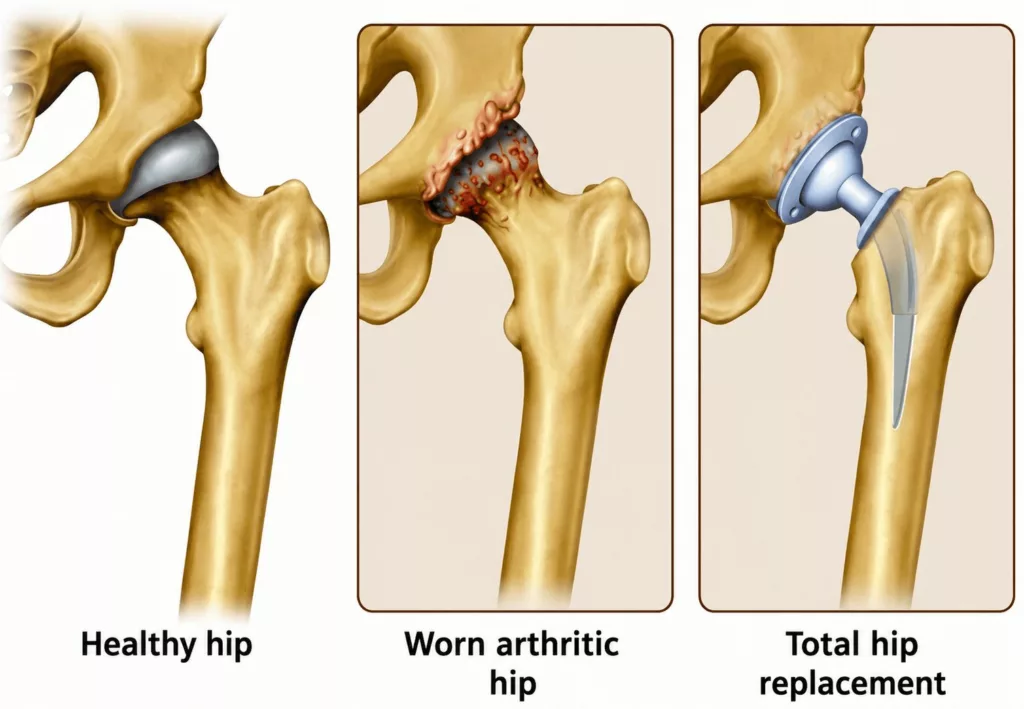
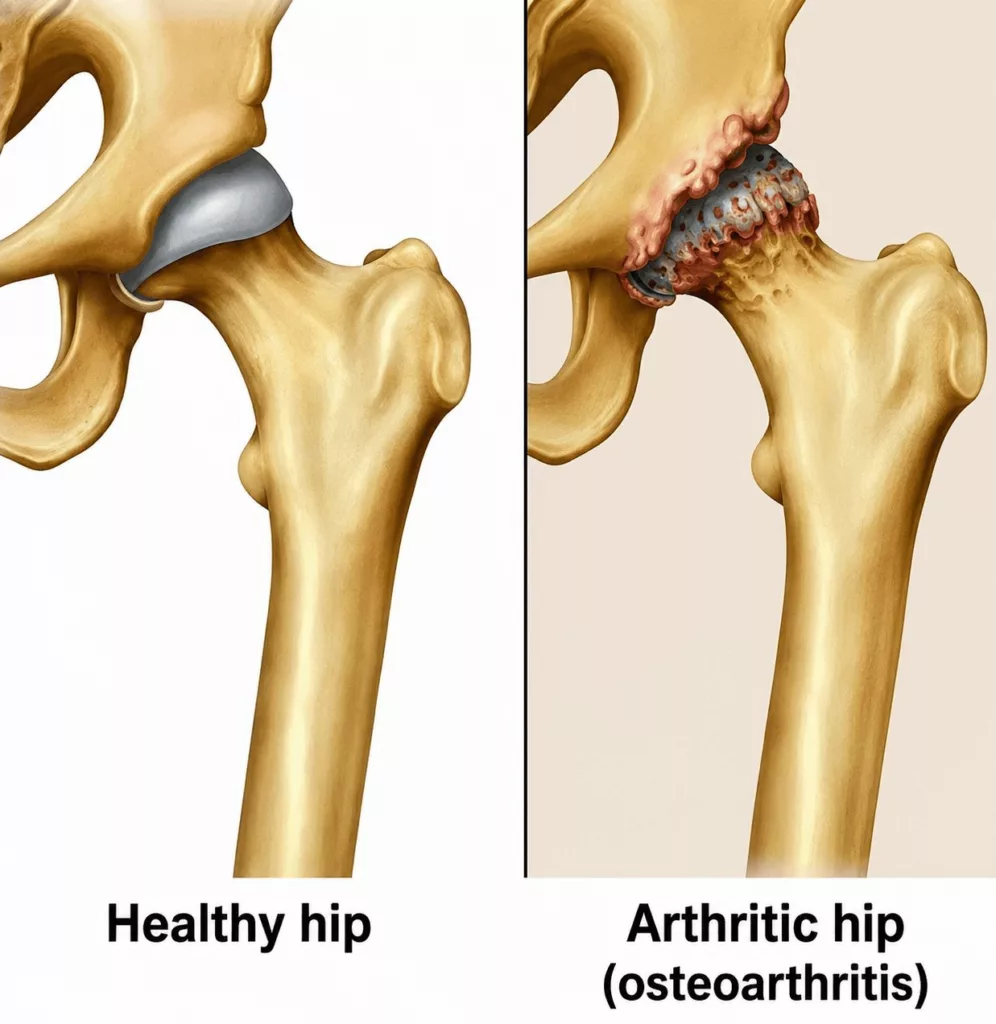
Hip osteoarthritis (coxarthrosis) is a degenerative joint disease affecting the articulation between the femur (thigh bone) and the acetabulum (hip socket of the pelvis). It begins with the gradual deterioration of the articular cartilage before progressively involving the other structures of the joint. As the condition advances, it causes increasing pain, stiffness and a progressive reduction in hip mobility.

The disease typically progresses in cycles, characterised by:

  • chronic phases, during which pain remains relatively stable and moderate;
  • acute flare-ups lasting several weeks, associated with significant pain and inflammation of the joint.

Hip osteoarthritis generally develops slowly over many years, leading to progressively increasing pain, discomfort when walking and a gradual decline in mobility.

Degenerative joint disease is very common. Approximately 80% of people over the age of 80 are affected by osteoarthritis.

Causes and Risk Factors for Hip Osteoarthritis

Hip Surgery Specialist in Hauts-de-Seine (92)

Hip osteoarthritis may be classified as either primary, meaning that no specific anatomical abnormality or previous injury has been identified, or secondary, when it develops as a consequence of an underlying deformity, disease or previous trauma.

Primary hip osteoarthritis is associated with several recognised risk factors, including:

  • Age: osteoarthritis most commonly develops after the age of 60, with its prevalence increasing progressively over time.
  • Repeated mechanical loading of the joint: frequent heavy lifting or intensive participation in certain sports may place additional stress on the hip joint.
  • Overweight and obesity.
  • Sex: women are more frequently affected than men after the menopause.

Secondary hip osteoarthritis may result from a variety of underlying conditions, including:

  • Congenital hip dislocation
  • Hip dysplasia
  • Avascular necrosis of the femoral head
  • Fractures of the femur or acetabulum
  • Inflammatory rheumatic diseases

Hip Osteoarthritis (Coxarthrosis) in Rueil-Malmaison

Hip Surgery in Hauts-de-Seine

Although hip osteoarthritis cannot always be prevented, adopting healthy lifestyle habits can help reduce risk factors and slow the progression of the disease. Maintaining a balanced diet together with regular physical activity plays an important role in preserving joint health.

Excess body weight increases the mechanical load placed on the hip joint, accelerating cartilage wear and contributing to pain. Achieving and maintaining a healthy weight can reduce pressure on the joint, improve symptoms and help slow disease progression.

In everyday life, it is important to protect a painful joint while remaining physically active. Regular exercise helps strengthen the muscles surrounding the hip and maintain joint flexibility. Good muscle strength and preserved mobility contribute to improved joint function. Muscle-strengthening and stretching exercises are particularly beneficial, together with low-impact activities such as walking, cycling and swimming.

The clinical assessment aims to evaluate the patient’s symptoms and the impact of the condition on everyday activities and independence, including walking distance, the ability to climb stairs and difficulties with dressing. The examination also assesses the presence of a limp, hip range of motion, lower limb length and muscle bulk.

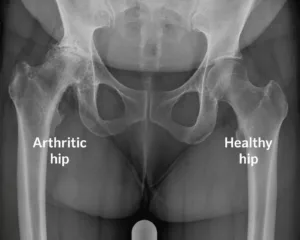
Standard X-rays of both hips are used to confirm the diagnosis of hip osteoarthritis. Typical radiographic findings include:

  • narrowing of the joint space caused by progressive cartilage loss;
  • increased bone density beneath the cartilage (subchondral sclerosis);
  • abnormal bony projections around the joint, known as osteophytes.

Further investigations are not usually required.
Although there is currently no treatment capable of curing hip osteoarthritis, several therapeutic options can effectively relieve symptoms and help slow disease progression. Initial management is based on lifestyle modifications, appropriate medication and physiotherapy.

When conservative treatment no longer provides sufficient pain relief or satisfactory function, total hip replacement becomes the most effective surgical solution for restoring mobility and improving quality of life.