
Orthopaedic Surgeon and Sports Trauma Specialist
Paris, Hauts-de-Seine & Yvelines
Specialist in Hip, Knee, Ankle and Foot Surgery
Orthopaedic Surgeon in Hauts-de-Seine & Yvelines
Dr. Simon Tournemine
I specialise in lower limb surgery, with expertise in the hip, knee, ankle and foot. During my residency and fellowship at the renowned Orthopaedic Department of Cochin Hospital, I developed advanced expertise in joint replacement surgery. I perform total hip replacement using the latest surgical advances, including minimally invasive direct anterior approach techniques combined with Enhanced Recovery After Surgery (ERAS) protocols. I also perform total knee replacement following the same principles, with personalised preoperative planning tailored to each patient’s anatomy. Together, these modern surgical techniques are designed to optimise clinical outcomes while promoting faster recovery and an earlier return to everyday activities.
I also specialise in foot and ankle surgery, including the treatment of hallux valgus, osteoarthritis, deformities, ankle instability and other complex conditions. My training at Ambroise-Paré Hospital (Boulogne-Billancourt), where I continue to practise, has enabled me to develop extensive expertise in this highly specialised field. These procedures are performed using percutaneous techniques (without open surgery) or minimally invasive arthroscopic surgery, a video-assisted approach that allows treatment without opening the joint. Today, foot and ankle surgery represents one of my principal areas of expertise.
As an endurance athlete myself, competing in long-distance triathlon, ultra-trail running and mountaineering, I have a unique understanding of sports-related injuries and their functional impact. I treat sports injuries using the latest evidence-based surgical techniques, including meniscal repair, anterior cruciate ligament (ACL) reconstruction and ankle stabilisation procedures. My objective is to provide athletes with access to the most advanced surgical innovations, enabling a safe, efficient recovery and a return to sport under the best possible conditions.
Hip • Knee • Ankle • Foot Surgery
Lower Limb Orthopaedic Specialist
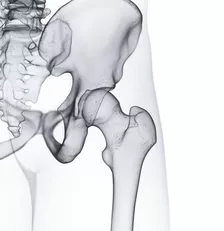
Hip
The hip is a major weight-bearing joint connecting the femur to the pelvis. It is commonly affected by osteoarthritis (cartilage degeneration), avascular necrosis, and fractures of the femoral neck or trochanteric region. The principal surgical procedures include total hip replacement to restore a damaged joint and internal fixation (osteosynthesis) to stabilise fractures. These procedures are performed using a minimally invasive direct anterior approach, allowing immediate weight-bearing whenever clinically appropriate.
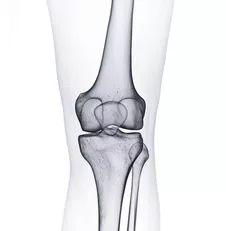
Knee
The knee is one of the joints most frequently affected by osteoarthritis (cartilage wear) and traumatic injuries, including meniscal tears, anterior and posterior cruciate ligament injuries, patellar dislocation and tendinopathies. The principal surgical procedures include total knee replacement, meniscal repair or treatment, cruciate ligament reconstruction, and patellar stabilisation. These procedures are performed using minimally invasive arthroscopic surgery whenever indicated.
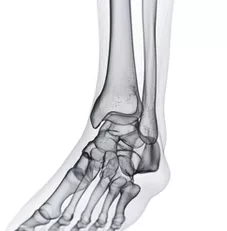
Ankle
The ankle is a complex joint that may be affected by cartilage damage, including osteoarthritis and osteochondral lesions of the talus (OLT), as well as traumatic injuries such as sprains, fractures, Achilles tendon ruptures and anterior or posterior ankle impingement. Surgical treatment focuses on cartilage restoration, tendon and ligament repair or reconstruction, and the correction of joint impingement. Whenever appropriate, these procedures are performed using minimally invasive arthroscopic techniques.
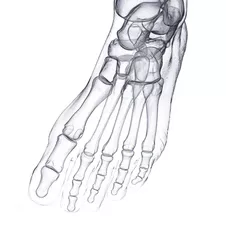
Foot
The foot is a highly complex anatomical structure that may be affected by deformities such as hallux valgus, metatarsalgia and claw toes, degenerative conditions including osteoarthritis, traumatic injuries such as sprains and fractures, as well as conditions including ingrown toenails and Morton’s neuroma. Surgical treatment aims to correct deformities, manage cartilage lesions and perform procedures such as ingrown toenail surgery or excision of Morton’s neuroma. These procedures are performed using minimally invasive surgical techniques whenever possible.