Total Hip Replacement in Hauts-de-Seine
Hip Surgery
What Is a Total Hip Replacement?
Dr Simon Tournemine in Hauts-de-Seine (92)
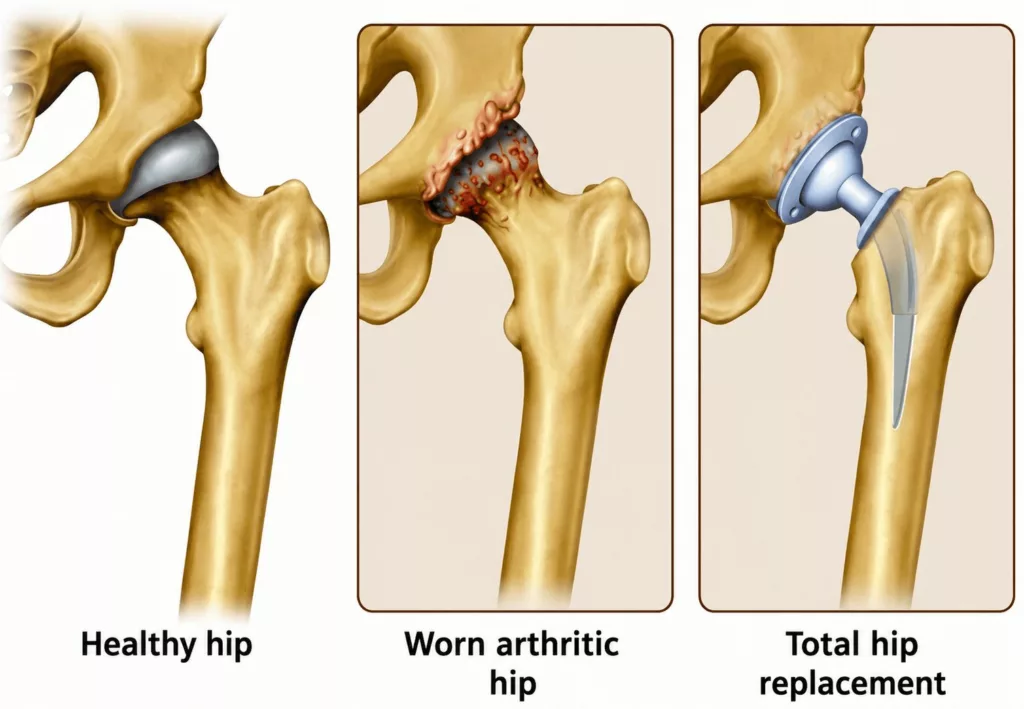
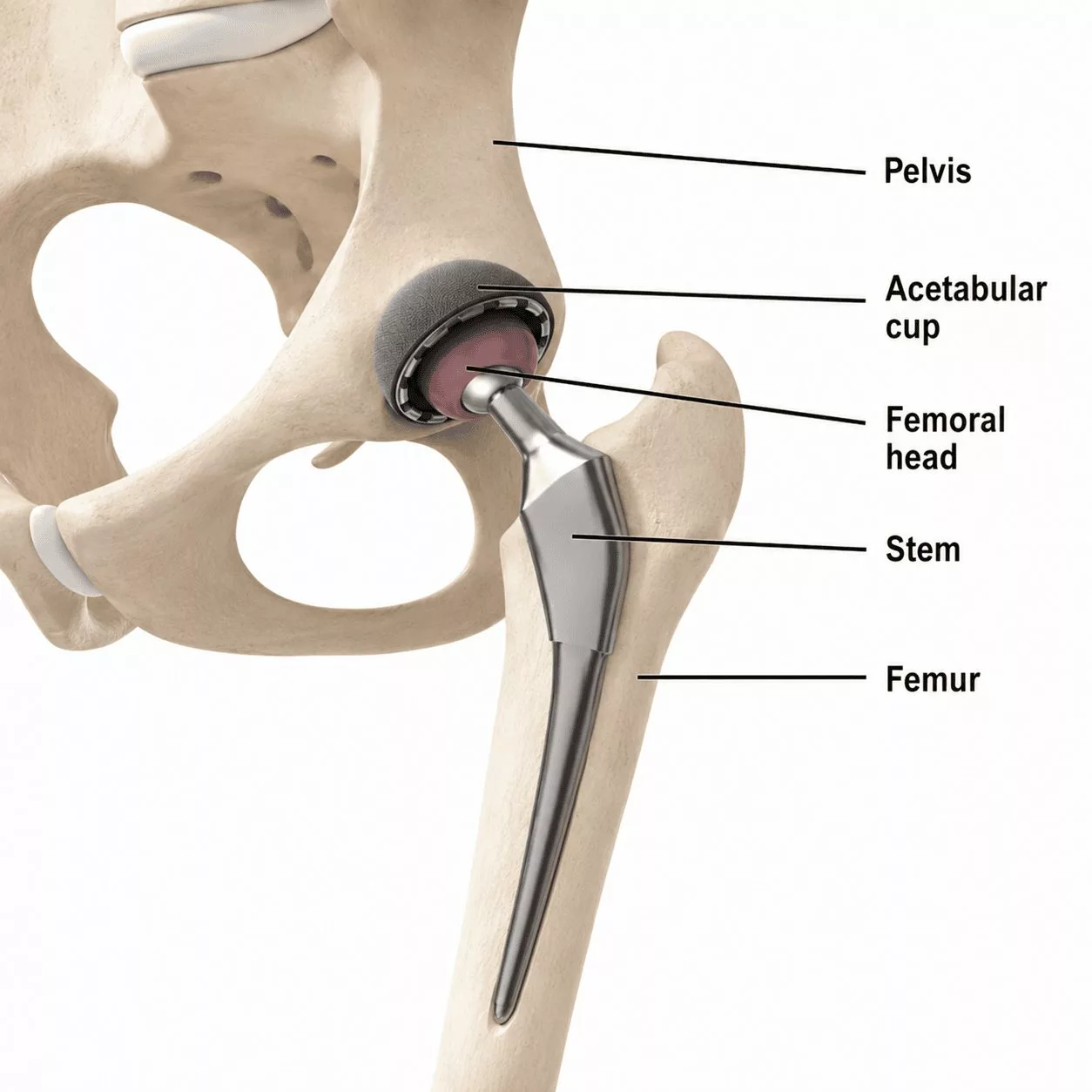
Total hip replacement is a surgical procedure that replaces a damaged or worn hip joint with an artificial implant. The prosthesis is designed to reproduce the shape and function of a healthy hip joint. It consists of three components: a femoral stem inserted into the femur, a femoral head attached to the stem, and an acetabular cup implanted into the pelvis. Together, these components restore smooth joint movement and help relieve pain caused by advanced hip disease.
When and Why Is Total Hip Replacement Recommended?
Hip Surgery Specialist in Hauts-de-Seine (92)
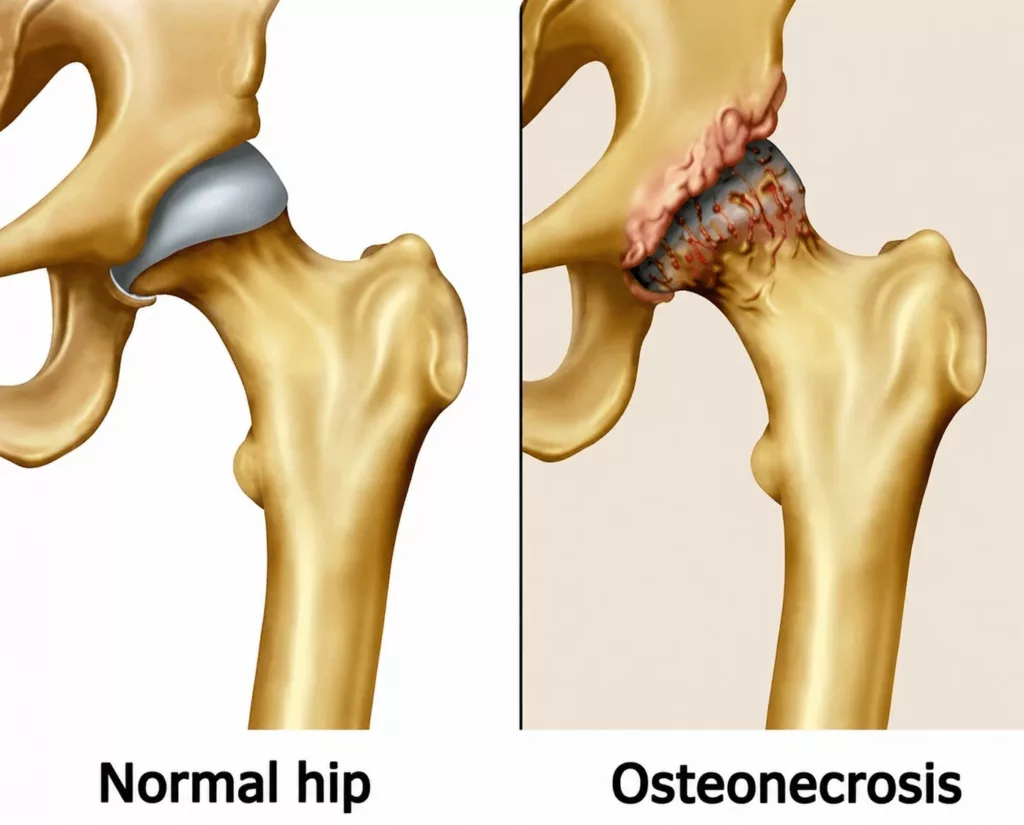
Hip osteoarthritis (coxarthrosis) is a progressive degenerative condition affecting the hip joint. Although no treatment can reverse cartilage wear, several conservative options can help relieve symptoms and slow disease progression. These include lifestyle modifications, pain-relieving medication, anti-inflammatory treatment and physiotherapy.
When these treatments no longer provide sufficient relief and hip degeneration significantly affects daily life, total hip replacement may be recommended. The aim of surgery is to provide lasting pain relief, restore hip mobility and allow patients to return to normal walking, everyday activities and sporting pursuits.
Total Hip Replacement Surgery in Rueil-Malmaison
Hip Surgery in Hauts-de-Seine
Total Hip Replacement Procedure
I perform total hip replacement using the direct anterior approach (Hueter approach) through a minimally invasive “bikini” incision. This approximately 10 cm incision is made within the natural groin crease, producing a discreet scar that is generally concealed beneath underwear. This muscle-sparing approach respects the natural anatomy of the hip, avoiding muscle detachment whenever possible and promoting faster postoperative recovery together with improved prosthetic stability.
During the procedure, the damaged cartilage and bone are removed from both the femoral head and the acetabulum, preparing the joint surfaces for implantation of the prosthesis.
The prosthetic components are then inserted. The hemispherical acetabular cup is positioned within the acetabulum, while the femoral stem is implanted into the femur and fitted with a femoral head that articulates with the cup. These components reproduce the anatomy and function of a healthy hip joint. Depending on the clinical situation, they are secured to the bone either by press-fit fixation or with bone cement.
The procedure takes approximately 45 minutes.
Surgery is performed under either general anaesthesia or spinal anaesthesia, in which only the lower limbs are anaesthetised. The choice of anaesthetic is made jointly with the anaesthetist during your preoperative consultation.
Hospitalisation usually lasts one to two days.
Recovery and Rehabilitation After Total Hip Replacement
Following surgery, the surgical dressing is usually changed every two days for approximately two weeks. Effective pain management is implemented and closely monitored to maximise comfort and facilitate early rehabilitation. Anticoagulant treatment is prescribed for four weeks to reduce the risk of deep vein thrombosis (DVT).
The prosthesis is stable immediately after surgery, allowing patients to stand and walk on the day of the operation. Enhanced Recovery After Surgery (ERAS) protocols are routinely used, and a physiotherapist will assist you with your first steps and rehabilitation exercises on the day of surgery. Early mobilisation combined with physiotherapy plays a key role in maintaining muscle strength, restoring mobility and supporting a successful recovery.
Certain movements should be avoided during the first few weeks after surgery. These precautions will be explained by both your physiotherapist and your surgeon. Walking sticks or crutches may be helpful during the first few days, although they are most often no longer required after the first week.
Patients usually return home one to two days after surgery. In some situations, however, a rehabilitation centre may be recommended. Before discharge, your surgeon will provide all necessary prescriptions, including wound care, pain medication, anticoagulants and physiotherapy. Rehabilitation should then continue either at home with a physiotherapist or in a specialist rehabilitation centre. Returning gradually to normal daily activities forms an essential part of the recovery process.
Driving is generally possible approximately one month after surgery. Sick leave is also typically around one month, although this varies depending on your occupation, with office-based work often allowing an earlier return. These timeframes are indicative and may differ from one patient to another.
Sporting activities can usually be resumed progressively from the end of the first postoperative month.
Long-term clinical and radiographic follow-up remains essential to monitor the condition of the prosthesis and detect any potential abnormalities.
Risks and Complications of Total Hip Replacement
Every effort is made to ensure a safe procedure and an uncomplicated recovery. Nevertheless, as with any surgical intervention, complications, although uncommon, may occur.
The principal risks include:
- Deep vein thrombosis (DVT) and pulmonary embolism: uncommon complications, with the risk reduced by anticoagulant treatment prescribed for one month after surgery.
- Worsening of pre-existing medical conditions: such as heart disease or diabetes. Close postoperative monitoring by the anaesthetic team helps reduce this risk.
- Prosthetic joint infection (approximately 1%): this may require further surgery to wash out or replace the prosthesis, followed by antibiotic treatment.
- Hip prosthesis dislocation: this occurs when the femoral head disengages from the acetabular cup. It generally occurs shortly after surgery following an extreme or accidental movement. The direct anterior approach and the prosthetic design help minimise this risk, reducing it to less than 1%. Your surgeon and physiotherapist will explain which movements should be avoided during the early recovery period.
- Haematoma: postoperative bleeding may occasionally result in the formation of a haematoma. Depending on its severity, drainage or blood transfusion may be required.
- Nerve injury: small sensory nerves supplying the skin of the thigh may rarely be affected, causing an area of reduced sensation over the outer aspect of the thigh.
- Leg length discrepancy: differences of less than 15 mm are generally not clinically significant. Despite careful preoperative planning and intraoperative assessment, achieving perfectly equal leg lengths is not always possible or desirable, as excessive shortening of the operated limb may weaken the gluteal muscles and reduce prosthetic stability, increasing the risk of dislocation.
These represent the principal risks associated with total hip replacement but do not constitute an exhaustive list. Although exceptional complications may occur, every patient is unique. Your orthopaedic surgeon will discuss your individual situation in detail and answer any questions you may have before surgery.
Results of Total Hip Replacement
Thanks to modern prosthetic implants and minimally invasive surgical techniques, excellent outcomes are achieved in the vast majority of patients. Nevertheless, despite technically successful surgery, complete symptom resolution cannot always be guaranteed and some residual discomfort may occasionally persist.
Walking is resumed immediately after surgery, pain generally improves rapidly, and hip stiffness gradually resolves as mobility returns over the following weeks. In most cases, total hip replacement allows patients to progressively resume their personal, professional and sporting activities within approximately one month.
Activities such as cycling, swimming, golf and hiking are generally encouraged. Other sports, including skiing, tennis and recreational running, may also be possible, although they are usually recommended at a moderate intensity to maximise the longevity of the prosthesis.
The average lifespan of a modern hip replacement is approximately 30 years. However, its durability depends on several factors, including the patient’s age, body weight and level of physical activity.