Revision Hip Replacement in Hauts-de-Seine
Hip Surgery
What Is Revision Hip Replacement?
Dr Simon Tournemine in Hauts-de-Seine (92)
A total hip replacement consists of two principal mechanical components: a hemispherical acetabular cup implanted into the pelvis (acetabulum) and a femoral stem with a femoral head implanted into the femur. The femoral head articulates within the acetabular cup, reproducing the movement and function of a healthy hip joint.
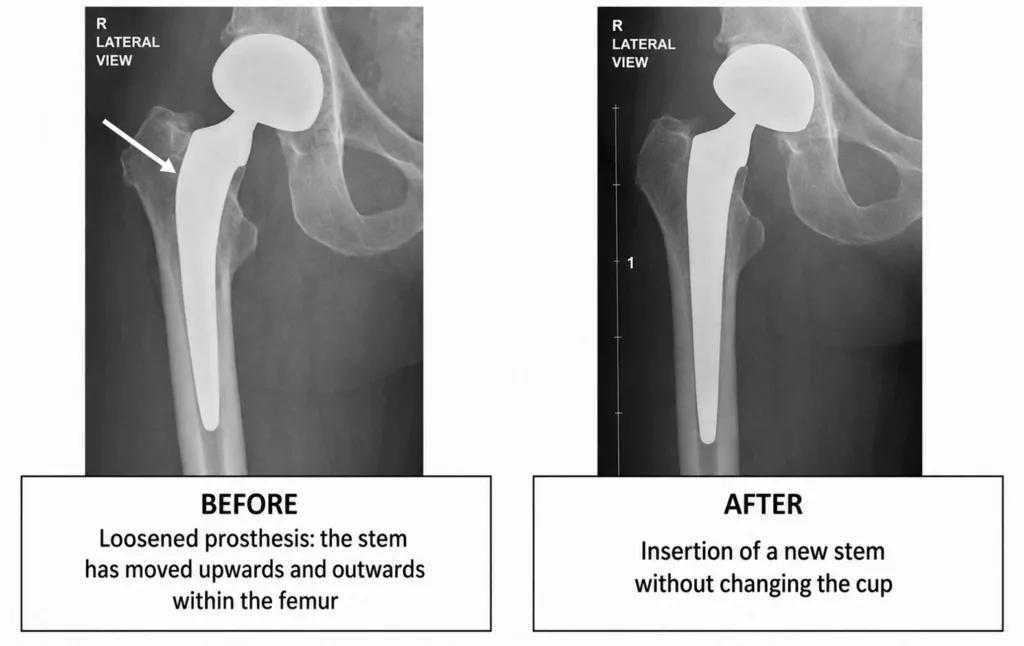
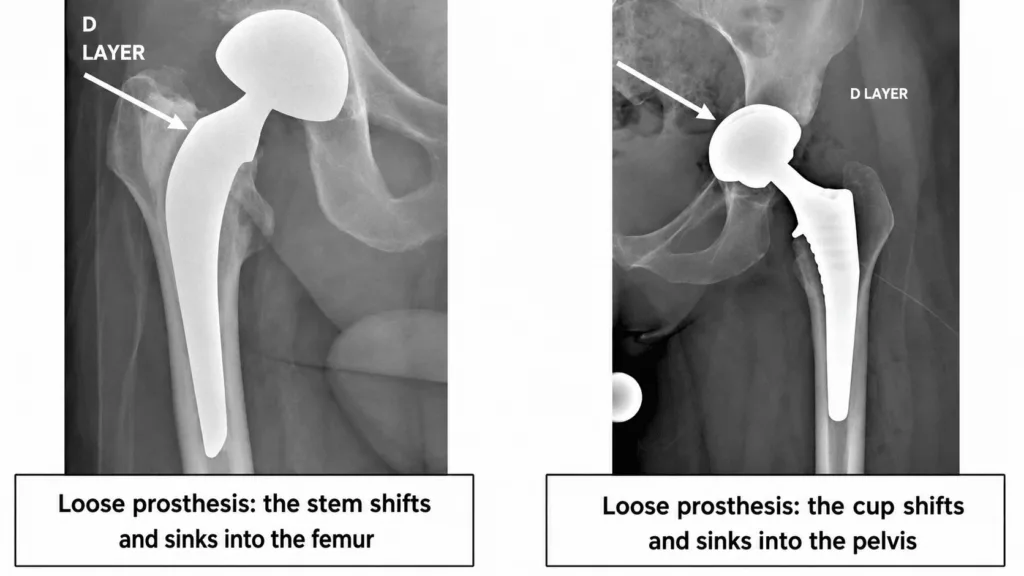
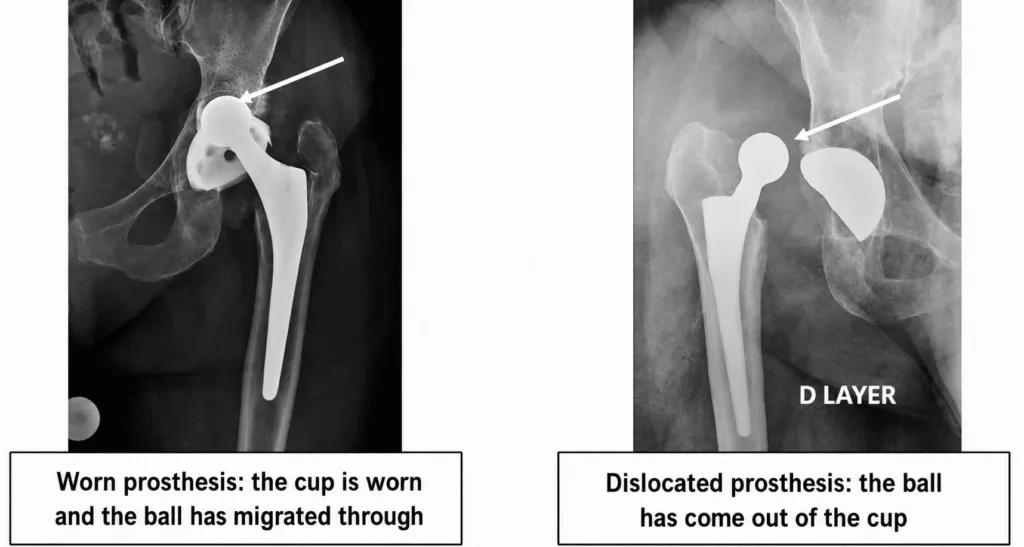
Over time and with regular use, these prosthetic components may gradually wear or lose their fixation within the bone, a process known as implant loosening. Modern hip replacements generally have an expected lifespan of around 20 years, although older implants may wear more rapidly.
Wear or loosening may affect the acetabular cup, the femoral stem, or both components. These changes can lead to hip pain, limping, or episodes of prosthetic instability and dislocation, where the femoral head disengages from the acetabular cup. In these situations, replacing the worn or loosened components may become necessary. This procedure is known as revision hip replacement.
Revision surgery may also be required when the prosthetic components are incorrectly positioned. Malposition may result in leg length discrepancy, recurrent instability or dislocation, or persistent pain caused by contact between the prosthesis and the surrounding muscles or tendons of the hip.
Infection, whether recent or longstanding, is another recognised indication for revision hip replacement surgery.
Revision Hip Replacement Procedure
Hip Surgery Specialist in Hauts-de-Seine (92)
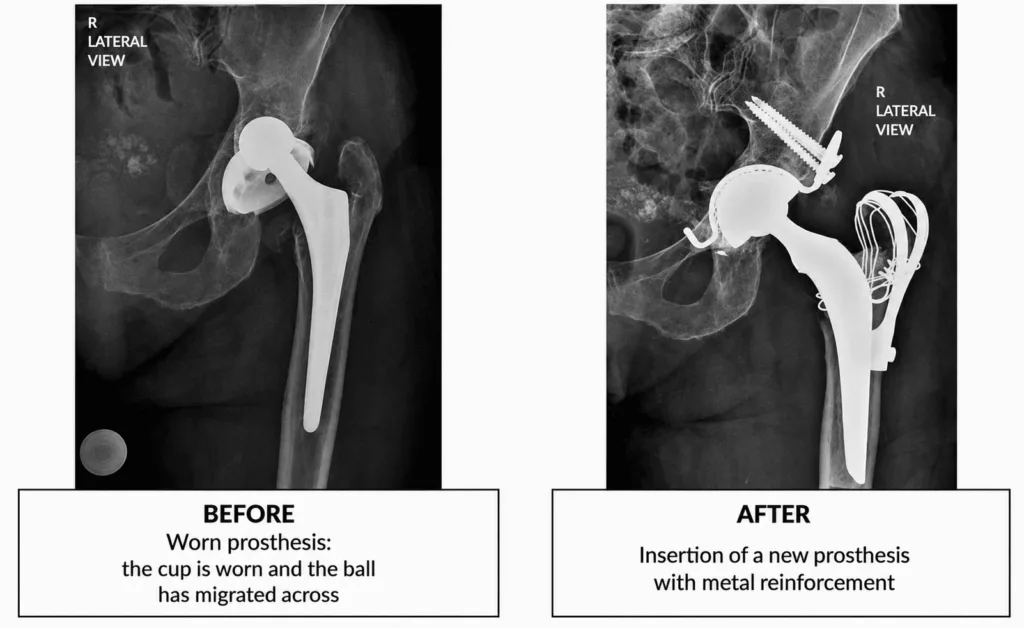
Revision hip replacement involves removing the worn, loosened or malpositioned prosthetic components and replacing them with new implants. Depending on the underlying problem, the femoral stem, the acetabular cup or both components may be exchanged. Any wear debris generated by the original prosthesis is also removed during the procedure.
The surgical approach varies according to the components requiring replacement and the extent of bone reconstruction required. Whenever possible, the original surgical approach is reused, avoiding the need for an additional scar. However, in certain situations the previous approach does not provide sufficient access for implant replacement or bone reconstruction, making a new posterior incision over the buttock necessary.
In some cases, wear of the original prosthesis may have caused bone loss or weakening of the pelvis or femur. These bone defects may require additional metal reinforcement and reconstruction using bone grafting. The bone graft may be harvested from the patient or obtained from a donor.
Removal of the existing femoral stem may occasionally require a femorotomy, a procedure in which part of the femur is carefully opened to facilitate implant extraction. When this is necessary, the femur is stabilised using metal cerclage wires.
When revision surgery is performed because of infection, the procedure may be carried out either as a one-stage or a two-stage revision. This means that removal of the infected prosthesis, debridement of infected tissues and implantation of a new prosthesis may be performed during a single operation or divided into two procedures several weeks apart. The most appropriate strategy depends on factors including the duration of the infection, the infecting organism and the patient’s overall health. In every case, surgery is followed by several weeks of antibiotic treatment.
The duration of surgery varies considerably according to the complexity of the procedure and the extent of bone damage, ranging from approximately 1 to 4 hours.
The procedure is performed under either general anaesthesia or spinal anaesthesia, in which only the lower limbs are anaesthetised. The choice of anaesthetic is made jointly with the anaesthetist during your preoperative consultation.
Hospitalisation generally lasts between 2 and 7 days.
Revision Hip Replacement Surgery in Rueil-Malmaison
Hip Surgery in Hauts-de-Seine
Recovery and Rehabilitation After Revision Hip Replacement
Following surgery, the dressing is usually changed every two days for approximately two weeks. Pain management is carefully monitored to maximise comfort and encourage early rehabilitation. Anticoagulant treatment is prescribed for four weeks to reduce the risk of deep vein thrombosis (DVT).
A surgical drain is commonly left in place to reduce the risk of postoperative haematoma formation. It is removed according to the type of revision performed. Because revision surgery is often associated with greater blood loss than primary hip replacement, blood transfusion during or after surgery is relatively common.
In the majority of cases, the revised hip replacement is stable enough to allow patients to stand and walk on the day of surgery. Enhanced Recovery After Surgery (ERAS) protocols are routinely implemented, and a physiotherapist will assist you in beginning rehabilitation on the day of the operation. Early mobilisation combined with physiotherapy plays a key role in preserving muscle function, maintaining joint mobility and promoting optimal recovery.
Walking sticks or crutches may be required during the first few days but are most often discontinued after the first week.
Following a short hospital stay, patients generally return home unless rehabilitation in a specialist centre is considered necessary. Before discharge, your surgeon will provide all required prescriptions for wound care, pain medication, anticoagulants and physiotherapy. Rehabilitation should continue either at home with a physiotherapist or in a rehabilitation centre. Gradual resumption of normal daily activities remains an essential part of recovery.
Driving is generally possible around one month after surgery. Sick leave is also usually around one month, although this varies according to the patient’s occupation, with office-based work often allowing an earlier return. Sporting activities may be resumed progressively after the first postoperative month. These timeframes are averages and remain indicative.
In more complex cases, extensive bone reconstruction using bone grafting may be necessary. Likewise, removal of the original prosthesis may require a femorotomy. In these situations, full weight-bearing cannot be resumed immediately, and approximately six weeks are required to allow bone healing. Walking remains possible using two crutches while avoiding weight-bearing on the operated hip, resulting in a longer rehabilitation period.
When revision surgery is performed for infection, several weeks of antibiotic treatment are required following the procedure.
Long-term clinical and radiographic follow-up remains essential to monitor the revised prosthesis and detect any potential abnormalities.
Risks and Complications of Revision Hip Replacement
Every precaution is taken to ensure the safest possible outcome. Nevertheless, as with any surgical procedure, complications, although uncommon, may occur.
The principal risks include:
- Deep vein thrombosis (DVT) and pulmonary embolism: uncommon complications, with the risk reduced by postoperative anticoagulant treatment.
- Worsening of pre-existing medical conditions: such as heart disease or diabetes. Close postoperative monitoring by the anaesthetic team helps minimise this risk.
- Prosthetic joint infection (risk below 1%): this may require further surgery to wash out or replace the prosthesis, followed by prolonged antibiotic therapy. Because smoking significantly increases the risk of infection and wound-healing complications, patients are strongly advised to stop smoking at least one month before surgery and for three months afterwards.
- Fracture of the femur or acetabulum: this may occur during removal of the original implants and may require additional reconstructive surgery.
- Hip prosthesis dislocation: dislocation may occur shortly after surgery following an extreme accidental movement. The use of the direct anterior approach, when appropriate, together with modern implant design, helps minimise this risk to less than 1%.
- Haematoma: postoperative bleeding may occasionally require drainage or blood transfusion.
- Leg length discrepancy: differences of less than 15 mm are generally not clinically significant. Despite meticulous preoperative planning and intraoperative assessment, equal leg length cannot always be achieved or may not be desirable. In addition, the constraints imposed by complex bone reconstruction may make exact correction impossible.
- Iliopsoas tendon irritation (psoas syndrome): friction between the prosthesis and the surrounding tendons may cause persistent pain and occasionally require an injection or further surgery.
These are the principal risks associated with revision hip replacement but do not represent an exhaustive list. Exceptional complications may occur, and every clinical situation is unique. Your orthopaedic surgeon will discuss your individual case in detail and answer any questions you may have before surgery.
Results of Revision Hip Replacement
In the majority of cases, weight-bearing and walking can be resumed immediately after surgery. Pain generally improves rapidly, stiffness gradually resolves and normal hip mobility is progressively restored over the following weeks. Revision hip replacement usually allows patients to return progressively to their personal, professional and sporting activities without pain within approximately one month.
Activities such as cycling, swimming, golf and hiking are generally encouraged. Other sports, including skiing, tennis and recreational running, may also be practised at a moderate intensity to maximise the longevity of the prosthesis.
In more complex situations requiring bone graft reconstruction or femorotomy, immediate weight-bearing is not possible. Approximately six weeks are required to allow bone healing, during which walking is carried out using two crutches without loading the operated hip. Consequently, postoperative rehabilitation takes longer.
The expected lifespan of the revised prosthesis is approximately 20 years, although this depends on several factors, including the patient’s age, body weight and level of physical activity.