
Hip Osteosynthesis in Hauts-de-Seine
Hip Surgery
What Is Hip Osteosynthesis?
Dr Simon Tournemine in Hauts-de-Seine (92)
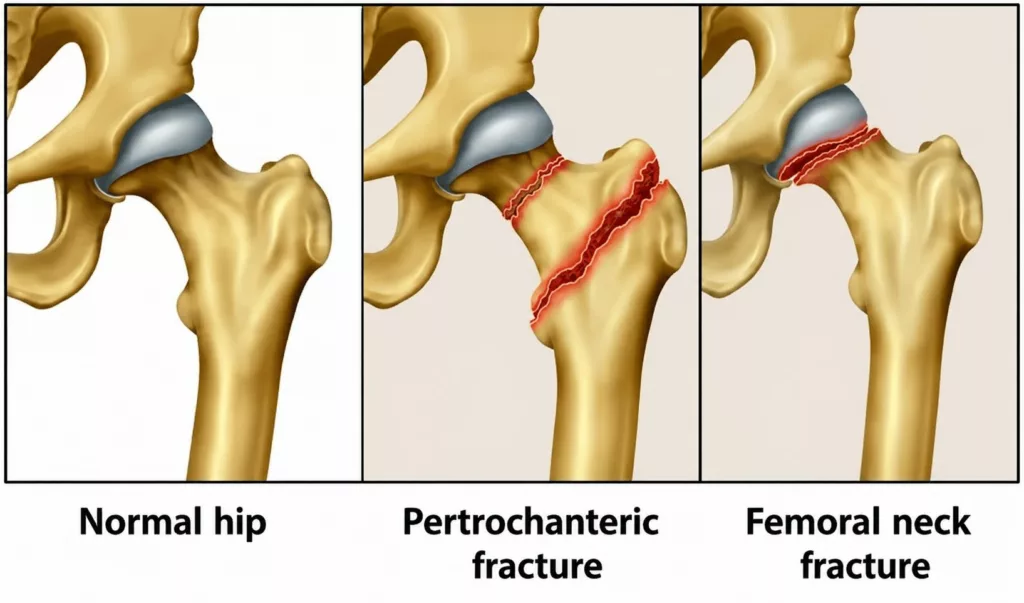
Hip osteosynthesis is a surgical procedure performed to treat certain hip fractures. The operation consists of restoring the fractured bone fragments to their anatomical position before stabilising them with metal fixation devices, such as screws or an intramedullary nail, while the bone heals.
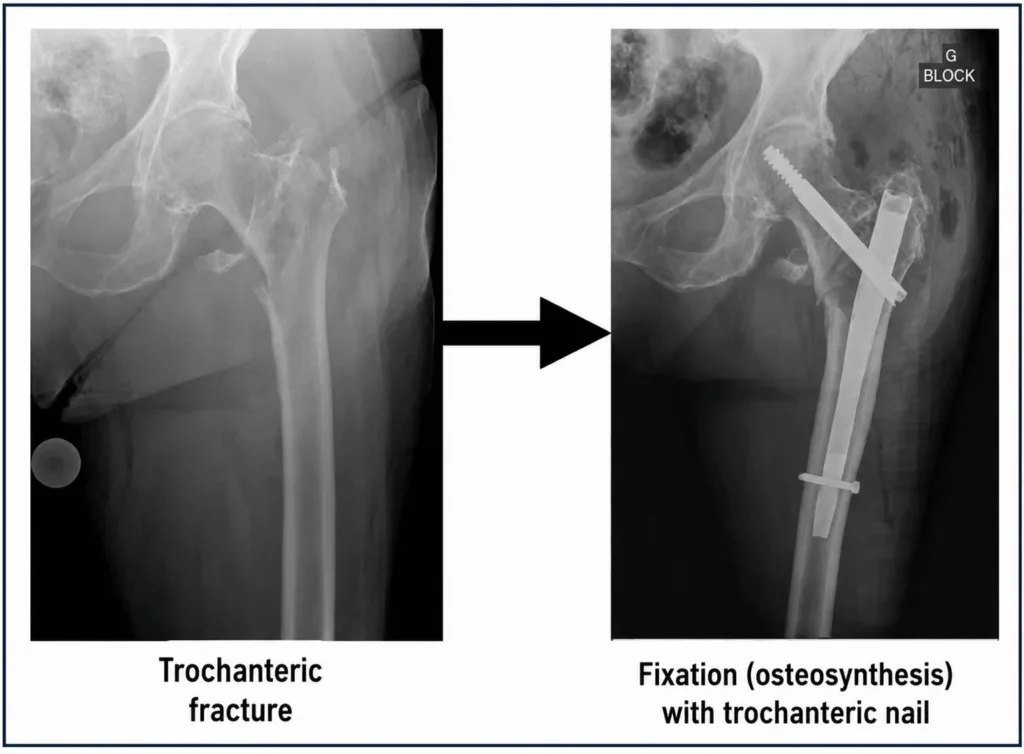
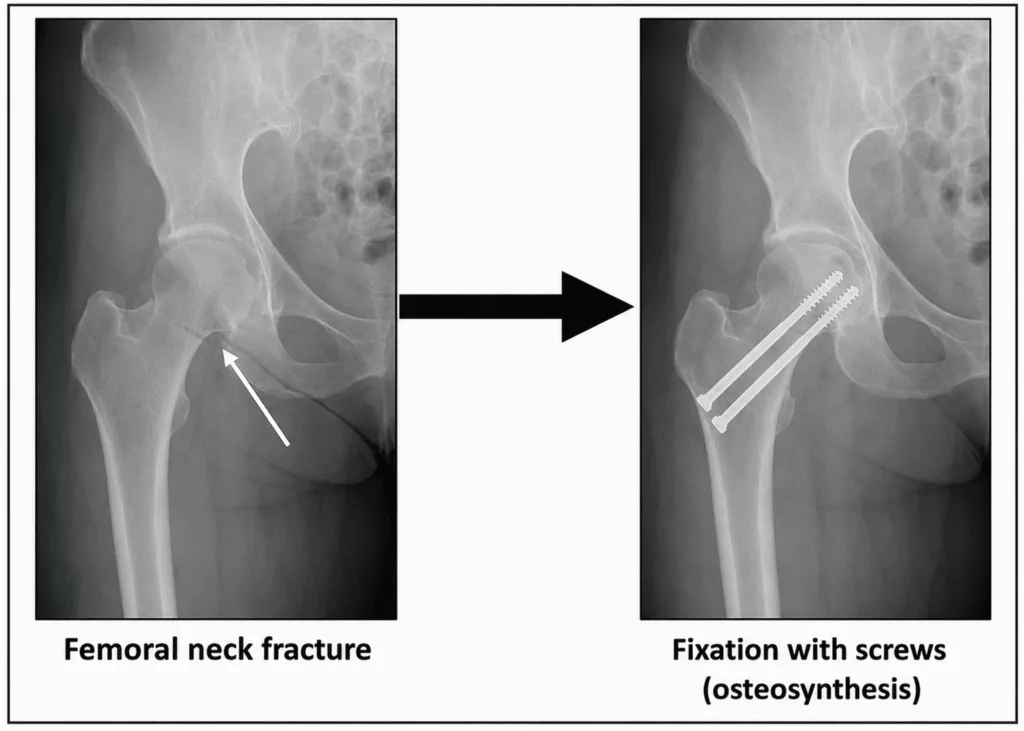
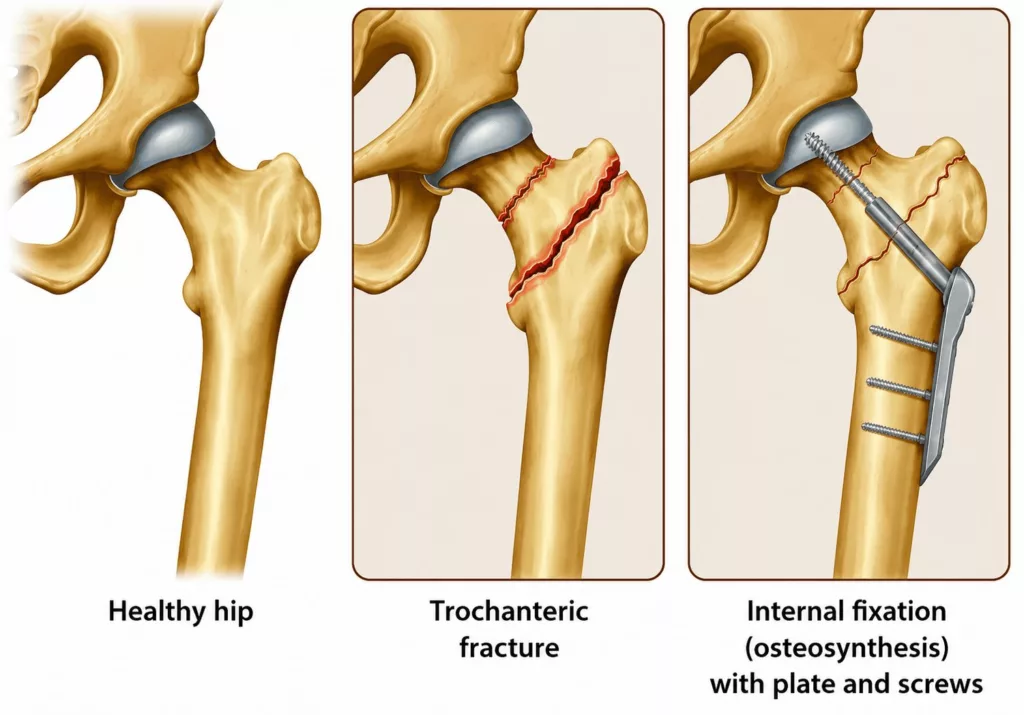
The three principal methods of hip fracture fixation are cannulated screw fixation for selected femoral neck fractures, the trochanteric intramedullary nail (Gamma nail), and the dynamic hip screw (DHS) for pertrochanteric fractures. The choice of fixation depends on the type of fracture, the quality of the bone and each patient’s individual circumstances. Your surgeon will discuss the most appropriate technique with you.
Hip Osteosynthesis Procedure
Hip Surgery Specialist in Hauts-de-Seine (92)
The operation generally lasts approximately 45 minutes. It is performed under either general anaesthesia or spinal anaesthesia, in which only the lower limbs are anaesthetised. The choice of anaesthetic is made jointly with the anaesthetist during your preoperative consultation.
An incision measuring approximately 5 to 15 cm is made along the outer aspect of the hip to access the fracture. The fractured bone fragments are carefully repositioned into their normal anatomical alignment before the fixation device is implanted to stabilise the fracture. The length of the incision depends on the complexity of the fracture and the fixation technique selected.
Hospitalisation usually lasts one to three days.
Depending on the type of fracture, different fixation techniques may be used.
Hip Osteosynthesis in Rueil-Malmaison
Hip Surgery in Hauts-de-Seine
Gamma Nail Osteosynthesis
Screw Fixation Osteosynthesis
Dynamic Hip Screw (DHS) Osteosynthesis
Recovery and Rehabilitation After Hip Osteosynthesis
Following surgery, the dressing is usually changed every two days for approximately two weeks. Effective pain management is carefully monitored to maximise comfort and facilitate early rehabilitation. Anticoagulant treatment is prescribed for four weeks to reduce the risk of deep vein thrombosis (DVT).
In the majority of cases, the hip is sufficiently stable to allow patients to stand and walk on the day of surgery. Enhanced Recovery After Surgery (ERAS) protocols are routinely implemented, and a physiotherapist will assist you in walking and beginning rehabilitation on the day of the operation. Early mobilisation combined with physiotherapy is a key factor in achieving a successful recovery, helping to preserve muscle function and restore joint mobility. No specific movements are routinely prohibited following surgery.
Patients generally return home a few days after the operation, although admission to a rehabilitation centre may occasionally be recommended. Returning home and resuming normal daily activities as early as possible forms an important part of the rehabilitation process.
Before discharge, your surgeon will provide all necessary prescriptions for wound care, pain medication, anticoagulants and physiotherapy. Follow-up consultations, including X-rays, will be arranged to monitor fracture healing. Rehabilitation should continue either at home with a physiotherapist or in a rehabilitation centre.
Bone healing usually takes approximately three months, and crutches are generally required during this period.
Driving is usually possible around six weeks after surgery. Sick leave is also typically around six weeks, although this depends on your occupation, with office-based work often allowing an earlier return. Sporting activities can usually be resumed progressively after the second postoperative month. These timeframes are averages and may vary from one patient to another.
In certain complex cases involving poor bone quality or unstable fractures, immediate weight-bearing may not be possible. Approximately six weeks are required to allow sufficient bone healing before full weight-bearing can resume. During this period, walking remains possible using two crutches while avoiding weight-bearing on the operated hip, resulting in a longer rehabilitation programme.
Risks and Complications Following Hip Osteosynthesis
Every precaution is taken to optimise recovery. Nevertheless, as with any surgical procedure, complications, although uncommon, may occur.
The principal risks include:
- Deep vein thrombosis (DVT) and pulmonary embolism: uncommon complications, with the risk reduced by anticoagulant treatment prescribed for one month after surgery.
- Worsening of pre-existing medical conditions: such as heart disease or diabetes. Close postoperative monitoring by the anaesthetic team helps minimise this risk.
- Infection (risk below 1%): this may require further surgery to clean the surgical site or replace the fixation device, followed by prolonged antibiotic treatment.
- Haematoma: postoperative bleeding may occasionally require drainage or blood transfusion.
- Non-union (failure of the fracture to heal): a second operation may be required to stimulate bone healing or, in some cases, to replace the hip joint with a prosthesis.
- Failure of fixation: although the fixation devices themselves are designed to withstand normal mechanical loads, poor bone quality or highly fragmented fractures may lead to secondary displacement of the fracture. Regular X-rays are performed throughout the healing period to assess the stability of the fixation. Evidence of fracture displacement may require temporary restriction of weight-bearing or further surgery.
- Malunion: healing of the fracture in a non-anatomical position is a recognised complication but, in most cases, has little impact on overall hip function.
- Discomfort related to the fixation device: once the fracture has fully healed, removal of the hardware may occasionally be considered if it causes symptoms. However, the vast majority of patients retain their fixation devices permanently without any significant inconvenience.
These represent the principal risks associated with hip osteosynthesis but do not constitute an exhaustive list. Exceptional complications may occur, and every patient’s situation is unique. Your orthopaedic surgeon will discuss your individual case in detail and answer any questions you may have before surgery.
Results of Hip Osteosynthesis
In the majority of cases, weight-bearing and walking can be resumed immediately after surgery, and pain improves rapidly. Hip osteosynthesis allows patients to progressively return to their usual daily activities within approximately one month. Once fracture healing has been achieved, resumption of all activities, including sporting activities, is encouraged.