Ankle Osteoarthritis in Hauts-de-Seine
Ankle Surgery
What Is Ankle Osteoarthritis?
Dr Simon Tournemine in Hauts-de-Seine (92)
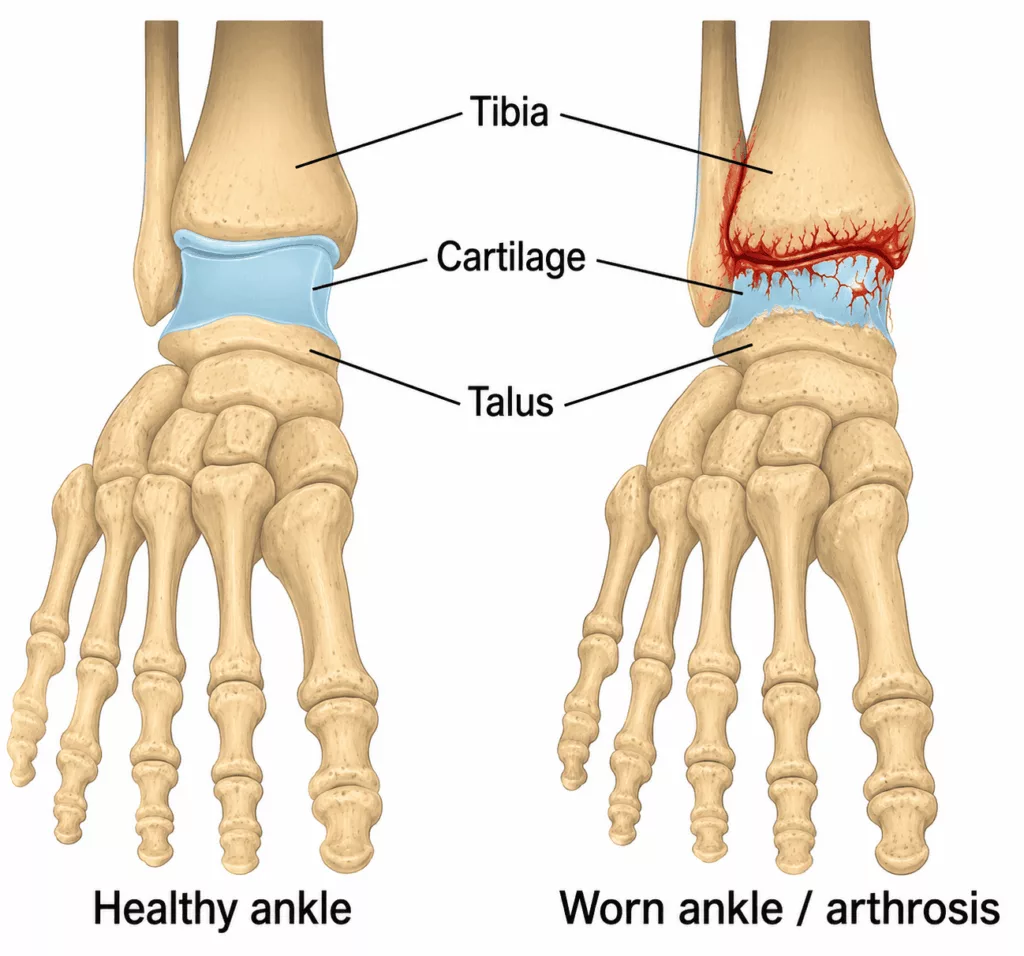
Ankle osteoarthritis (tibiotalar osteoarthritis) is a degenerative condition affecting the joint between the shin bone (tibia) and the talus, the main bone of the hindfoot. It begins with progressive deterioration of the articular cartilage before gradually involving all structures of the joint. This process leads to pain, stiffness and progressive loss of ankle mobility.
The disease typically follows a cyclical course, characterised by:
- chronic phases, during which pain remains relatively stable and moderate;
- acute flare-ups lasting several weeks, associated with inflammation of the joint.
Ankle osteoarthritis generally progresses slowly over many years, resulting in increasing discomfort and pain during walking and weight-bearing activities.
Osteoarthritis is one of the most common musculoskeletal disorders. Approximately 80% of people over the age of 80 show signs of osteoarthritis affecting one or more joints.
Causes and Risk Factors for Ankle Osteoarthritis
Ankle Surgery Specialist in Hauts-de-Seine (92)
Ankle osteoarthritis may be primary, occurring without any obvious anatomical abnormality or previous injury, or secondary, developing as a consequence of trauma, deformity or underlying disease.
Primary ankle osteoarthritis is favoured by several factors, including:
- advancing age, with incidence increasing significantly after the age of 60;
- excessive mechanical loading of the joint through repetitive heavy lifting or intensive sporting activities;
- overweight and obesity;
- female sex, particularly after menopause.
Secondary ankle osteoarthritis may result from:
- congenital deformities or ankle dysplasia;
- recurrent ankle sprains and chronic ligament injuries;
- osteochondral lesions of the talar dome (OLT);
- previous fractures involving the ankle or foot;
- inflammatory rheumatic diseases.
Ankle Osteoarthritis in Rueil-Malmaison
Ankle Surgery in Hauts-de-Seine
Symptoms of Ankle Osteoarthritis
The earliest symptom is usually gradually progressive ankle pain. Pain may involve the entire ankle and radiate into the leg or foot.
Symptoms typically worsen during weight-bearing activities such as walking or climbing stairs and improve with rest. Morning stiffness is common and usually requires a short period of movement before normal mobility returns.
As pain progresses, patients may develop a limp and experience increasing difficulty with everyday activities, including climbing stairs, bending down or walking longer distances. In more advanced stages, the use of a walking stick may become necessary.
The disease generally evolves slowly, alternating between painful inflammatory flare-ups and periods of relative symptom relief.
Preventing Ankle Osteoarthritis
Although osteoarthritis cannot always be prevented, several measures can help slow its progression and reduce symptoms.
Maintaining a healthy body weight through a balanced diet and regular physical activity is particularly important. Excess body weight increases mechanical stress on the ankle joint, accelerating cartilage wear. Weight reduction can significantly relieve symptoms and decrease joint loading.
Patients should aim to protect painful joints while remaining physically active. Regular exercise helps strengthen the muscles supporting the ankle and preserve joint flexibility. Low-impact activities such as walking, cycling and swimming are particularly beneficial, together with stretching and strengthening exercises.
Diagnosis of Ankle Osteoarthritis
Clinical examination evaluates the patient’s symptoms, functional limitations and degree of loss of independence, including walking distance, stair climbing and activities of daily living. The surgeon also assesses gait, ankle mobility and muscle strength.
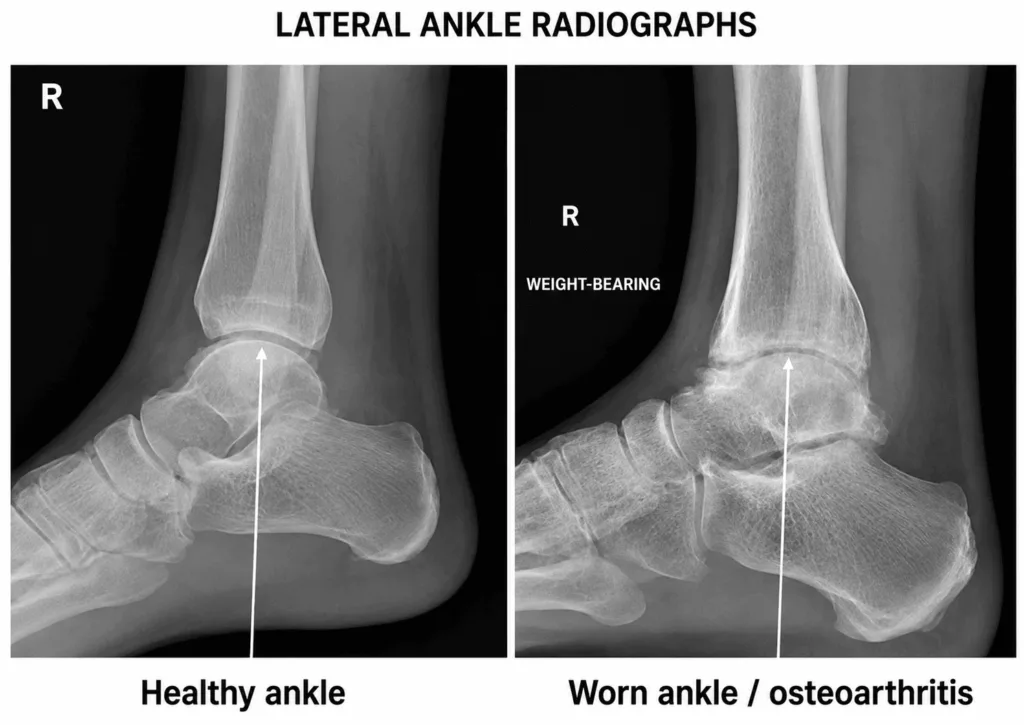
Weight-bearing radiographs of both ankles usually confirm the diagnosis by demonstrating:
- narrowing of the joint space due to cartilage loss;
- increased density (subchondral sclerosis) of the underlying bone;
- abnormal bony outgrowths around the joint known as osteophytes.
In most cases, additional imaging investigations are not routinely required.
Treatment of Ankle Osteoarthritis
There is currently no treatment capable of curing ankle osteoarthritis or reversing cartilage degeneration. Management therefore aims to relieve pain, improve function and slow disease progression.
Initial treatment is conservative and includes:
- weight reduction where appropriate;
- maintaining regular physical activity;
- analgesic and anti-inflammatory medication;
- intra-articular corticosteroid injections, which may temporarily relieve symptoms but do not halt disease progression.
When conservative treatment no longer provides adequate relief, surgical management may be recommended.
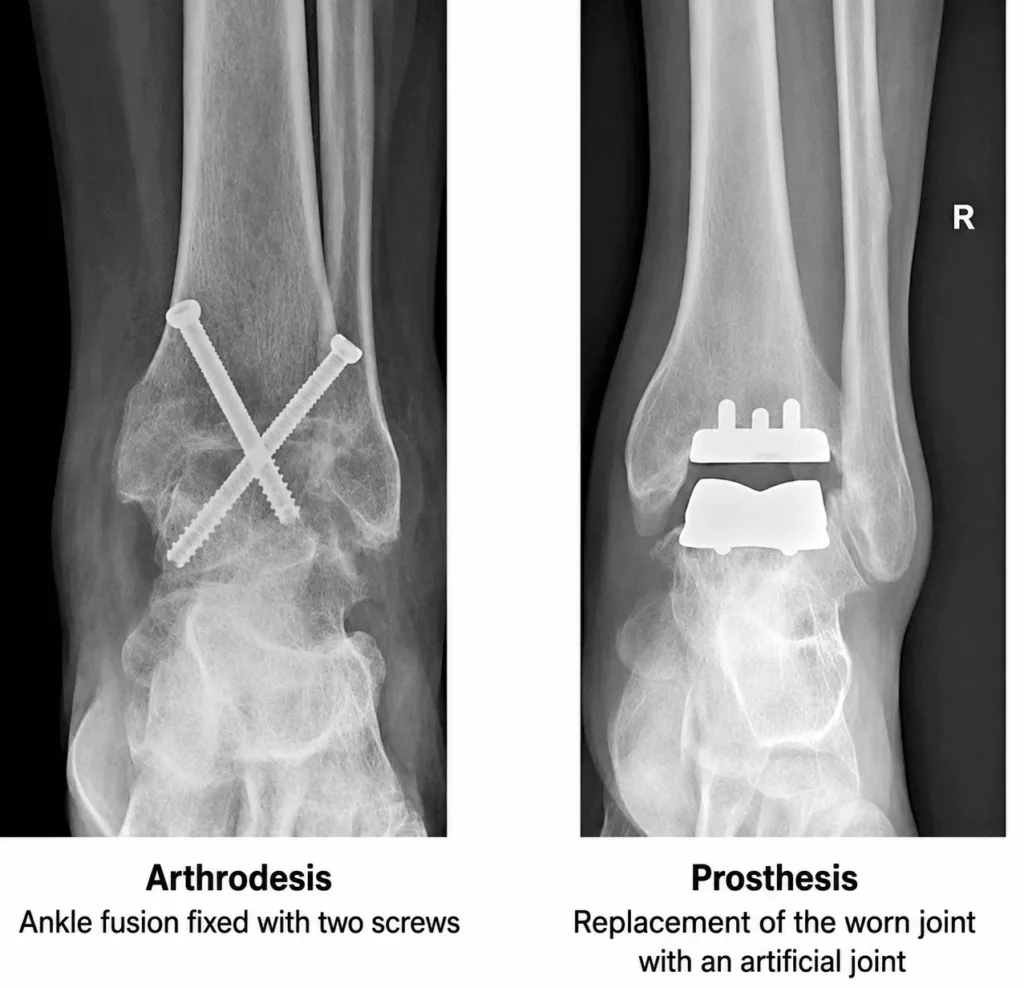
Depending on the severity of joint degeneration, patient characteristics and functional requirements, surgery may involve either:
- total ankle replacement, replacing the damaged joint with an artificial prosthesis; or
- ankle arthrodesis, permanently fusing the joint to eliminate pain.
The most appropriate surgical option depends on multiple factors and is determined on an individual basis following discussion with your surgeon.