
Posterior Ankle Impingement in Hauts-de-Seine
Ankle Surgery
What Is Posterior Ankle Impingement?
Dr Simon Tournemine in Hauts-de-Seine (92)
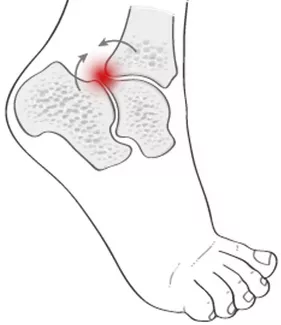
The ankle joint is the articulation between the shin bone (tibia) and the talus. It allows movements of dorsiflexion and plantarflexion. An ankle impingement occurs when structures become trapped within the joint during movement, restricting motion and causing pain. These impinging structures may consist of bony prominences (osteophytes) or soft tissues such as ligaments or the synovial membrane.
Two main types of ankle impingement are recognised:
- Anterior ankle impingement, when the impinging structures are located at the front of the ankle;
- Posterior ankle impingement, when the impingement occurs at the back of the ankle.
Causes and Risk Factors for Posterior Ankle Impingement
Ankle Surgery Specialist in Hauts-de-Seine (92)
Posterior ankle impingement most commonly develops following recurrent ankle sprains and repeated ankle trauma.
These injuries damage the ligaments and surrounding bone. During healing, excessive scar tissue, ligament thickening and bony overgrowth may develop. These enlarged tissues can become trapped within the posterior aspect of the joint during movement, resulting in painful pinching and mechanical blockage.
Posterior ankle impingement is particularly common in ballet dancers, individuals who frequently wear high-heeled shoes, and football players following a small posterior fracture of the talus caused by forced plantarflexion. The detached bone fragment may subsequently impinge against the surrounding posterior structures.
The presence of an os trigonum, an accessory bone located behind the talus, is another recognised anatomical factor that predisposes patients to posterior ankle impingement.
Posterior Ankle Impingement in Rueil-Malmaison
Ankle Surgery in Hauts-de-Seine
Symptoms of Posterior Ankle Impingement
Posterior ankle impingement typically presents with pain at the back of the ankle accompanied by episodes of mechanical locking, particularly during forced plantarflexion.
Pain is frequently associated with a sensation of ankle instability resulting from ligament injuries sustained during previous ankle sprains.
Without appropriate treatment, longstanding impingement may progressively damage the joint and ultimately contribute to the development of ankle osteoarthritis.
Diagnosis of Posterior Ankle Impingement
The consultation begins with a detailed medical history to identify potential causes of the impingement and evaluate symptoms including pain, clicking, locking and their impact on daily activities.
Weight-bearing radiographs of the foot and ankle help identify bony impingement, assess the condition of the articular cartilage and detect the presence of an os trigonum or previous fracture of the posterior talus. Radiographs also allow assessment of overall foot alignment and identification of any associated bony abnormalities.
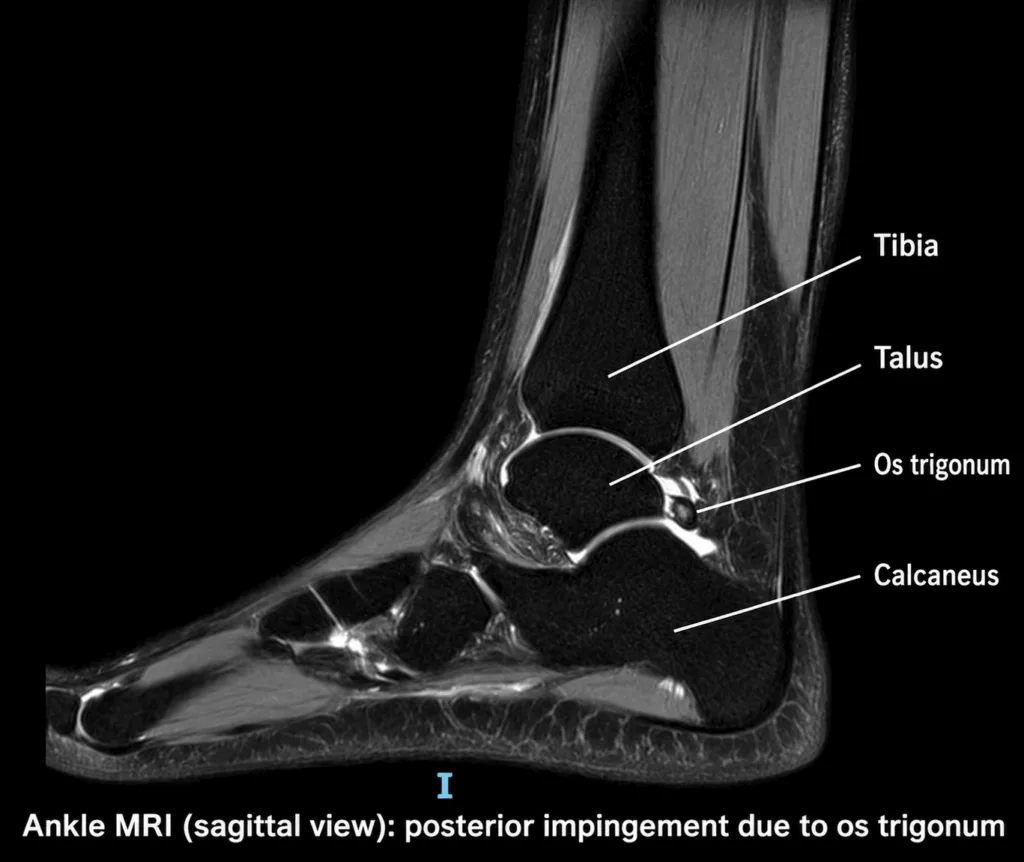
CT arthrography and magnetic resonance imaging (MRI) remain the reference imaging investigations. They provide precise visualisation of the bony prominences and soft tissue structures responsible for the impingement while also evaluating the condition of the ankle ligaments and cartilage.
Treatment of Posterior Ankle Impingement
Initial management is conservative.
Treatment typically combines temporary activity modification with anti-inflammatory medication. In selected cases, a corticosteroid injection into the site of impingement may provide effective symptom relief.
When conservative treatment fails to relieve symptoms and the patient remains limited in daily or sporting activities, surgical treatment may be recommended.
The procedure is usually performed arthroscopically and consists of removing the bony prominences and soft tissues responsible for the impingement, thereby restoring ankle mobility and relieving pain.