Ankle Replacement Surgery in Hauts-de-Seine

Ankle Surgery

What is an ankle replacement?

Dr Simon Tournemine in Hauts-de-Seine (92)

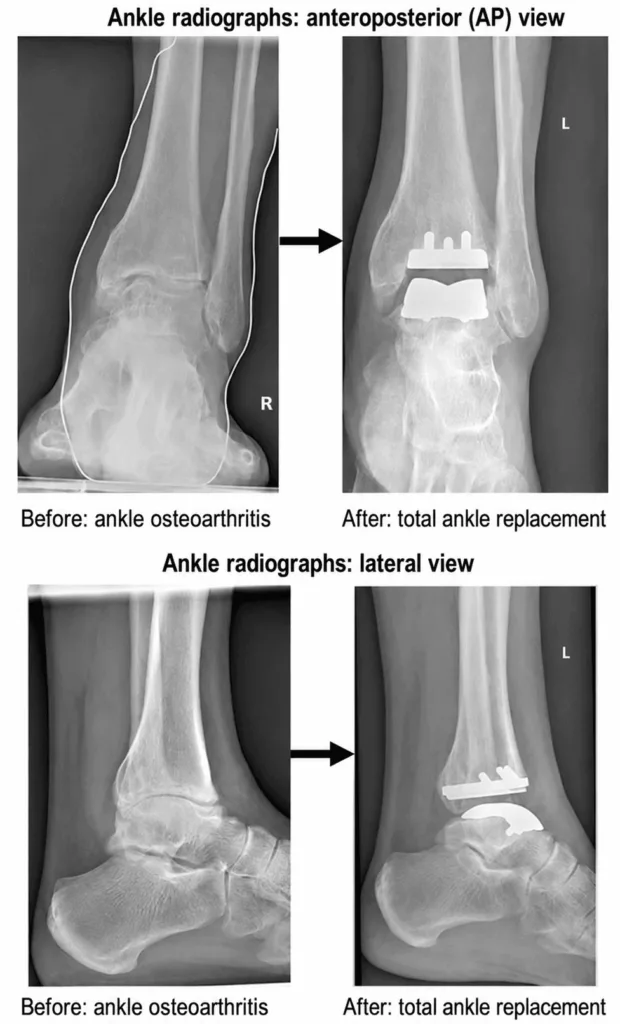
Ankle replacement surgery involves replacing the worn surfaces of the ankle joint with a prosthetic joint.

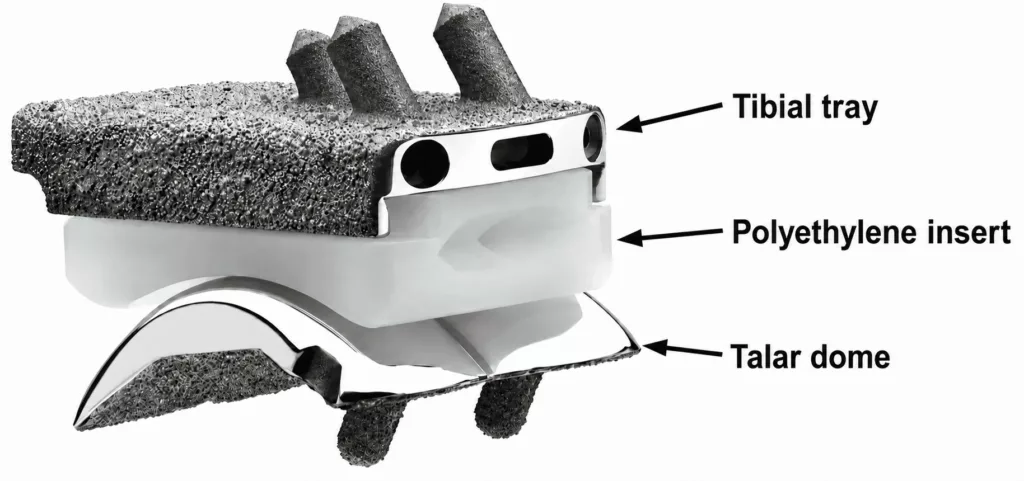
This artificial joint consists of three components designed to reproduce the shape and function of a healthy ankle. A metallic talar component is fixed to the talus, a tibial component is implanted on the tibia, and a mobile polyethylene bearing is positioned between them, recreating the normal anatomy and movement of the ankle.

When is ankle replacement recommended and why?

Specialist in Ankle Surgery in Hauts-de-Seine (92)

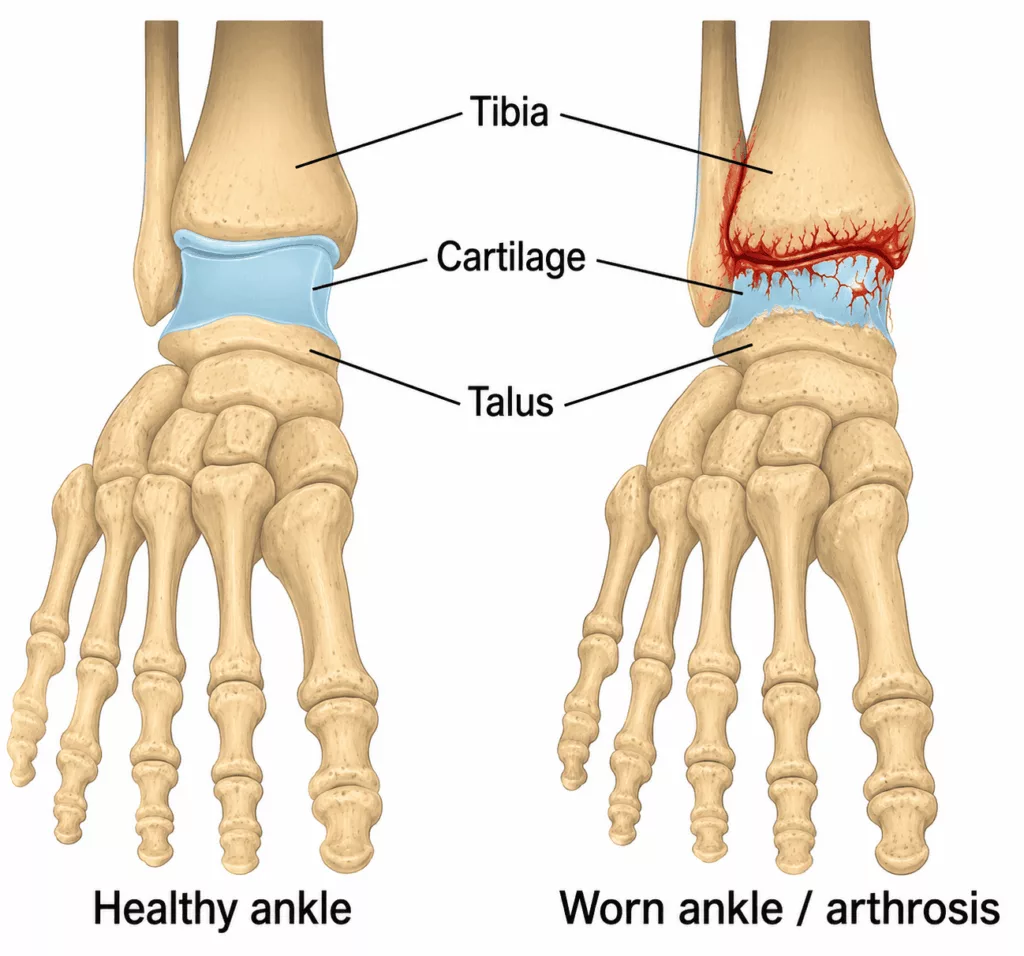
Ankle osteoarthritis is a progressive degenerative condition affecting the ankle joint. No treatment can reverse cartilage degeneration, and the natural course of the disease is gradual deterioration. Various conservative treatments may help relieve pain and slow progression, including lifestyle modifications, pain-relieving medication, anti-inflammatory drugs and corticosteroid injections.

However, when joint degeneration becomes advanced and these treatments no longer provide adequate symptom relief, total ankle replacement may be recommended.

The aim of surgery is to relieve pain, restore ankle mobility and enable patients to return to their normal daily activities with improved function and comfort.

Ankle Replacement in Rueil-Malmaison

Ankle Surgery in Hauts-de-Seine

The operation is performed through an anterior approach using an incision of approximately 15 cm over the front of the ankle.

The damaged joint surfaces are removed, and the bone is carefully prepared to receive the prosthetic components. Implant positioning is individually planned and tailored to your anatomy. A preoperative CT scan is performed to create a three-dimensional reconstruction of your ankle, allowing personalised surgical planning and optimal prosthesis positioning.

The procedure takes approximately 60 minutes.

It is performed under either general anaesthesia or spinal anaesthesia (where only the legs are anaesthetised). The most appropriate anaesthetic technique will be discussed with your anaesthetist during your preoperative consultation.

Hospitalisation generally lasts one to two days.

Following surgery, the ankle is placed in a removable walking boot, purchased beforehand from your pharmacy, or alternatively in a resin boot applied in the operating theatre. This protects the operated joint for approximately two weeks while the soft tissues heal.

Dressings are changed every two days for approximately two weeks.

Pain management is carefully monitored to maximise comfort and facilitate early rehabilitation. Anticoagulant treatment is prescribed for four weeks to reduce the risk of deep vein thrombosis.

The prosthesis is immediately stable enough to allow walking on the day of surgery. We follow Enhanced Recovery After Surgery (ERAS) protocols, and a physiotherapist will assist you in walking and beginning rehabilitation while wearing the walking boot on the day of the operation.

Early mobilisation combined with physiotherapy is a key factor in achieving an optimal recovery, helping to preserve muscle function while restoring joint mobility.

No specific movements or activities are formally prohibited.

Walking sticks or crutches may be helpful during the first few weeks but are usually discontinued rapidly.

Patients generally return home the day after surgery, although admission to a rehabilitation centre may occasionally be recommended to restore independence before returning home. Physiotherapy, either at home or in a rehabilitation facility, should continue for approximately two to three months.

Driving is usually possible after approximately six weeks.

Time away from work is generally around two months, although office-based occupations may often be resumed sooner. These recovery periods are average estimates and vary according to each patient’s individual progress.

Long-term clinical and radiographic follow-up is essential to monitor the prosthesis and identify any potential abnormalities at an early stage.

Every precaution is taken to ensure the safest possible outcome. Nevertheless, as with any surgical procedure, complications, although uncommon, may occur.

Potential complications include:

  • Deep vein thrombosis (DVT) and pulmonary embolism: uncommon complications minimised through one month of anticoagulant treatment.
  • Exacerbation of pre-existing medical conditions: such as heart failure or diabetes. Careful postoperative monitoring is provided by the anaesthetic team.
  • Prosthetic joint infection (risk below 1%): this may require further surgery to wash out or replace the prosthesis or, in certain cases, conversion to ankle arthrodesis, followed by prolonged antibiotic treatment.
  • Reduced ankle mobility and postoperative stiffness: these may occur if rehabilitation is not carried out appropriately.
  • Haematoma: postoperative bleeding may occasionally lead to the formation of a haematoma requiring drainage or, more rarely, blood transfusion.
  • Injury to small superficial sensory nerve branches: this uncommon complication may result in reduced sensation in certain areas around the ankle.
  • Complex Regional Pain Syndrome (CRPS): a rare and poorly understood painful inflammatory condition that may persist for several months, or occasionally years, requiring specialised rehabilitation, additional investigations and, in some cases, dedicated pain management. Its onset, progression and long-term consequences remain unpredictable.

These represent the principal recognised risks but do not constitute an exhaustive list. Other rare or exceptional complications may occur. Not every possible complication can be listed, and your surgeon will be happy to discuss any specific concerns relating to your individual case.

Thanks to modern-generation ankle prostheses and patient-specific three-dimensional surgical planning, excellent outcomes are achieved in the majority of cases.

Weight-bearing walking begins immediately after surgery. Pain progressively subsides, stiffness improves, and ankle mobility gradually returns over the following weeks.

Total ankle replacement generally allows patients to progressively resume their personal, professional and sporting activities within approximately two months.

Activities such as cycling, swimming and golf are not only possible but are often encouraged.

The average lifespan of an ankle prosthesis is approximately 15 years, although this varies according to several factors, including the patient’s age, body weight, activity level and overall health.