
Hallux Rigidus (Great Toe Osteoarthritis) in Hauts-de-Seine
Foot Surgery
What is hallux rigidus (great toe osteoarthritis)?
Dr Simon Tournemine in Hauts-de-Seine (92)
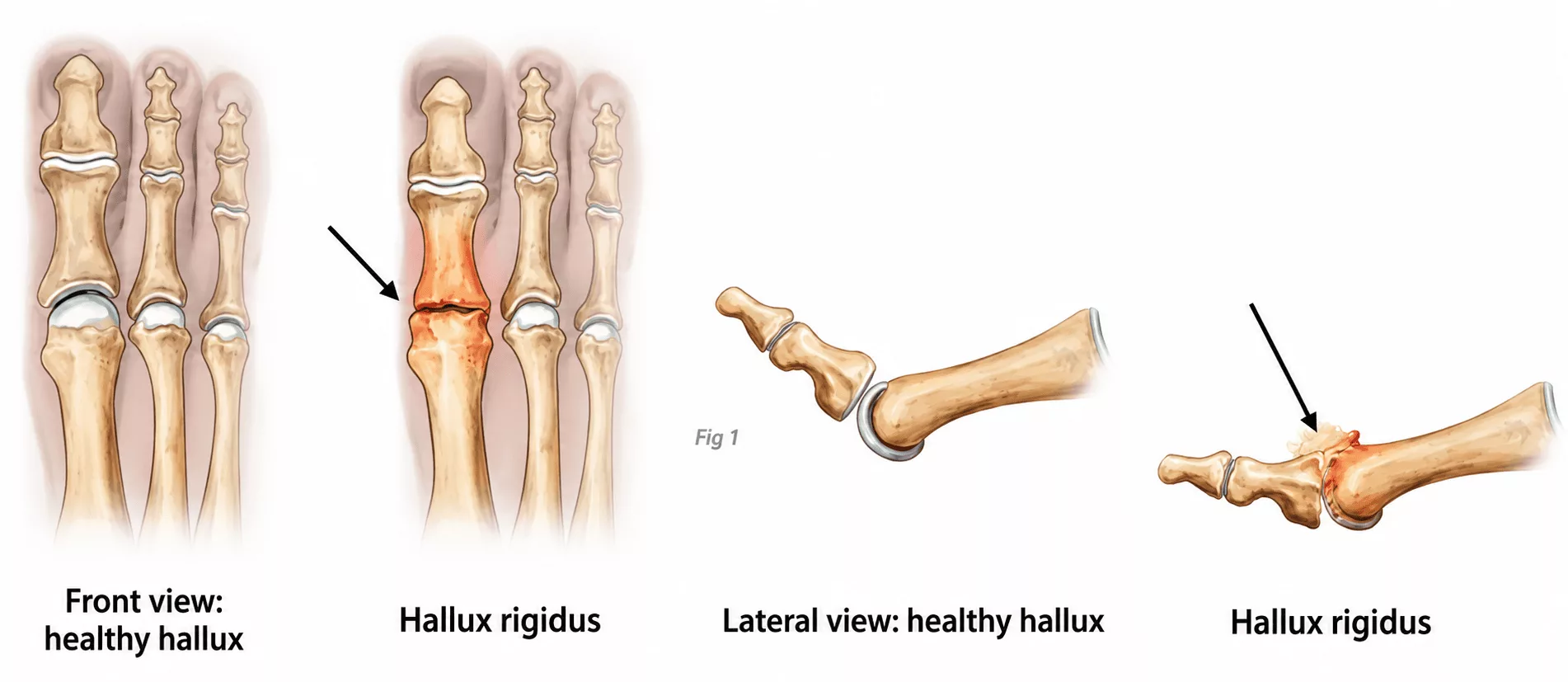
The first metatarsophalangeal (MTP) joint, located at the base of the great toe, connects the first metatarsal to the proximal phalanx. The joint surfaces are covered with cartilage, allowing the bones to glide smoothly and painlessly during movement.
Hallux rigidus is a degenerative condition characterised by the progressive wear of this articular cartilage, resulting in osteoarthritis of the first metatarsophalangeal joint. As the disease progresses, the joint gradually becomes stiff, painful and deformed.
Causes and risk factors for hallux rigidus
Specialist in Foot Surgery in Hauts-de-Seine (92)
Hallux rigidus predominantly affects men.
In most cases, it develops as a result of repetitive microtrauma, particularly in sports that place significant stress on the forefoot, such as football, dance and long-distance running.
Regular use of high-heeled shoes or narrow-fitting footwear may also contribute to the development of the condition.
Less commonly, hallux rigidus may occur following a fracture, joint infection, or other conditions affecting the first metatarsophalangeal joint.
Hallux Rigidus (Great Toe Osteoarthritis) in Rueil-Malmaison
Foot Surgery in Hauts-de-Seine
Preventing hallux rigidus
To help reduce the risk of developing hallux rigidus or slow its progression, it is advisable to minimise repetitive stress and excessive pressure on the great toe.
Maintaining a healthy body weight, wearing appropriately fitting footwear and choosing activities that place less repetitive impact on the forefoot may all help preserve joint function.
Symptoms of hallux rigidus
Typical symptoms of hallux rigidus include:
- Joint stiffness: movement of the great toe gradually becomes increasingly restricted, making everyday activities more difficult.
- Joint deformity: progressive enlargement of the joint due to the development of bony prominences (osteophytes), creating painful bumps that make footwear uncomfortable.
- Pain: increasing pain in the great toe, particularly during walking and weight-bearing activities, which can significantly impair mobility.
Diagnosis of hallux rigidus
The consultation begins with a detailed medical history to identify the possible causes and risk factors associated with hallux rigidus. Particular attention is paid to the impact of symptoms on daily life, including pain, walking ability and difficulties wearing shoes.
Clinical examination identifies the painful areas of the foot, evaluates the severity of the deformity, measures stiffness of the first metatarsophalangeal joint and assesses any associated deformities affecting the lesser toes.
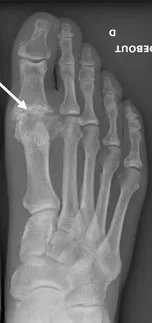
Weight-bearing anteroposterior and lateral radiographs of the foot are routinely obtained. These assess the degree of joint degeneration and deformity affecting the great toe, while also evaluating the effect on the neighbouring toes and overall forefoot alignment.
Treatment of hallux rigidus
Without treatment, hallux rigidus gradually progresses. The great toe becomes increasingly stiff, painful and deformed over time.
Initial management is conservative and may include routine podiatric care, appropriately fitting footwear, pain-relieving medication, anti-inflammatory drugs, and, where appropriate, intra-articular corticosteroid injections to provide temporary relief during painful flare-ups.
When conservative treatment no longer provides adequate symptom control, and pain or difficulty wearing shoes begins to interfere with everyday life, surgical treatment may be recommended to correct the deformity and relieve pain.