
Claw Toes in Hauts-de-Seine
Foot Surgery
What are claw toes?
Dr Simon Tournemine in Hauts-de-Seine (92)
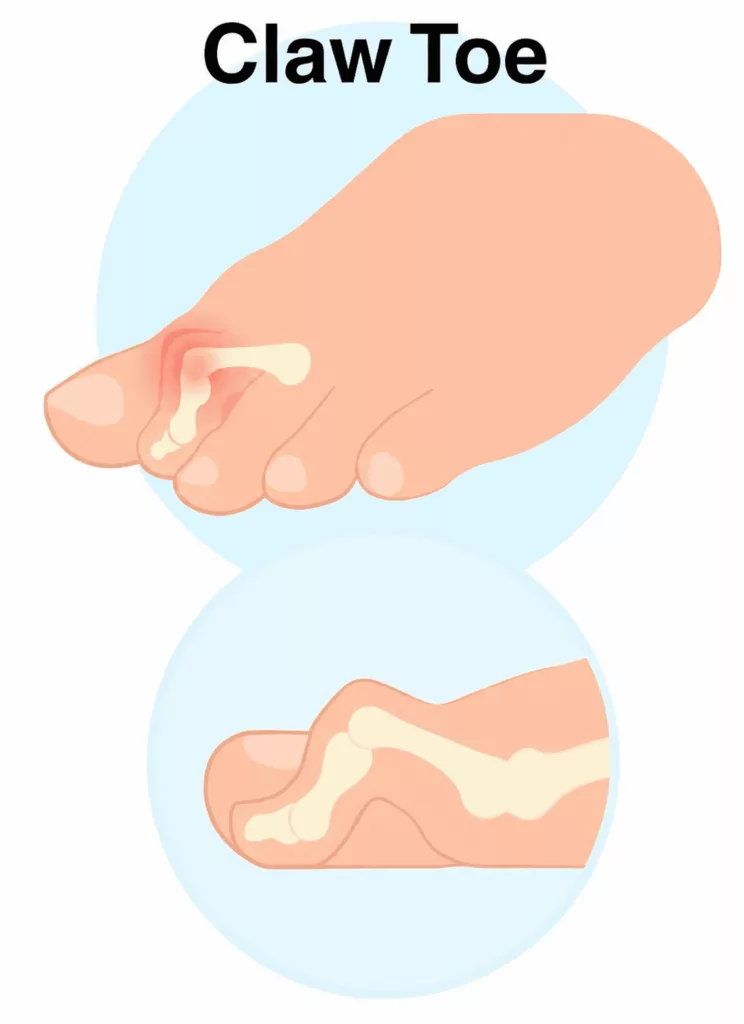
Claw toes are a common foot deformity that predominantly affects women over the age of 50. Under normal circumstances, the toes remain aligned in a relatively straight position. However, when there is an imbalance in the tension of the tendons controlling the toes, they gradually curl into a claw-like position.
As the deformity progresses, the affected toe rubs against footwear, causing increasing discomfort and pain. Repeated friction leads to the development of corns and calluses (areas of thickened skin) over pressure points. These lesions can become extremely painful and, in some cases, may ulcerate or become infected.
Causes and risk factors for claw toes
Specialist in Foot Surgery in Hauts-de-Seine (92)
Several factors may contribute to the development of claw toes, including:
- footwear that is too narrow or the regular use of high-heeled shoes;
- an excessively long second metatarsal;
- secondary deformity resulting from a neighbouring condition, most commonly hallux valgus;
- excess body weight;
- ligamentous laxity (joint hypermobility);
- neurological disorders;
- inflammatory rheumatic diseases, particularly rheumatoid arthritis.
Claw Toes in Rueil-Malmaison
Foot Surgery in Hauts-de-Seine
Preventing claw toes
Good foot care may help reduce the risk of developing claw toes or slow their progression.
The following measures are recommended:
- wear footwear that is wide, soft and well adapted to the shape of your feet;
- avoid wearing high heels whenever possible;
- attend regular podiatry appointments to prevent excessive build-up of hard skin;
- maintain a healthy body weight to reduce pressure on the forefoot.
Symptoms of claw toes
The earliest symptom is often discomfort when wearing shoes or walking.
As the deformity progresses, corns and calluses develop over the top of the affected toe due to repeated friction against footwear. These areas of thickened skin are not only painful and uncomfortable but may also become infected and develop into painful ulcers if left untreated.
Diagnosis of claw toes
Your consultation begins with a detailed medical history to identify the underlying causes and risk factors contributing to the deformity. Particular attention is paid to the impact of symptoms on daily life, including pain, walking ability and difficulties wearing shoes.
Clinical examination identifies painful areas of the foot, assesses calluses and pressure points, and evaluates overall foot alignment and associated biomechanical abnormalities.
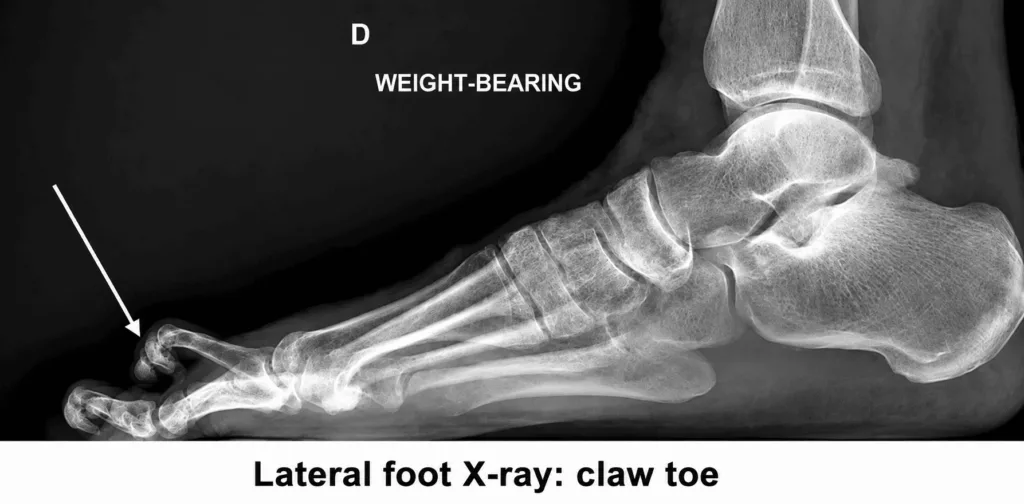
Weight-bearing anteroposterior and lateral foot radiographs are routinely obtained. These provide an overall assessment of foot morphology and help identify associated structural abnormalities, such as flatfoot, high-arched (cavus) foot, or other biomechanical disorders that may contribute to the claw toe deformity.
No additional investigations are usually required.
Treatment of claw toes
The first step in treatment is to adapt footwear. Shoes with a wider toe box and softer materials can significantly reduce pressure and improve comfort.
Podiatric treatment may also be recommended, including the fabrication of custom silicone orthoses to reduce friction and relieve pressure.
If symptoms persist despite these conservative measures, surgical correction should be considered.
The aim of surgery is to correct the deformity and restore proper alignment of the affected toe, relieving pain and improving both foot function and footwear comfort.