
Morton's Neuroma in Hauts-de-Seine
Foot Surgery
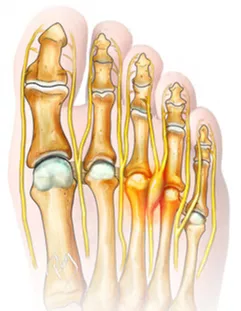
What is Morton's neuroma?
Dr Simon Tournemine in Hauts-de-Seine (92)
Morton’s neuroma is a common condition characterised by pain in the forefoot and toes. Sensation in the toes is provided by nerves that run between the metatarsal bones on the plantar aspect of the foot. These intermetatarsal nerves divide into digital branches that supply sensation to each toe.
At the point where these nerves divide, repeated mechanical stress and chronic compression can lead to thickening of the nerve tissue. The affected nerve becomes painful and may cause numbness or altered sensation in the toes.
Morton’s neuroma most commonly develops between the third and fourth toes, although it may also occur in the space between the second and third toes.
Causes and risk factors for Morton's neuroma
Specialist in Foot Surgery in Hauts-de-Seine (92)
The exact cause of Morton’s neuroma remains incompletely understood.
The condition affects approximately three women for every man and is thought to be associated with several contributing factors, including:
- wearing tight-fitting shoes;
- frequent use of high-heeled footwear;
- repeated trauma or excessive loading of the forefoot.
Morton's Neuroma in Rueil-Malmaison
Foot Surgery in Hauts-de-Seine
Symptoms of Morton's neuroma
Morton’s syndrome is characterised by a combination of symptoms, including:
- pain beneath the forefoot when walking;
- electric shock-like sensations radiating into the toes;
- numbness affecting the toes;
- sharp, stabbing pain beneath the forefoot, often aggravated by wearing narrow shoes.
Diagnosis of Morton's neuroma
Your consultation begins with a detailed medical history to identify potential causes and risk factors for Morton’s neuroma. The impact of symptoms on daily activities, including pain and difficulties wearing shoes, is also carefully assessed.
Clinical examination identifies the painful areas of the forefoot and evaluates overall foot alignment and biomechanics.
Standard weight-bearing anteroposterior and lateral foot radiographs are obtained to exclude other potential causes of forefoot pain.
Magnetic resonance imaging (MRI) is the reference investigation for confirming the diagnosis. It accurately demonstrates the presence and location of the neuroma while helping exclude alternative conditions that may produce similar symptoms.
Treatment of Morton's neuroma
Initial management consists of conservative treatment.
Custom orthotic insoles are prescribed to offload the affected intermetatarsal space and reduce pressure on the neuroma, thereby relieving symptoms. Corticosteroid injections around the neuroma may also provide effective pain relief in selected patients.
When symptoms persist despite appropriate non-surgical treatment, surgical management is recommended.
The procedure consists of removing the affected nerve (neurectomy) to relieve pain and improve function.