
Metatarsalgia in Hauts-de-Seine
Foot Surgery
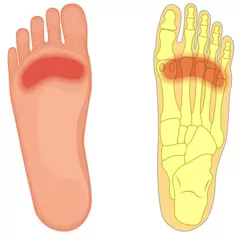
What is metatarsalgia?
Dr Simon Tournemine in Hauts-de-Seine (92)
The forefoot is composed of five metatarsal bones, which articulate with the toe phalanges. The metatarsal heads form the principal weight-bearing area of the forefoot during standing and walking.
Metatarsalgia refers to pain and inflammation affecting the ball of the foot, caused by excessive pressure beneath one or more metatarsal heads. This common condition can make walking, prolonged standing and sporting activities increasingly uncomfortable, significantly affecting daily quality of life.
Causes and risk factors for metatarsalgia
Specialist in Foot Surgery in Hauts-de-Seine (92)
Metatarsalgia is a very common condition with numerous contributing factors, including:
- a short first metatarsal or a long second metatarsal;
- wearing narrow shoes that compress the forefoot;
- excess body weight;
- hallux valgus, which alters weight distribution through the first metatarsal;
- foot deformities such as pes cavus (high-arched foot) or pes planus (flat foot);
- sports involving repetitive running or jumping;
- frequent use of high-heeled footwear;
- joint disorders such as osteoarthritis or rheumatoid arthritis;
- ageing, as the plantar fat pad that cushions the sole of the foot gradually becomes thinner over time;
- stress fractures involving the toes or metatarsal bones;
- tightness of the posterior muscle chain.
Another condition known as Morton’s neuroma may also produce symptoms similar to those of metatarsalgia.
Metatarsalgia in Rueil-Malmaison
Foot Surgery in Hauts-de-Seine
Preventing metatarsalgia
Looking after your feet may help reduce the risk of developing metatarsalgia:
- wear soft, well-fitting shoes adapted to the shape of your feet;
- avoid high heels whenever possible;
- use cushioned insoles to reduce pressure beneath the forefoot;
- attend regular podiatry appointments to prevent excessive callus formation;
- maintain a healthy body weight;
- stretch and warm up properly before exercise.
Symptoms of metatarsalgia
Metatarsalgia typically causes intense pain beneath the ball of the foot.
The pain is often described as a burning sensation that develops while walking or after prolonged standing. Some patients also experience numbness or altered sensation in the forefoot.
Areas of callus formation (thickened skin) may also develop beneath the metatarsal heads due to chronic overload.
Diagnosis of metatarsalgia
Your consultation begins with a detailed medical history to identify potential causes and risk factors for metatarsalgia. The impact of symptoms on daily activities, including pain and difficulties with footwear, is also carefully assessed.
Clinical examination identifies the painful areas of the foot, evaluates callus formation, and assesses overall foot alignment and biomechanics.
Weight-bearing anteroposterior and lateral foot radiographs are obtained to evaluate the overall morphology of the foot, identify flat feet, high-arched feet or other biomechanical abnormalities, and detect previous fractures, differences in metatarsal length or signs of osteoarthritis.
In selected cases, magnetic resonance imaging (MRI) may be requested to investigate a stress fracture, Morton’s neuroma or an associated bursitis.
Treatment of metatarsalgia
Initial management is based on conservative treatment, including:
- weight reduction where appropriate;
- wearing soft, flat and well-fitting footwear;
- podiatric care to reduce painful calluses;
- custom-made orthotic insoles incorporating a retrocapital metatarsal pad to redistribute plantar pressure;
- stretching exercises targeting the posterior muscle chain.
During painful flare-ups, anti-inflammatory medication combined with local ice application may also be prescribed.
Without appropriate treatment, metatarsalgia generally progresses, with increasing pressure beneath the forefoot and worsening pain over time.
When conservative management no longer provides sufficient relief and symptoms begin to interfere with everyday life, surgical treatment may be recommended. The aim of surgery is to restore a more even distribution of weight across the forefoot, thereby relieving pain and improving long-term foot function.