First Metatarsophalangeal Joint Arthrodesis in Hauts-de-Seine

Foot Surgery

What is first metatarsophalangeal joint arthrodesis?

Dr Simon Tournemine in Hauts-de-Seine (92)

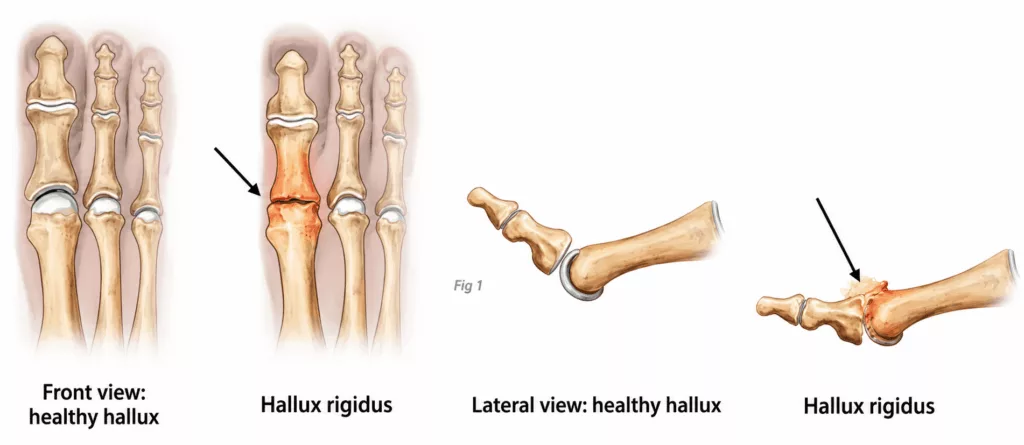
The first metatarsophalangeal (MTP) joint is located at the base of the great toe, connecting the first metatarsal to the proximal phalanx. This joint is covered with articular cartilage, allowing the bones to glide smoothly and painlessly over one another.

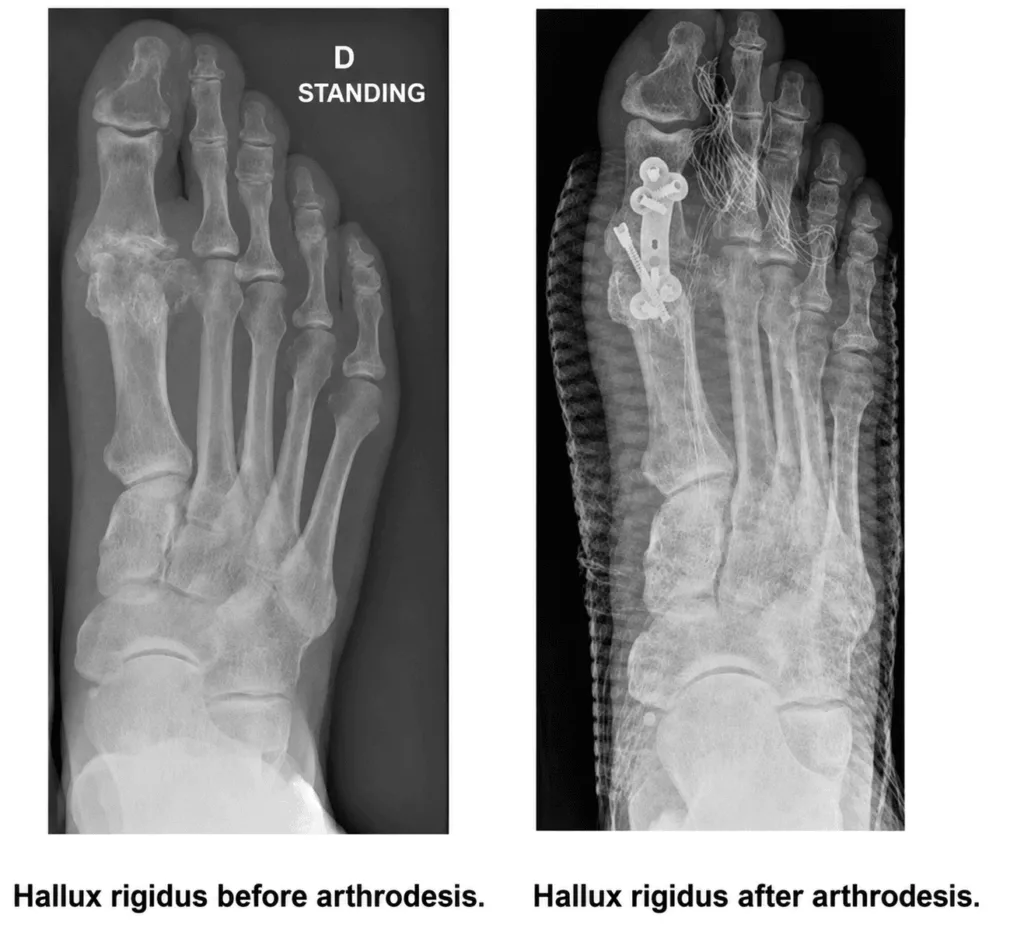
Hallux rigidus is a form of osteoarthritis affecting this joint. As the cartilage progressively wears away, the joint becomes increasingly stiff, painful and deformed.

First metatarsophalangeal joint arthrodesis

Specialist in Foot Surgery in Hauts-de-Seine (92)

Several surgical procedures are available for the treatment of hallux rigidus, depending on the severity of joint degeneration.

In cases of mild osteoarthritis, surgery may simply involve removing the dorsal bony prominence (exostosis) responsible for pain. This procedure is known as a cheilectomy.

For more advanced hallux rigidus, joint replacement may be considered. While a prosthesis can relieve pain while preserving joint motion, it is generally not recommended, as medium-term outcomes are often unsatisfactory and revision surgery to a fusion procedure is frequently required.

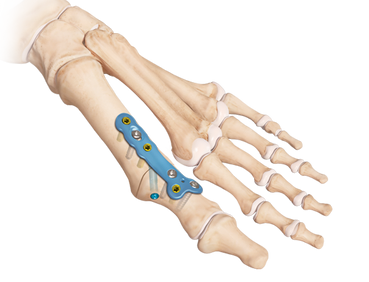
For severe hallux rigidus, the gold-standard treatment is arthrodesis. Arthrodesis means fusion of the joint. The damaged cartilage is removed, and the joint is permanently fixed in the optimal position using a metal plate and screws. These implants are generally well tolerated and do not require routine removal.

Certain severe deformities of the great toe, including hallux valgus or hallux varus, may also require fusion of the first metatarsophalangeal joint.

First Metatarsophalangeal Joint Arthrodesis in Rueil-Malmaison

Foot Surgery in Hauts-de-Seine

Initial treatment is conservative and may include podiatric care, appropriate footwear, pain-relieving medication, non-steroidal anti-inflammatory drugs (NSAIDs) and, where appropriate, intra-articular corticosteroid injections. These measures usually provide temporary relief during painful flare-ups.

When conservative treatment no longer adequately controls pain and daily activities or footwear become significantly affected, surgery is recommended to correct the deformity and eliminate pain.

The procedure is performed as day-case (outpatient) surgery, allowing you to return home on the day of the operation.

A sterile dressing is applied in the operating theatre and must remain in place for two weeks without being removed.

A comprehensive pain management programme is implemented and closely monitored to maximise comfort and promote recovery.

Anticoagulant treatment is prescribed for two weeks to reduce the risk of deep vein thrombosis.

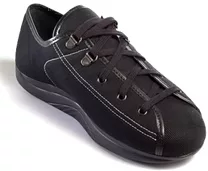
Walking is permitted immediately while wearing a PODONOV forefoot offloading shoe, which should be worn for six weeks.
Following surgery, swelling (oedema) of the foot and toes is entirely normal. Keeping the foot elevated and allowing adequate rest will help the swelling resolve more quickly.

Time away from work is generally around three weeks, although this varies depending on the nature of your occupation. Patients with office-based jobs may often return earlier.

Sporting activities can usually be resumed after approximately three months.

These recovery times are average estimates and may vary between individuals.

Long-term clinical and radiographic follow-up is essential to monitor healing and detect any potential abnormalities.

Every precaution is taken to ensure the best possible outcome. Nevertheless, as with any surgical procedure, rare complications may occur, including:

  • deep vein thrombosis (DVT) and pulmonary embolism, minimised by prescribing anticoagulant treatment for two weeks after surgery;
  • worsening of pre-existing medical conditions such as heart failure or diabetes, with careful postoperative monitoring provided by the anaesthetic team;
  • infection (risk below 1%). Should this occur, further surgery may be required to wash out the surgical site, followed by antibiotic treatment;
  • stiffness and reduced mobility of the toes if postoperative rehabilitation is not carried out appropriately;
  • haematoma, which may occasionally require drainage or, exceptionally, blood transfusion;
  • injury to small sensory nerve branches supplying the foot, potentially resulting in areas of reduced sensation affecting the toes;
  • non-union (pseudoarthrosis), where the bones fail to fuse, occasionally requiring further surgery to stimulate bone healing;
  • altered weight-bearing during walking, which may require revision surgery or the use of a custom orthotic insole.

Complex Regional Pain Syndrome (CRPS) is a painful inflammatory condition that remains poorly understood. It is treated medically and may persist for several months, or in some cases several years, requiring specialised rehabilitation, further investigations and, occasionally, dedicated pain management. Both its onset and long-term outcome remain unpredictable.

These represent the principal potential complications, although this list is not exhaustive. Rare and exceptional complications may also occur. It is not possible to describe every potential risk in advance. Your surgeon will be pleased to discuss your individual situation and answer any questions you may have.

Osteoarthritis is a degenerative condition of the joint for which there is no curative treatment. Without surgery, hallux rigidus progressively worsens, leading to increasing stiffness, pain and deformity of the great toe.

Arthrodesis corrects the deformity while reliably relieving pain.

Although the joint of the great toe is permanently fused, this does not usually impair normal walking. Activities such as skiing, cycling, tennis and golf remain possible, provided that the other joints of the foot are healthy.

The procedure provides excellent outcomes, with approximately 90% of patients becoming pain-free and successfully returning to their usual daily and sporting activities.