
Morton’s Neuroma Excision in Hauts-de-Seine
Foot Surgery
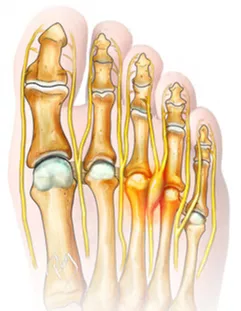
What is Morton’s neuroma excision?
Dr Simon Tournemine in Hauts-de-Seine (92)
Morton’s neuroma is a common condition of the forefoot characterised by pain beneath the foot and radiating into the toes during walking. It most commonly develops between the third and fourth toes, although it may also occur between the second and third toes.
Sensation in the toes is provided by the interdigital nerves, which run between the metatarsal bones before dividing into branches supplying each toe. At this point of division, repeated mechanical stress and chronic compression can lead to thickening of the nerve. The damaged nerve then becomes a source of pain, burning sensations and numbness affecting the toes.
The exact cause of Morton’s neuroma remains uncertain. It affects women approximately three times more often than men and is thought to be associated with tight footwear, high-heeled shoes, and repeated mechanical overload of the forefoot.
Morton’s neuroma excision
Specialist in Foot Surgery in Hauts-de-Seine (92)
Surgical treatment consists of removing the affected nerve segment (Morton’s neuroma excision).
A skin incision of approximately 4 cm is made on the dorsum (top) of the foot directly over the neuroma. The affected portion of the nerve is divided at both ends and completely excised.
The procedure typically takes around 15 minutes.
Surgery is performed under either general anaesthesia or regional anaesthesia (where only the leg is anaesthetised). The most appropriate anaesthetic technique will be determined during your preoperative consultation with the anaesthetist.
The operation is performed as day-case (outpatient) surgery, allowing you to return home the same day.
Morton’s Neuroma Excision in Rueil-Malmaison
Foot Surgery in Hauts-de-Seine
When should Morton’s neuroma excision be performed?
Initial management is conservative.
This includes wearing appropriate footwear, together with custom orthotic insoles designed to offload pressure beneath the neuroma. Corticosteroid injections around the neuroma may also provide temporary symptom relief.
When these non-operative treatments fail to adequately control symptoms, surgical excision is recommended.
Postoperative care and rehabilitation following Morton’s neuroma excision
The procedure is performed as day-case surgery, and patients usually return home on the day of the operation.
A sterile dressing is applied in the operating theatre and must remain in place for two weeks without being removed.
Pain management is carefully monitored to maximise comfort and support early recovery.
Anticoagulant treatment is prescribed for two weeks to reduce the risk of deep vein thrombosis.
Walking is permitted immediately, wearing normal footwear as tolerated.
Following surgery, swelling (oedema) of the foot and toes is expected and represents a normal part of healing. During the first two weeks, resting regularly and elevating the foot will help reduce postoperative swelling.
Patients are encouraged to begin self-directed toe mobilisation exercises immediately in order to maintain flexibility.
Most patients require approximately two weeks away from work, although this varies according to the nature of their occupation. Office-based work may often be resumed sooner.
Sporting activities can usually be restarted after approximately one month.
These recovery times are average estimates and may vary depending on individual healing.
Long-term clinical follow-up remains important to monitor recovery and identify any potential complications.
Risks and complications of Morton’s neuroma excision
Every precaution is taken to optimise healing and minimise complications. Nevertheless, as with any surgical procedure, certain risks remain, although they are uncommon:
- deep vein thrombosis (DVT) and pulmonary embolism, with the risk reduced through anticoagulant treatment for two weeks following surgery;
- infection (risk below 1%). Should infection occur, additional surgery to clean the operative site together with antibiotic treatment may be required;
- haematoma, caused by postoperative bleeding, which may occasionally require surgical evacuation.
Complex Regional Pain Syndrome (CRPS) is a painful inflammatory condition that remains poorly understood. It is treated medically and may persist for several months, or occasionally several years, requiring specialised rehabilitation, additional investigations and, in some cases, dedicated pain management. Both its occurrence and long-term evolution remain unpredictable.
These represent the principal potential complications, although this list is not exhaustive. Rare and exceptional complications may also occur. Not every possible complication can be anticipated in advance. Your surgeon will discuss your individual case and answer any questions during your consultation.
Results of Morton’s neuroma excision
Without treatment, Morton’s neuroma generally progresses, with worsening pain and increasing functional limitation.
Approximately 90% of patients experience significant pain relief following surgical excision.
As the diseased nerve is removed during the procedure, a permanent reduction in sensation is expected in the web space between the affected toes. This sensory change is generally well tolerated and rarely interferes with normal daily activities.