
Every joint replacement is subjected to mechanical stresses that gradually lead to wear of the materials from which it is made. Total knee replacements and partial knee replacements (unicompartmental knee replacements) are no exception.
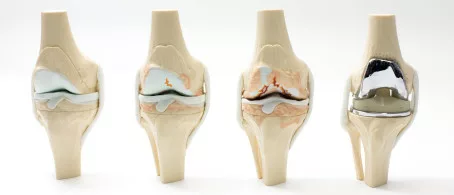
WHY DOES A KNEE REPLACEMENT HAVE A LIMITED LIFESPAN?
A knee replacement is composed of two types of materials:
A metal alloy fixed to the bony surfaces of the tibia and femur. These components are generally made from titanium or cobalt-chromium alloy.
A high-density polyethylene insert, which forms the interface between the two metal components and acts as an “artificial cartilage”.
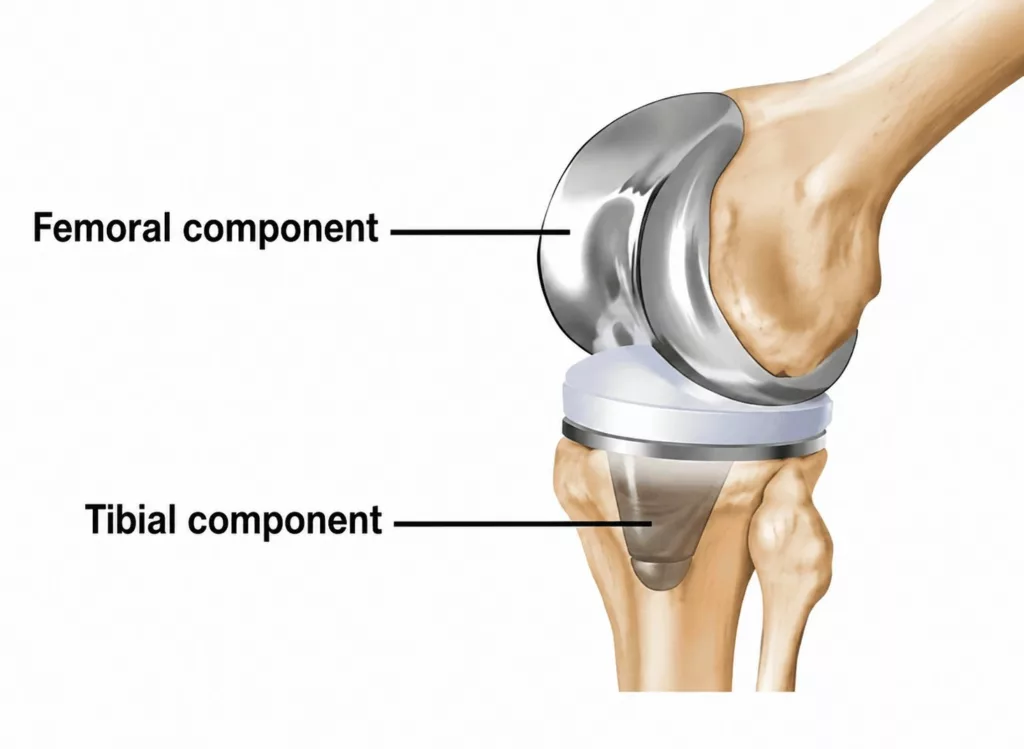
With every step, these components are subjected to the body’s weight, resulting in gradual wear over the years.
KNEE REPLACEMENT: AN ESTIMATED LIFESPAN OF 25 YEARS
A recent study published in The Lancet compiled data from clinical studies and national joint replacement registries. Among 300,000 total knee replacements, more than 8 out of 10 prostheses remained functional for approximately 25 years.
For partial knee replacements (unicompartmental knee replacements), the results were slightly lower, with 7 out of 10 prostheses remaining functional after 25 years.
WHICH FACTORS CAN AFFECT THE LIFESPAN OF A UNICOMPARTMENTAL KNEE REPLACEMENT?
The lifespan of a knee replacement depends on the mechanical stresses to which it is subjected. Two main factors may reduce its longevity:
- Excess body weight (BMI >35);
- Excessive levels of physical activity;
- Participation in high-impact sports such as running, football, squash, martial arts or rugby.
In these situations, premature wear of the prosthesis may occur.
HOW CAN YOU TAKE CARE OF YOUR KNEE REPLACEMENT?
Avoid excess body weight: Maintaining a healthy weight reduces the pressure exerted on the knee replacement, thereby lowering the risk of premature wear.
Adapt your physical activities: Swimming, cycling and walking are recommended to strengthen your knee without placing excessive stress on the prosthesis.
Avoid high-impact activities: Sports such as running, rugby, martial arts and football should be avoided or practised at a low intensity, as they place considerable stress on the prosthesis and may lead to premature wear.