
Morton’s neuroma is a common foot condition that causes pain in the forefoot and toes, particularly when walking or participating in sporting activities. But how should it be treated, and when does surgery become the most appropriate option?
What is Morton’s neuroma?
The sensation in the toes is provided by small plantar digital nerves that run between the metatarsal bones. These nerves divide near the metatarsal heads to supply sensation to each toe.
At this point of division, repeated mechanical stress and chronic compression can cause the nerve to become thickened. This enlargement, commonly known as Morton’s neuroma, leads to pain, burning sensations and numbness affecting the toes.
The condition most commonly develops between the third and fourth toes, although it may also occur between the second and third toes.
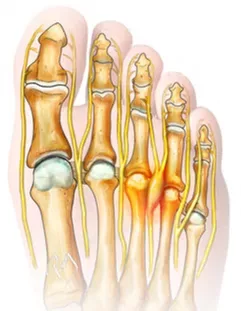
The exact cause remains incompletely understood. Morton’s neuroma affects women approximately three times more often than men and appears to be associated with narrow footwear, high-heeled shoes and repetitive overload of the forefoot.
Signs and symptoms to look out for
The most common symptoms of Morton’s neuroma include:
- pain beneath the forefoot;
- burning, tingling or electric shock-like sensations radiating into the toes;
- the feeling of walking on a pebble or having a folded sock inside the shoe.
Symptoms typically worsen during walking, prolonged standing or when wearing tight-fitting footwear.
Conservative treatment
Before considering surgery, several non-surgical treatment options can help relieve symptoms.
These include:
- switching to wider, more comfortable footwear;
- wearing custom orthotic insoles to reduce pressure on the affected nerve;
- stretching exercises and massage therapy;
- corticosteroid injections to reduce inflammation.
For many patients, these conservative measures provide satisfactory relief and may eliminate the need for surgery.
When does surgery become necessary?
Surgical treatment is generally considered when conservative management fails to provide lasting pain relief.
If symptoms persist despite appropriate non-operative treatment and begin to interfere with everyday activities or quality of life, surgical treatment may be recommended following assessment by an orthopaedic foot and ankle specialist.
Surgical procedure
The operation consists of removing the affected segment of the nerve.
A small incision of approximately 3 cm is made on the top of the foot directly over the neuroma. The inflamed nerve is divided at both ends and the diseased segment is carefully excised.
The procedure usually takes around ten minutes and is performed under either general anaesthesia or regional anaesthesia, where only the foot is numbed.
Recovery after surgery
The procedure is performed as day-case surgery, allowing patients to return home on the same day.
Immediate full weight-bearing is usually permitted while wearing normal footwear, according to your surgeon’s postoperative instructions.
A sterile dressing applied in the operating theatre should remain in place for two weeks without being removed.
A comprehensive postoperative pain management protocol is implemented to maximise comfort and facilitate rapid recovery.
Sick leave is typically around two weeks, although this depends on the nature of your occupation. Patients with sedentary office-based work may often return sooner. Sporting activities can usually be resumed after approximately one month, subject to clinical recovery.
Conclusion
The decision to operate on a Morton’s neuroma should always be made in consultation with an orthopaedic foot and ankle surgeon, taking into account the severity of symptoms, their impact on daily life and the response to conservative treatment.
Although surgical excision provides reliable and definitive relief for most patients, non-operative treatment should generally be attempted first whenever appropriate.