
Surgery for a bunionette (also called tailor’s bunion or quintus varus) should be performed neither too early nor too late. If the deformity causes no daily pain, simple monitoring and conservative medical treatment are sufficient. On the other hand, in cases of chronic footwear-related pain, recurrent bursitis, or significant toe deformity, surgical intervention becomes necessary.
What is a Bunionette (Quintus Varus)?
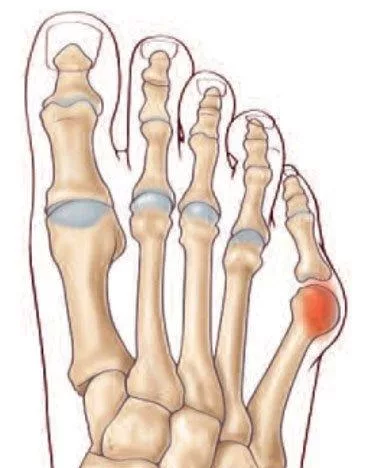
A bunionette is a common forefoot condition. It is characterized by the inward deviation of the fifth toe (the pinky toe) toward the fourth toe.
This deviation is accompanied by a painful prominence at the head of the fifth metatarsal, on the outer edge of the foot. Due to friction against footwear, a red and painful “bunion” develops.
Causes and Risk Factors
The causes of a bunionette are multiple:
- Anatomical factors: flat feet, high arches, or a constitutional widening of the forefoot (an increased angle between the 4th and 5th metatarsals).
- Ill-fitting footwear: regularly wearing narrow, pointed, or high-heeled shoes exerts excessive pressure on the outer edge of the foot and accelerates the deformity.
- Hyperlaxity or genetic predisposition: hereditary factors often contribute to its occurrence.
What are the Complications of an Untreated Bunionette?
Without proper care, the deformity can progressively worsen and lead to several complications:
- Major footwear difficulties: mechanical friction with footwear becomes constant, making closed shoes very uncomfortable to wear.
- Bursitis and infection risk: repeated friction causes inflammation, leading to calluses or corns that can act as a port of entry for infection, posing a high risk.
- Weight transfer and metatarsalgia: to avoid pain on the outer edge, patients alter their gait, which can cause pain under the ball of the foot (transfer metatarsalgia) or in adjacent toes.
- Claw toe or hammer toe: the fifth toe can overlap (supraductus) or underlap (infraductus) the fourth toe.
What are the Non-Surgical Medical Treatments?
Before considering surgery, conservative treatment is systematically offered to relieve symptoms:
- Footwear adaptation: choosing soft, wide-fitting shoes across the forefoot without aggressive seams on the outer edge.
- Orthotics and protection: using silicone toe separators or protective pads to minimize skin friction inside the shoe.
- Custom orthotics (plantar orthoses): custom-made by a podiatrist to redistribute weight-bearing and offload the 5th metatarsal head.
- Podiatry care: removing painful corns and calluses.
When Does Surgery Become Necessary?
Bunionette surgery is indicated when:
- Medical treatment and footwear modifications no longer relieve the pain.
- Functional impairment restricts daily activities or sports.
- Recurrent skin friction (bursitis, infected corn) carries a risk of infection.
Important Note: Bunionette surgery is never performed for purely cosmetic reasons. The presence of pain and functional impairment is what establishes the surgical indication.
How is Bunionette Surgery Performed?
Modern surgical techniques favor minimally invasive or percutaneous surgery.
Surgical Technique
Under fluoroscopic (X-ray) guidance and through mini-incisions measuring just a few millimeters, the orthopedic surgeon performs:
- A 5th metatarsal osteotomy: a precise bone cut to realign the metatarsal head and eliminate the external bony prominence.
- Release of contracted soft tissues to realign the pinky toe.
- The correction is held in place by a specific compression dressing.
The procedure is usually performed under regional anesthesia (only the foot is numbed) on an outpatient basis (returning home a few hours after surgery).
Postoperative Care and Recovery
- Immediate weight-bearing: walking is allowed on the day of surgery using a special postoperative shoe, which is worn for 4 weeks.
- Pain management: advanced anesthetic techniques and minimally invasive surgery significantly reduce postoperative pain.
- Dressing: the surgical dressing applied in the operating room is crucial; it maintains bone alignment during initial healing and will be removed after two weeks.
- Resuming activities: driving is possible after approximately 2 weeks. Returning to sports is done gradually between 2 and 3 months after surgery.
In Summary
A bunionette or quintus varus is a benign but disabling condition when footwear conflict becomes constant. If medical solutions no longer relieve pain, minimally invasive surgery offers a lasting correction with rapid recovery and immediate weight-bearing.
If you suffer from pain in your pinky toe, consult an orthopedic surgeon to perform a complete X-ray evaluation and discuss the therapeutic options tailored to your situation.