Definition
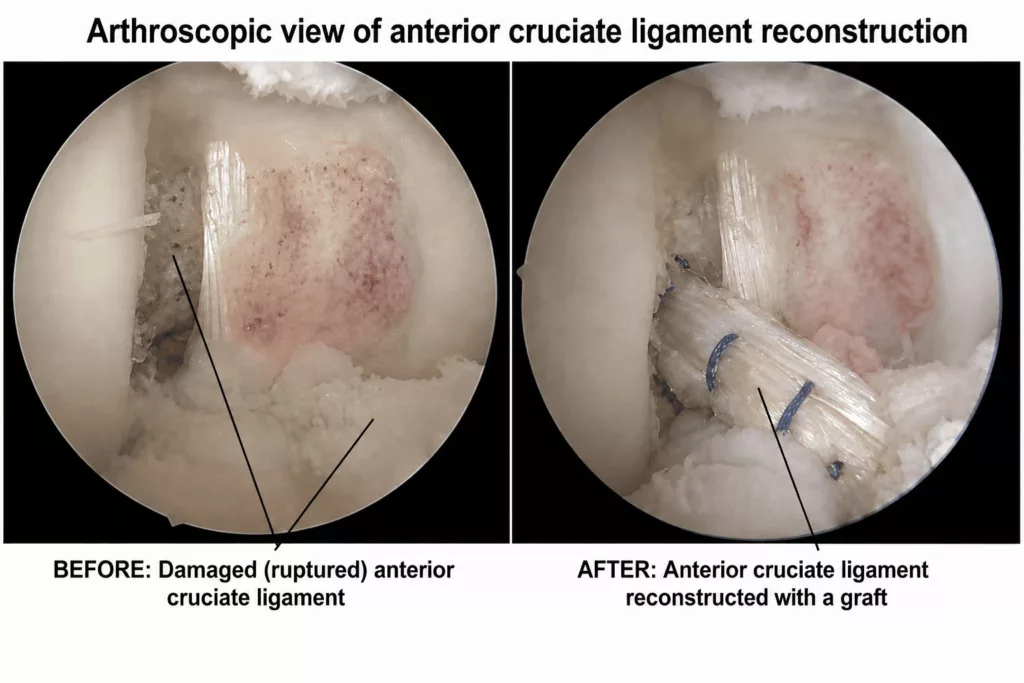
The anterior cruciate ligament (ACL) is a ligament located at the centre of the knee that plays a key role in stabilising the joint. ACL rupture is a very common injury (approximately 1 in 3,000 people) and most often occurs following a sports-related injury. Patients typically experience a popping sensation, followed by immediate pain.
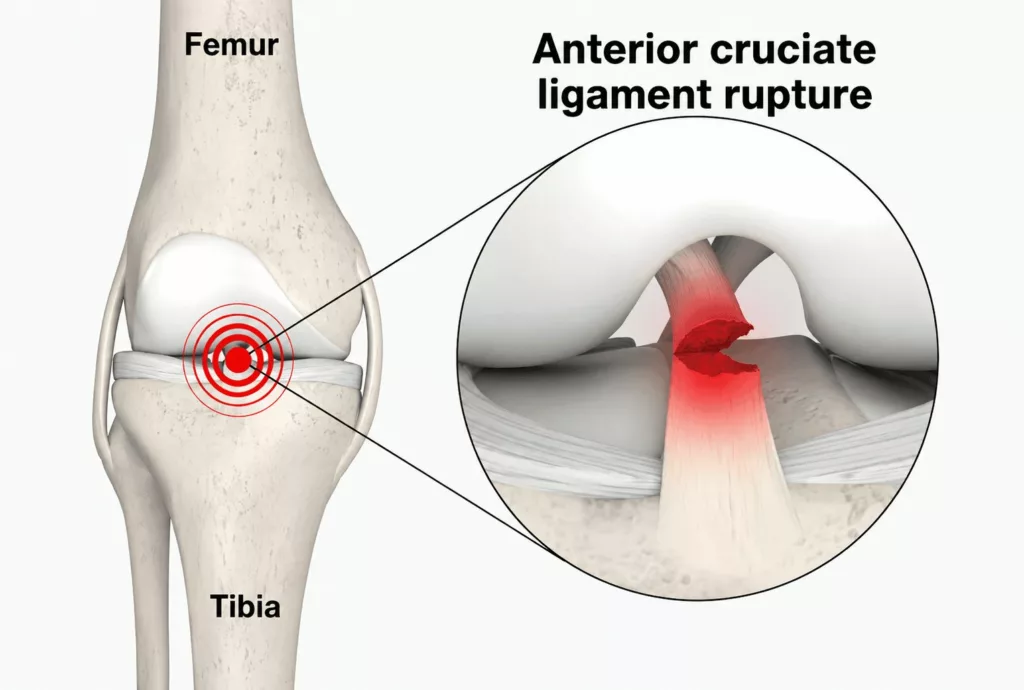
During the initial, highly painful phase, the knee is immobilised in a brace. Painkillers, anti-inflammatory medication, rest and regular icing are prescribed. This acute phase usually resolves over the course of a few weeks, as the swelling subsides and a gradual return to daily activities becomes possible.
However, the natural progression of an ACL rupture is unfavourable, as the torn ligament cannot heal spontaneously. Patients may then develop persistent discomfort and a feeling of knee instability. In these situations, ACL reconstruction surgery may be recommended.
Surgery
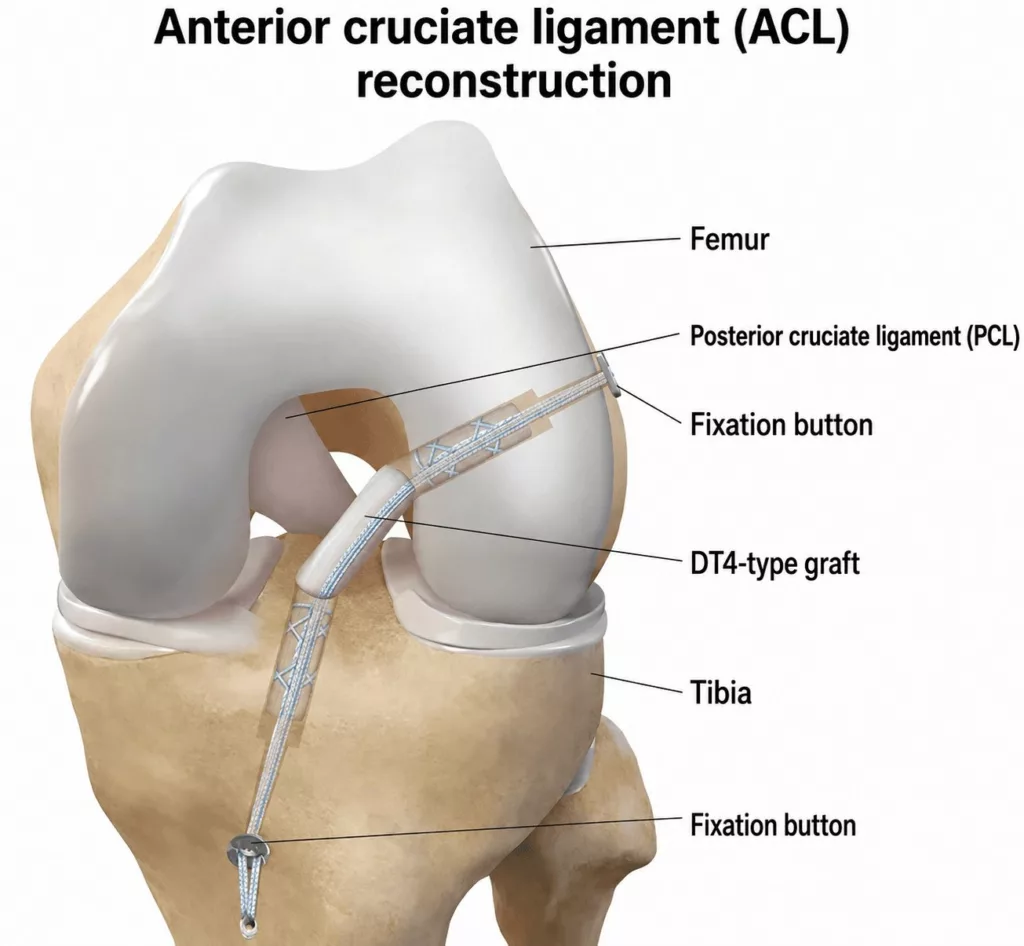
ACL reconstruction (also known as ligamentoplasty) is a very common procedure, with approximately 60,000 operations performed each year in France.
The aim of the procedure is to replace the torn ligament with a new tendon graft. The operation is performed arthroscopically, using a minimally invasive, camera-assisted technique that avoids opening the knee joint.
The procedure is carried out under general anaesthesia as day-case surgery, allowing you to return home on the evening of the operation.
Postoperative care and rehabilitation
Rehabilitation is an essential part of treatment and plays a major role in achieving a successful outcome. It is carried out with a physiotherapist or in a rehabilitation centre and begins on the day after surgery, continuing for several months.
A return to straight-line sports, such as swimming, cycling and running, can generally be considered after three months.
A return to pivoting and contact sports is usually possible after eight months.
Why undergo surgery? What are the benefits?
The natural progression of an ACL rupture is unfavourable because the torn ligament cannot heal on its own. Persistent knee instability may lead to ongoing discomfort and progressive wear of the joint.
ACL reconstruction has two main objectives:
- To stabilise the knee, relieve pain and instability, and allow a return to sporting activities.
- To protect the knee over the long term by limiting joint degeneration. An unstable knee without a functioning ACL is more likely to develop meniscal injuries, cartilage damage and osteoarthritis.
Results
Recovery of knee strength and mobility generally occurs between three and six months after surgery. Pain, instability and locking sensations usually resolve.
The results of ACL reconstruction demonstrate an improvement in knee function in more than 90% of cases.