Ankle Ligament Reconstruction in Hauts-de-Seine

Ankle Surgery

What is ankle ligament reconstruction?

Dr Simon Tournemine in Hauts-de-Seine (92)

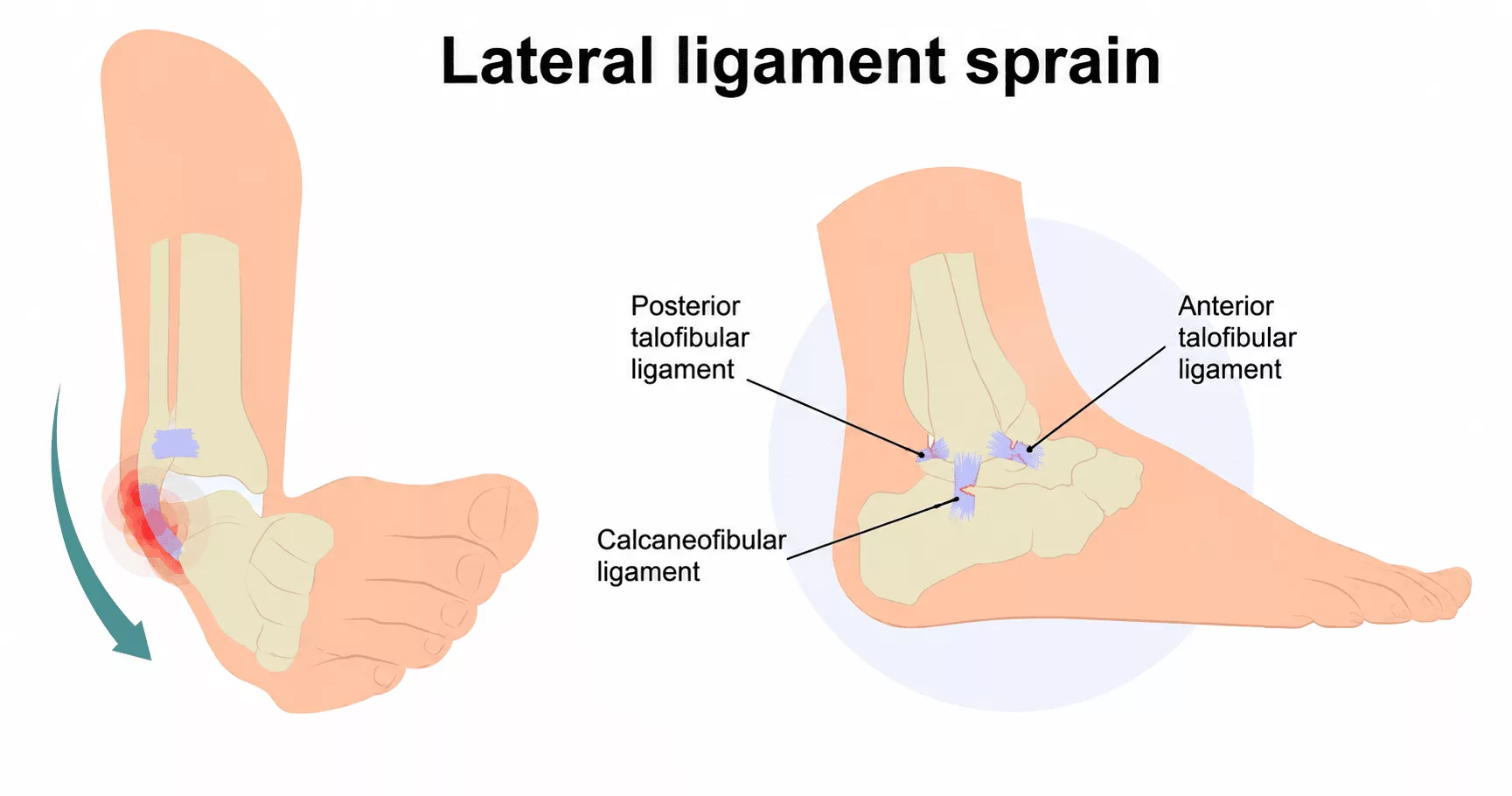
An ankle sprain is a partial or complete tear of one or more of the ligaments that stabilise the ankle joint following a traumatic injury. It is the most common ligament injury, accounting for approximately 6,000 medical consultations every day in France. Around 90% of ankle sprains involve the lateral (outer) ligament complex.

An ankle sprain may vary in severity:

  • Mild sprain: simple stretching of a ligament without tearing.
  • Moderate sprain: partial tear of one or more ligaments.
  • Severe sprain: complete rupture of one or more ligaments.

In most cases, the acute painful phase settles within a few weeks with appropriate conservative treatment, including immobilisation in a brace, pain relief, anti-inflammatory medication, rest and regular ice application. Swelling gradually subsides and activity can progressively resume. However, following severe sprains, persistent ankle pain and chronic instability, often associated with recurrent sprains, may develop.

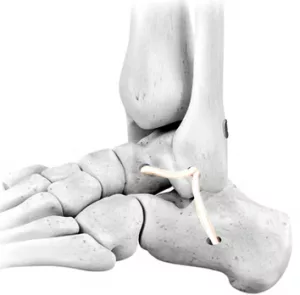
In these situations, ankle ligament reconstruction (ligamentoplasty) may be recommended. The procedure consists of reconstructing the torn ligaments using a tendon graft harvested from the patient’s own hamstring tendon (gracilis tendon), restoring the normal stability of the ankle.

Ankle ligament reconstruction procedure

Specialist in ankle surgery in Hauts-de-Seine (92)

Several surgical techniques have been described to restore ankle stability:

  • Capsulo-ligamentous repair (direct ligament repair), although long-term stability may be limited.
  • Tendon transfer procedures, such as the Castaing technique, which reroutes the peroneus brevis tendon. While reliable, these procedures may lead to secondary discomfort or weakness.
  • Anatomical ligament reconstruction using an autologous hamstring tendon graft.

Today, anatomical reconstruction with a gracilis tendon autograft provides the most reliable long-term outcomes in terms of restoring stability, relieving pain and preserving ankle biomechanics.

During the procedure, the torn ligaments are replaced with a new ligament created from one of the hamstring tendons (the gracilis). The graft is positioned anatomically along the course of the native lateral ankle ligaments and secured to the bone using an Endobutton fixation device and interference screws, providing immediate stability while biological healing occurs.

Ankle ligament reconstruction in Rueil-Malmaison

Ankle surgery in Hauts-de-Seine

The functional consequences of harvesting the gracilis tendon are minimal, as the tendon regenerates and surrounding muscles compensate effectively within a few weeks.

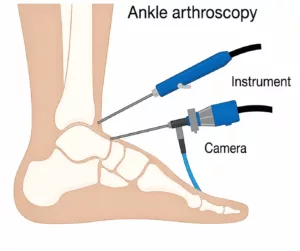
Whenever appropriate, the procedure is performed arthroscopically using minimally invasive techniques. Arthroscopy is a video-assisted procedure that avoids the need for a large open incision. Four small incisions of approximately 5 mm are made around the ankle to introduce a miniature camera and the specialised instruments required to reconstruct and secure the new ligament.

Compared with conventional open surgery, arthroscopy offers several advantages, including:

  • reduced soft tissue trauma;
  • less postoperative pain;
  • lower blood loss;
  • smaller scars;
  • faster functional recovery.

The procedure takes approximately 60 minutes and is performed under either general anaesthesia or spinal anaesthesia, in which only the lower limbs are anaesthetised. The most appropriate technique will be discussed during your preoperative consultation with the anaesthetist.

This is usually performed as day-case surgery, allowing patients to return home on the day of the operation.

Following surgery, the dressing is changed every two days for approximately two weeks.

Postoperative pain management is carefully monitored to ensure maximum comfort and facilitate early rehabilitation. Anticoagulant medication is prescribed for approximately three weeks to reduce the risk of deep vein thrombosis.

The ankle is protected in a removable walking boot for six weeks. Partial weight-bearing with crutches is recommended during the first two weeks, after which full weight-bearing is generally permitted while continuing to wear the boot.

Physiotherapy is an essential component of recovery and usually begins two weeks after surgery, continuing for several months.

The initial rehabilitation programme focuses on controlling pain and swelling while restoring ankle mobility. Most patients are able to walk without crutches after approximately one month.

Progressive strengthening of the ankle stabilising muscles, particularly the peroneal muscles, is then introduced.

As a general guide:

  • swimming, cycling and straight-line running can usually resume after three months;
  • pivoting and contact sports are generally resumed after eight months;
  • return to work usually occurs between one and three months, depending on the physical demands of the occupation.

These timeframes are averages and recovery varies between individuals.

Long-term clinical and radiographic follow-up is recommended to monitor healing and ensure optimal ankle function.

The acute symptoms of an ankle sprain usually improve within a few weeks with conservative treatment including immobilisation, pain relief, anti-inflammatory medication, rest and cryotherapy.

However, after a severe ligament injury, persistent ankle instability, recurrent sprains and chronic pain may remain despite appropriate rehabilitation. When instability significantly affects daily activities or sporting performance, ligament reconstruction becomes an appropriate surgical option.

Every precaution is taken to ensure a safe procedure and successful recovery. Nevertheless, as with any surgical intervention, complications, although uncommon, may occur.

Potential complications include:

  • deep vein thrombosis (DVT) and pulmonary embolism, minimised through postoperative anticoagulant treatment;
  • worsening of pre-existing medical conditions such as diabetes or cardiac disease, monitored closely by the anaesthetic team;
  • infection (risk below 1%), which may require further surgery and antibiotic treatment;
  • postoperative ankle stiffness if rehabilitation is inadequate;
  • postoperative haematoma, occasionally requiring drainage or, exceptionally, blood transfusion;
  • injury to small superficial sensory nerves, which may cause localised numbness around the ankle;
  • complex regional pain syndrome (CRPS), an uncommon but unpredictable chronic pain condition requiring specialised treatment and rehabilitation.

These represent the principal recognised risks but do not constitute an exhaustive list. Rare or exceptional complications may occur depending on individual circumstances. Your surgeon will discuss any specific concerns during your consultation.

Without treatment, chronic ankle instability usually progresses, leading to recurrent sprains, persistent pain and progressive degeneration of the joint. Over time, this instability increases the risk of developing ankle osteoarthritis.

The objectives of ankle ligament reconstruction are twofold:

  • restore ankle stability by eliminating recurrent sprains and reducing pain;
  • preserve the ankle joint over the long term by preventing progressive cartilage wear and osteoarthritis.

Modern arthroscopic techniques combined with anatomical ligament reconstruction provide excellent functional outcomes for the vast majority of patients. Weight-bearing is resumed immediately within the prescribed rehabilitation protocol, postoperative pain gradually subsides, and ankle mobility improves steadily over the following weeks.

Most patients return to low-impact sports such as swimming, cycling and running after approximately three months, while pivoting and contact sports are generally resumed after eight months, once ligament healing and neuromuscular recovery are complete.