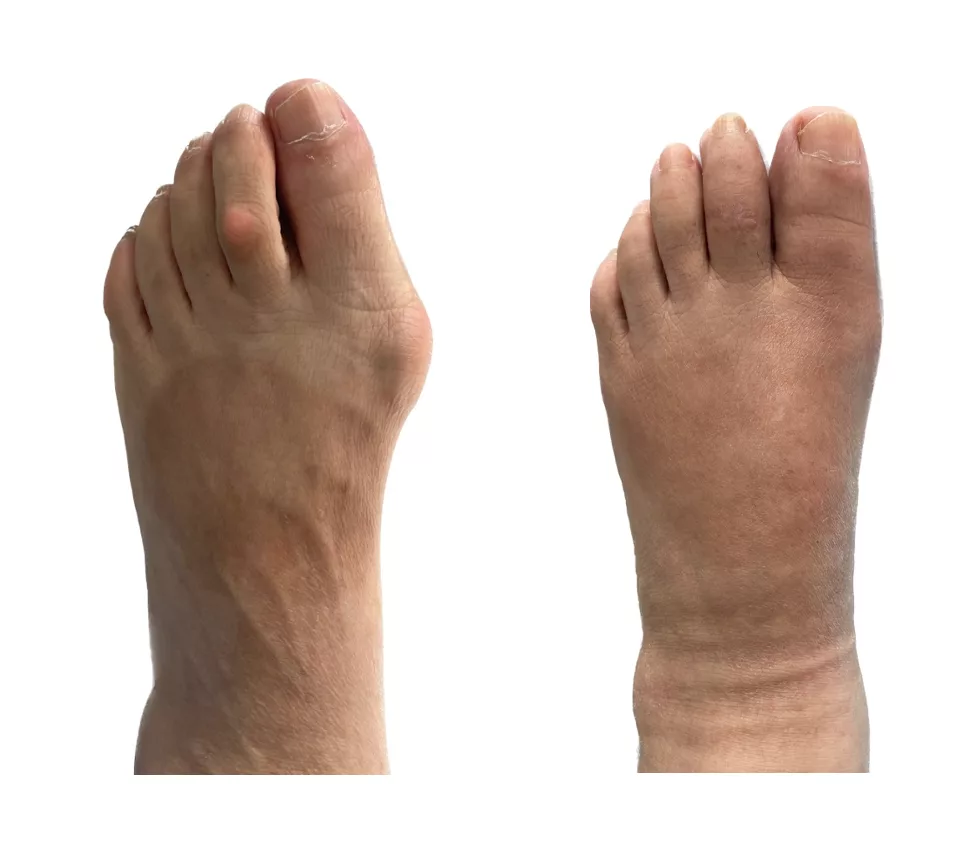
Definition
Hallux valgus, commonly known as a bunion, is a deformity of the great toe. The first metatarsal bone gradually deviates towards the inside of the foot, while the great toe shifts towards the lesser toes, resulting in the formation of a painful bony prominence on the inner side of the foot.
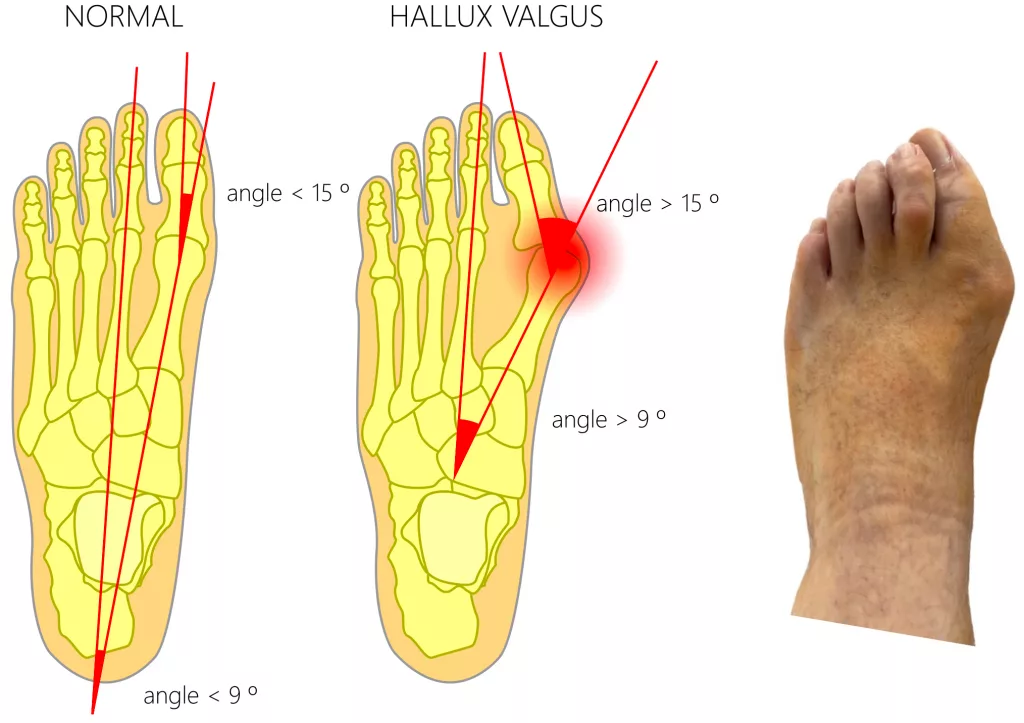
What treatment is available?
Initially, non-surgical treatment is recommended. This includes appropriate footwear, toe orthoses and podiatric care. If symptoms persist despite these measures, surgery may be considered. Surgery is not indicated for cosmetic or preventive reasons.
The aim of surgery is to correct the deformity in order to restore an even distribution of weight across the foot. The procedure realigns the great toe and removes the painful bony prominence.
The operation takes approximately 30 minutes, is performed under local anaesthesia (only the foot is anaesthetised), and you can return home on the same day. Walking is permitted immediately after surgery while wearing a protective postoperative shoe (Podonov).
Why undergo surgery?
The natural progression of hallux valgus is generally unfavourable, with gradual worsening of both the pain and the deformity. Over time, the deformity may extend to the lesser toes and eventually affect the overall structure of the foot.
The procedure has two main objectives:
- To relieve pain and allow a return to comfortable footwear and normal walking;
- To preserve the overall structure of the foot and limit further deformity and the long-term development of osteoarthritis.
It is estimated that 90% of patients experience an improvement in both pain and deformity following surgery. Walking and sporting activities are not restricted.