
Hallux Valgus in Hauts-de-Seine
Foot Surgery
What is hallux valgus?
Dr Simon Tournemine in Hauts-de-Seine (92)
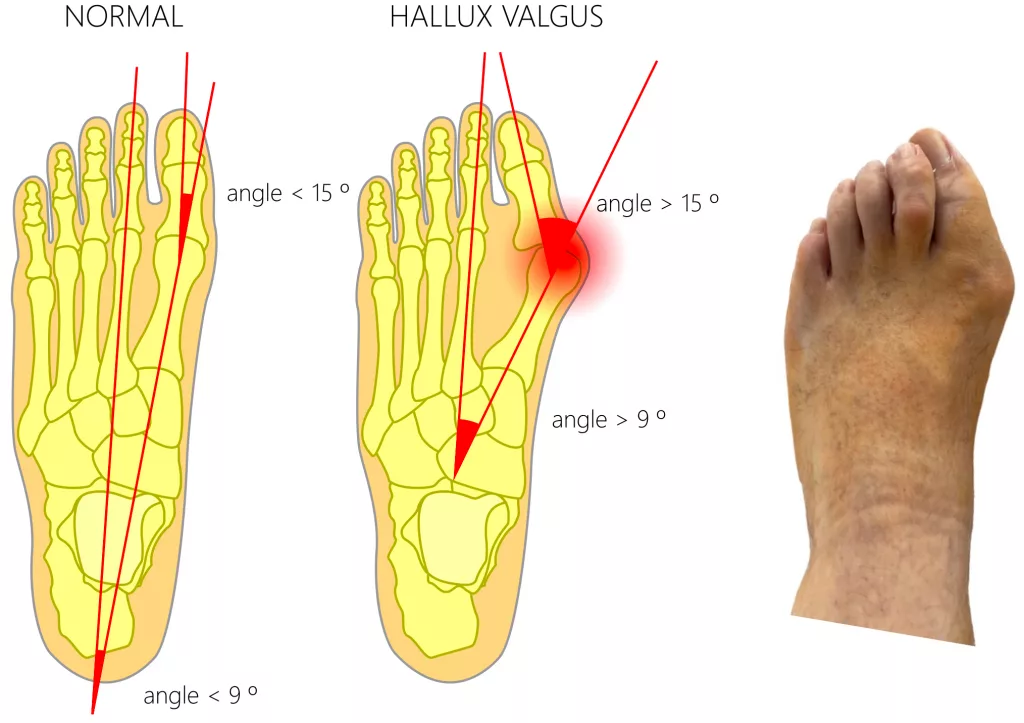
Hallux valgus, commonly known as a bunion, is a progressive deformity of the great toe. The first metatarsal bone gradually shifts towards the inside of the foot, while the great toe deviates towards the lesser toes. The joint between them, known as the first metatarsophalangeal (MTP) joint, becomes increasingly prominent, creating the characteristic bony bump on the inner side of the foot.
This deformity alters the alignment of the forefoot, leading to pain, difficulty wearing shoes and progressive changes in foot biomechanics.
Causes and risk factors for hallux valgus
Specialist in Foot Surgery in Hauts-de-Seine (92)
Hallux valgus is an extremely common condition. In France, it affects approximately 30% of people over the age of 65 and around 2% of children.
Approximately 90% of cases occur in women, with the condition most commonly developing between the ages of 40 and 50 years.
A hereditary predisposition is recognised, and familial forms are common. Wearing high-heeled shoes or footwear with narrow toe boxes may also contribute to the development or progression of the deformity.
Hallux Valgus in Rueil-Malmaison
Foot Surgery in Hauts-de-Seine
Preventing hallux valgus
The following measures may help reduce symptoms and slow the progression of the deformity:
- maintain a healthy body weight to reduce pressure on the feet;
- wear soft shoes with a wide, rounded toe box to minimise friction over the bunion;
- choose flat shoes whenever possible and avoid high heels;
- seek regular treatment from a podiatrist for corns, calluses and areas of hardened skin that develop beneath the forefoot.
Symptoms of hallux valgus
Hallux valgus may occasionally remain painless, although it most commonly causes discomfort.
Pain typically develops while walking and is localised over the prominent bunion at the base of the great toe. As the bony prominence rubs against footwear, calluses (areas of thickened skin) frequently develop. Repeated friction causes inflammation of the first metatarsophalangeal joint, resulting in redness, warmth and tenderness over the bunion.
As the deformity progresses, the entire forefoot gradually becomes misaligned. Body weight is increasingly transferred onto the lesser toes during walking, leading to thickened skin beneath the forefoot and the development of painful plantar calluses.
Eventually, the lesser toes are displaced by the deviated great toe and may develop into painful claw toe deformities, making footwear increasingly difficult to wear comfortably.
Diagnosis of hallux valgus
Your consultation begins with a detailed medical history to identify the underlying causes and risk factors for hallux valgus. Particular attention is given to the impact of the condition on daily activities, including pain, walking ability and difficulties finding suitable footwear.
Clinical examination identifies the painful areas of the foot, evaluates the severity of the deformity of the great toe and assesses any associated deformities affecting the lesser toes.
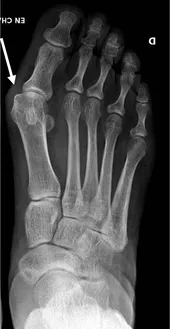
Weight-bearing anteroposterior and lateral foot radiographs are routinely obtained. These assess the severity of the hallux valgus deformity, its effects on the lesser toes, overall foot alignment and the condition of the forefoot joints, including any associated degenerative changes.
Treatment of hallux valgus
Without treatment, hallux valgus generally progresses over time. The great toe continues to deviate, progressively deforming the lesser toes, which may eventually develop into painful claw toe deformities.
When routine podiatric care is no longer sufficient to relieve symptoms, and pain or difficulty wearing shoes begins to interfere with daily life, surgical correction may be recommended.
The aim of surgery is to realign the bones of the forefoot, restore a more normal distribution of weight across the foot, reduce painful pressure points and eliminate friction between the bunion and footwear.