Subtalar Arthrodesis in Hauts-de-Seine

Foot Surgery

What is a subtalar arthrodesis?

Dr Simon Tournemine in Hauts-de-Seine (92)

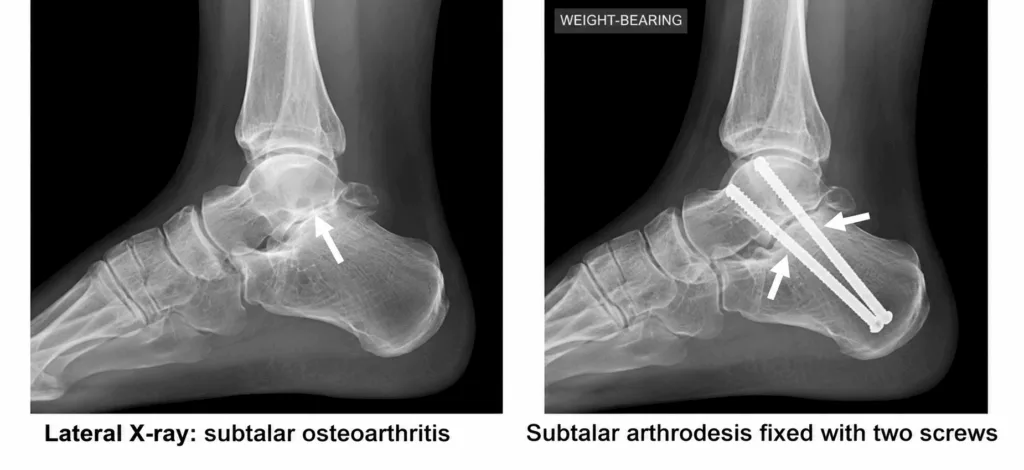
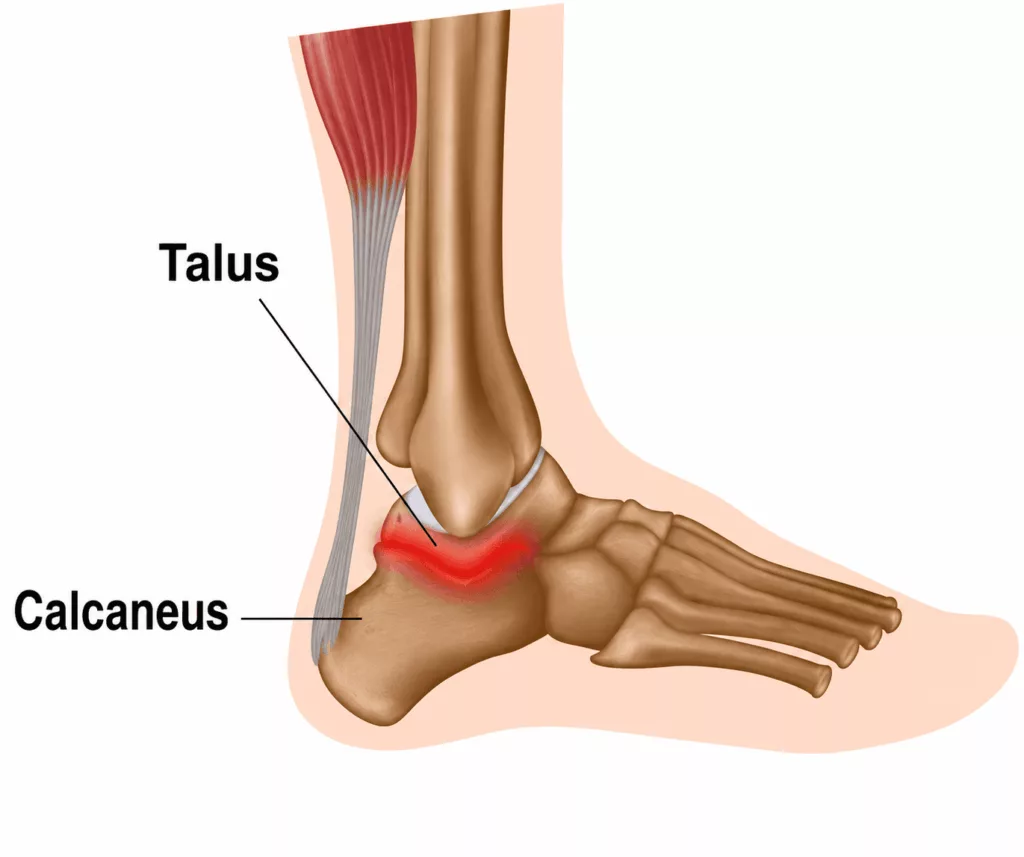
Subtalar osteoarthritis is the progressive degeneration of the joint between the talus (ankle bone) and the calcaneus (heel bone). As the articular cartilage wears away, the joint becomes increasingly painful and progressively loses mobility.

The condition typically develops over many years, leading to worsening pain, stiffness and increasing difficulty with walking.

There is no treatment capable of reversing osteoarthritis, and its natural progression is one of gradual joint deterioration. Osteoarthritis is a common condition, affecting approximately 80% of individuals over the age of 80.

Subtalar arthrodesis is a surgical procedure that removes the damaged joint surfaces before permanently fusing the talus and calcaneus together in order to eliminate pain.

Subtalar Arthrodesis

Specialist in Foot Surgery in Hauts-de-Seine (92)

Subtalar arthrodesis consists of removing the worn articular cartilage before permanently fusing the talus and calcaneus.

The damaged cartilage is removed and the underlying bone surfaces are carefully prepared to stimulate bone healing.

The joint is then positioned in its optimal alignment and secured using two surgical screws.

These screws are generally well tolerated and do not normally require removal.

The operation takes approximately 60 minutes.

It is performed under either general anaesthesia or regional anaesthesia (where only the leg is anaesthetised). The most appropriate anaesthetic technique will be discussed with the anaesthetist during your preoperative consultation.

Subtalar Arthrodesis in Rueil-Malmaison

Foot Surgery in Hauts-de-Seine

Subtalar osteoarthritis is an irreversible degenerative condition, and no treatment can restore the damaged cartilage.

Initial management focuses on relieving symptoms through conservative treatment, including:

  • lifestyle modifications;
  • pain-relieving medication;
  • anti-inflammatory medication;
  • physiotherapy;
  • corticosteroid injections.

When these treatments no longer provide adequate pain relief because of advanced joint degeneration, surgical treatment may be recommended.

Pain management is carefully supervised to maximise comfort and facilitate recovery.

Anticoagulant treatment is prescribed throughout the immobilisation period to reduce the risk of deep vein thrombosis.

The ankle is immobilised for six weeks to allow bone fusion.

During this period, walking is permitted without weight-bearing using two crutches.

After approximately six weeks, the cast is removed and progressive weight-bearing begins while returning to normal footwear.

Driving generally becomes possible after approximately two months, while sporting activities may usually be resumed after around three months.

Physiotherapy begins after immobilisation has been discontinued in order to restore muscle strength in the leg and optimise foot mobility.

The procedure is performed as day-case (outpatient) surgery, allowing you to return home on the day of the operation.

Long-term clinical and radiographic follow-up is recommended to monitor bone healing and identify any potential complications.

Every precaution is taken to ensure optimal healing. Nevertheless, as with any surgical procedure, complications may occur, although they remain uncommon:

  • deep vein thrombosis (DVT) and pulmonary embolism, with the risk reduced through anticoagulant treatment, which is prescribed for approximately three months;
  • worsening of pre-existing medical conditions such as heart disease or diabetes, with appropriate monitoring by the anaesthetic team;
  • infection (risk below 1%). Should infection occur, further surgery to clean the operative site together with antibiotic treatment may be required;
  • haematoma, which may occasionally require drainage or blood transfusion;
  • injury to small sensory nerve branches supplying the ankle and foot, potentially resulting in areas of reduced sensation;
  • non-union (pseudarthrosis), where the bones fail to fuse successfully. This uncommon complication may require prolonged immobilisation or revision surgery to achieve bone healing;
  • implant-related irritation, where the screws cause discomfort due to irritation of surrounding tissues. In rare cases, removal of the hardware may subsequently be required.

Complex Regional Pain Syndrome (CRPS) is a painful inflammatory condition that remains poorly understood. It is treated medically and may persist for several months, or occasionally several years, requiring specialised rehabilitation, further investigations and dedicated pain management. Both its occurrence and long-term outcome remain unpredictable.

These represent the principal potential complications, although this list is not exhaustive. Rare and exceptional complications may also occur. Your surgeon will discuss your individual circumstances during your consultation.

Subtalar arthrodesis is designed to relieve pain by eliminating movement within the arthritic joint.

Although the subtalar joint is permanently fused, this generally does not significantly impair walking, as neighbouring joints compensate for the loss of movement.

Activities such as skiing, cycling, running, tennis and other sports can usually be resumed, provided that the remaining joints of the foot are healthy.