
Hardware Removal in Hauts-de-Seine
Orthopaedic Surgery
What is hardware removal?
Dr Simon Tournemine in Hauts-de-Seine (92)
You have previously undergone orthopaedic surgery to the lower limb and have surgical implants in place. Once bone healing and tissue healing have been fully achieved, these implants have fulfilled their purpose. However, they may sometimes become a source of discomfort, acting as a foreign body within the surrounding tissues. In these situations, a further procedure may be performed to remove the implants. This operation is known as hardware removal.
When and why should hardware removal be performed?
Specialist in Orthopaedic Surgery in Hauts-de-Seine (92)
Orthopaedic implants may occasionally become symptomatic, causing pain or mechanical irritation of the surrounding structures such as tendons, muscles or nerves. Without treatment, these symptoms generally persist. Hardware removal may therefore be considered to relieve pain and improve comfort.
Before implant removal, complete bone union and soft tissue healing must be confirmed, which usually requires several months following the initial operation. Standard radiographs are performed to verify bone consolidation and confirm that the implants remain correctly positioned and can be safely removed. In selected cases, additional imaging such as ultrasound, CT or MRI may be required to confirm that the implants are responsible for the symptoms and that removal can be undertaken safely.
Hardware Removal in Rueil-Malmaison
Orthopaedic Surgery in Hauts-de-Seine
Hardware removal procedure
The procedure is performed under either general anaesthesia or regional anaesthesia (spinal anaesthesia or peripheral nerve block). The most appropriate anaesthetic technique will be decided in consultation with your anaesthetist during your preoperative assessment.
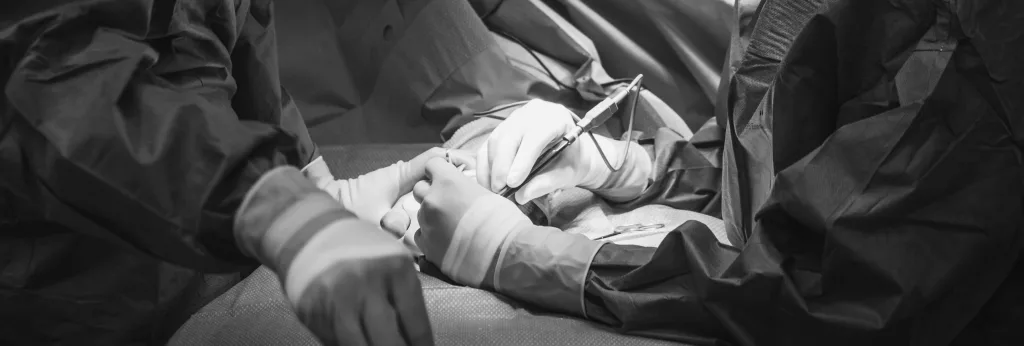
The previous surgical scar is reopened, either partially or completely, depending on the type and location of the implant. In some cases, the incision may need to be extended to gain safe access to the hardware.
The implants are carefully exposed and removed. Occasionally, complete removal may not be possible because part of the implant has broken, become firmly fixed or is surrounded by bone or dense scar tissue. In these situations, leaving a small portion of the implant in place may be safer than attempting complete removal.
Postoperative care and rehabilitation following hardware removal
After surgery, the dressing is usually changed every two days for approximately two weeks.
Pain management is carefully monitored to maximise comfort and facilitate an early recovery. In selected cases, anticoagulant medication may be prescribed to reduce the risk of deep vein thrombosis.
Early mobilisation combined with physiotherapy plays an important role in restoring muscle strength, joint mobility and limb function.
Depending on the implant removed and the underlying procedure, temporary partial weight-bearing or a period of immobilisation may be required for several weeks. Crutches may therefore be prescribed where appropriate. These recommendations are determined individually by your surgeon.
The duration of hospital stay depends on the complexity of the procedure, although the majority of hardware removal operations are performed as day-case surgery, allowing discharge home on the day of the procedure.
A short period of sick leave may be required depending on the type of surgery performed. Your surgeon will advise you regarding the appropriate timing for returning to work and resuming sporting activities.
Risks and complications of hardware removal
Every precaution is taken to ensure the best possible outcome. Nevertheless, as with any surgical procedure, complications may occur, although they remain uncommon.
Potential complications include:
- deep vein thrombosis (DVT), which may occur despite preventive anticoagulant treatment. A blood clot may form within the veins of the lower limb and, in rare cases, migrate to the lungs, causing a pulmonary embolism;
- infection, although uncommon following hardware removal. Further surgery to wash out the operative site together with prolonged antibiotic treatment may be required. Smoking significantly increases the risk of postoperative infection and should therefore be avoided during the healing period;
- Complex Regional Pain Syndrome (CRPS), a poorly understood inflammatory pain condition that may persist for several months, or occasionally years. It requires specialist medical management, rehabilitation and, in some cases, referral to a pain management service. Its occurrence and progression remain unpredictable;
- temporary weakening of the bone and surrounding soft tissues following implant removal. Return to sporting activities should only occur once authorised by your surgeon, as there is a small risk of refracture during the early healing period;
- haematoma, which may occasionally require surgical drainage or, rarely, blood transfusion if significant bleeding occurs;
- nerve injury. Dense scar tissue from the previous operation may make identification of nearby nerves technically challenging. Nerve injury may result from traction during surgery or, more rarely, partial or complete transection. Temporary nerve irritation generally improves over several months, whereas more significant injuries may occasionally require additional reconstructive nerve surgery;
- worsening of pre-existing medical conditions, including diabetes or cardiovascular disease, which are carefully monitored by the anaesthetic team throughout the perioperative period.
These represent the principal potential complications, although this list is not exhaustive. Rare or exceptional complications related to local anatomical factors or technical difficulties may also occur. Your surgeon will discuss your individual situation during your consultation.
Results of hardware removal
Skin healing is generally achieved within approximately two weeks, while deeper tissue healing continues over the following weeks.
Pain or discomfort caused by the implants usually improves within approximately six weeks after surgery. However, some patients may continue to experience discomfort related to scar tissue or residual fibrosis, which often improves progressively with time.