Femoral Neck Fracture in Hauts-de-Seine

Hip Surgery

What Is a Femoral Neck Fracture?

Dr Simon Tournemine in Hauts-de-Seine (92)

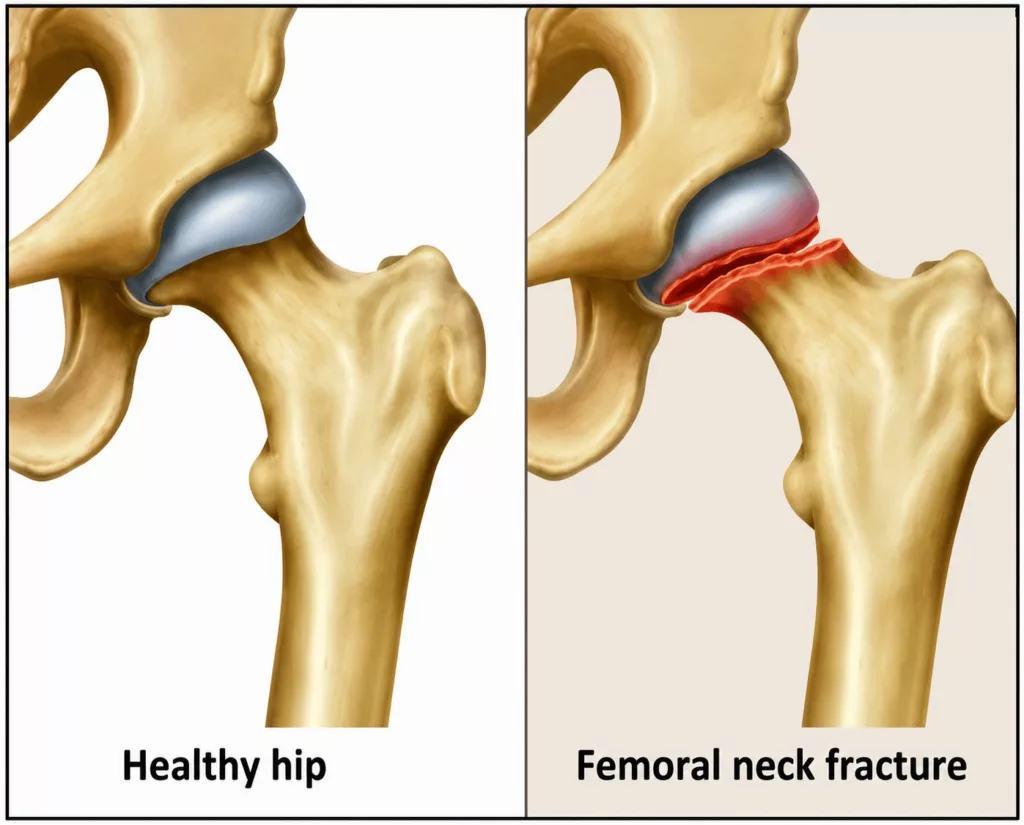
A femoral neck fracture is a break in the continuity of the bone at the femoral neck, the narrow region connecting the shaft of the femur to the femoral head. Because this area is particularly vulnerable, it is a common site of fracture. Once fractured, the femur is no longer able to support the body’s weight, resulting in severe hip pain and an inability to stand or walk.

Causes and Risk Factors for a Femoral Neck Fracture

Hip Surgery Specialist in Hauts-de-Seine (92)

More than 60,000 femoral neck fractures occur each year in France. Although younger individuals may sustain this injury, the vast majority of patients are over the age of 60.

Women are affected more frequently than men, particularly after the menopause, when osteoporosis, a condition that weakens bone strength, becomes more common.

In younger patients, femoral neck fractures usually result from high-energy trauma, most commonly road traffic accidents. In older adults, however, a simple fall may be sufficient to cause a fracture.

Certain medical conditions, including osteoporosis and other disorders that weaken the bones, increase the risk of sustaining a fracture following a fall.

Femoral Neck Fracture in Rueil-Malmaison

Hip Surgery in Hauts-de-Seine

A femoral neck fracture most commonly occurs following a fall. The pain is immediate and localised to the hip, making it impossible to stand, walk or move the affected hip. A visible deformity may be present, with the injured leg appearing shortened and externally rotated. Bruising around the hip may also develop rapidly.

In rare cases, when the fracture is stable and undisplaced, there may be no obvious deformity and the patient may still be able to walk despite experiencing pain.

Although not all femoral neck fractures can be prevented, reducing recognised risk factors can help lower the likelihood of injury. Preventive measures include:

  • screening for and treating osteoporosis;
  • achieving a healthy weight when overweight;
  • maintaining a balanced diet and engaging in regular physical activity to preserve bone strength and reduce muscle weakness;
  • identifying and managing factors that increase the risk of falls, such as visual, hearing or balance disorders;
  • avoiding excessive alcohol consumption and smoking.

The initial assessment begins with a detailed medical history to understand the circumstances surrounding the fall or injury.

Clinical examination typically reveals severe hip pain associated with an inability to stand or move the affected hip. The injured limb may appear shortened and malpositioned, and bruising may also be present.

In the uncommon situation of a stable, undisplaced fracture, no visible deformity may be present and walking may still be possible despite the pain.

A thorough neurological and vascular examination is also performed to identify any associated injury to nearby nerves or blood vessels. The examination additionally looks for other fractures that may have occurred at the same time.
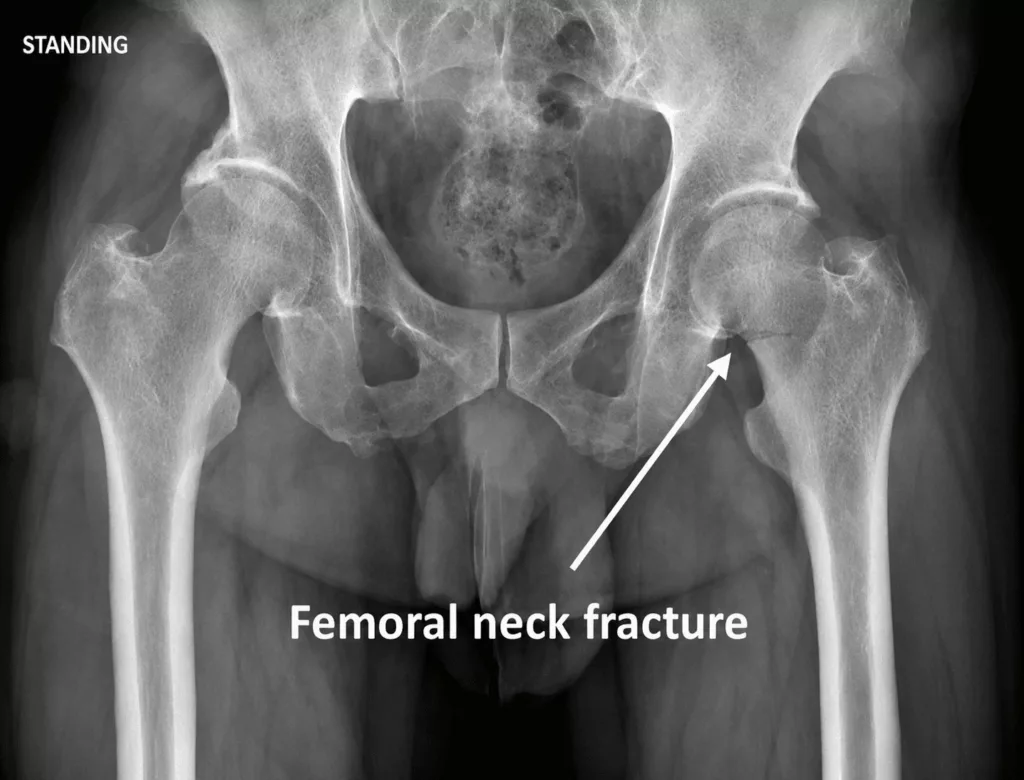
Standard pelvic X-rays confirm the diagnosis by demonstrating a break in the continuity of the femoral neck, often associated with displacement of the femoral head. Further imaging is not usually required.

Without surgical treatment, the natural course of a femoral neck fracture is generally unfavourable. Bone healing is unlikely because of fracture displacement and disruption of the blood supply to the femoral head. Without surgery, walking cannot usually be resumed and persistent hip pain is expected.

The standard treatment is total hip replacement, which enables early mobilisation and a faster return to walking.
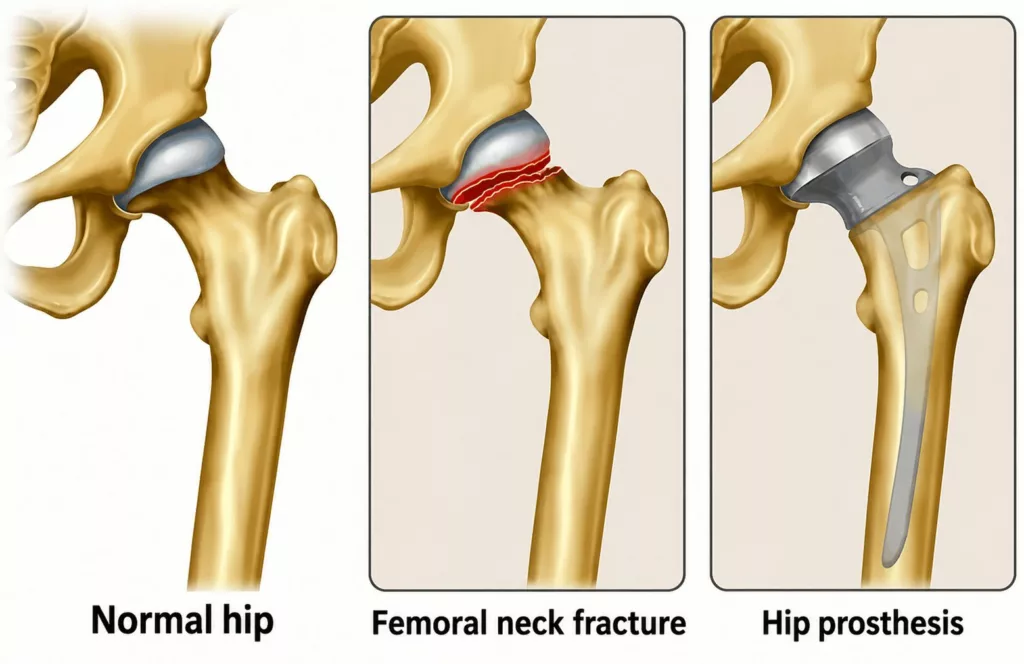
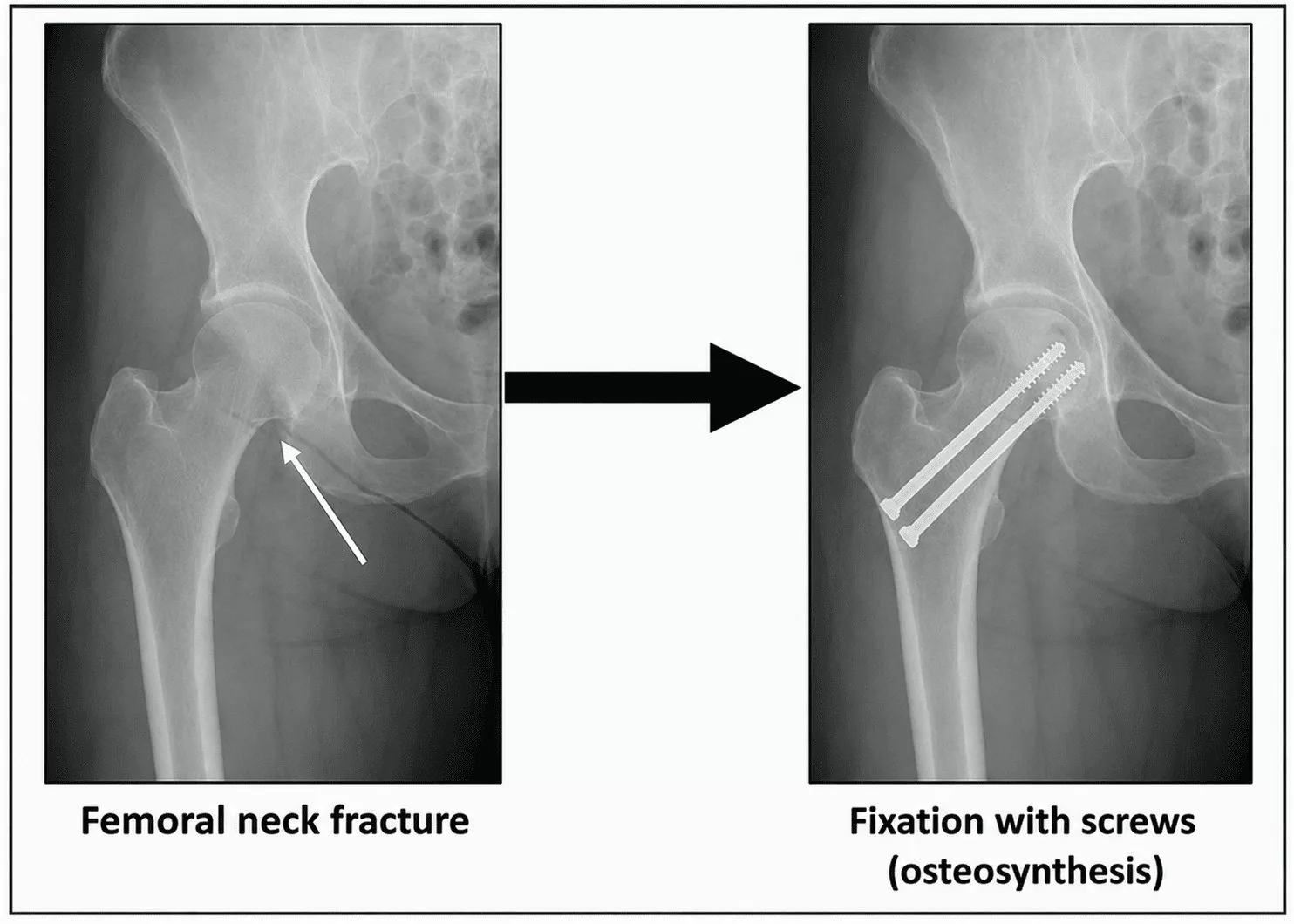
In selected cases, particularly in younger patients or when the fracture is completely undisplaced, the fracture may instead be stabilised using internal fixation (osteosynthesis) with screws placed across the femoral neck. The choice between these two treatment options depends on the type of fracture and should be discussed with your orthopaedic surgeon.