Total Knee Replacement in Hauts-de-Seine

Knee Surgery

What Is a Total Knee Replacement?

Dr Simon Tournemine in Hauts-de-Seine (92)

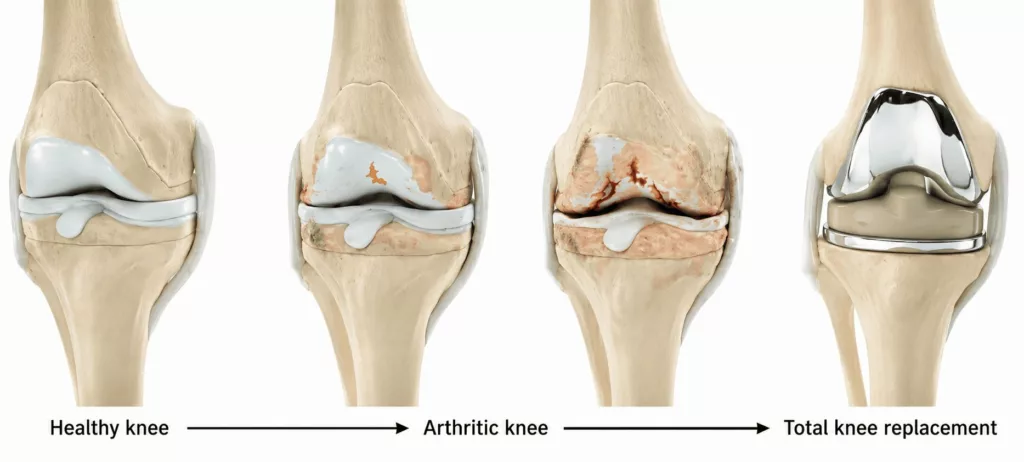
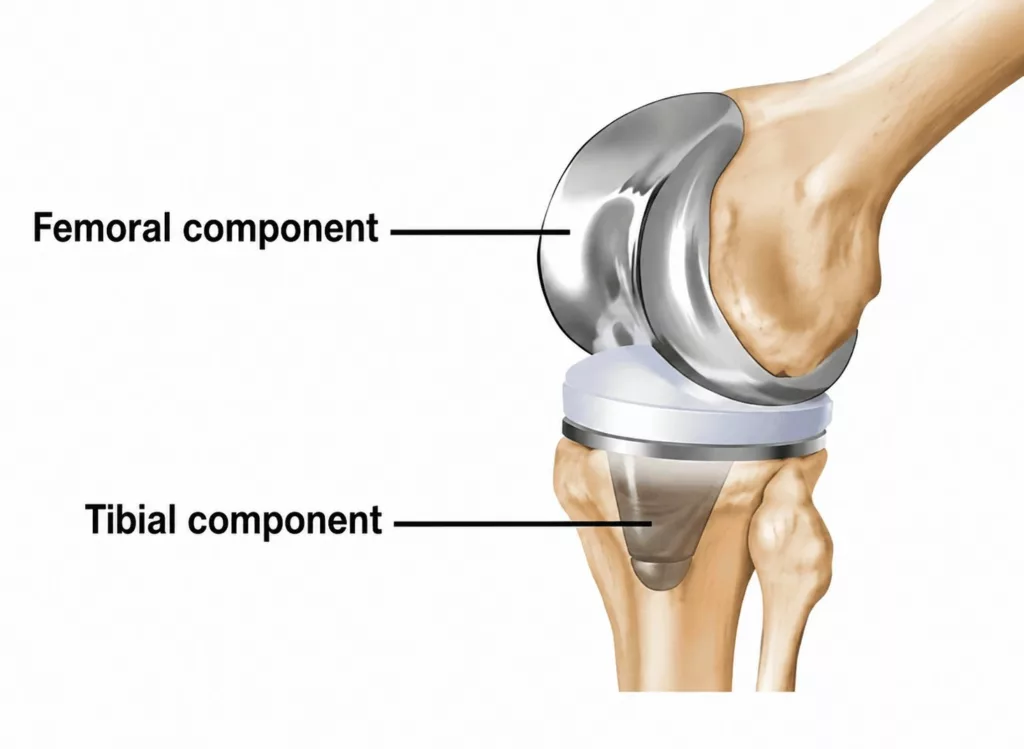
A total knee replacement (total knee arthroplasty) is a surgical procedure performed to replace a knee joint that has been damaged by osteoarthritis with an artificial joint. The prosthesis reproduces the anatomy and function of a healthy knee using three components: a femoral component fixed to the femur, a tibial component fixed to the tibia, and a patellar component attached to the kneecap, restoring smooth and stable joint movement.

There are three main types of knee replacement, selected according to the extent and location of the arthritis:

  • Total knee replacement, when osteoarthritis affects the entire knee joint.
  • Unicompartmental (partial) knee replacement, when only one compartment of the knee is affected.
  • Patellofemoral knee replacement, for isolated arthritis of the patellofemoral joint.

When Is Total Knee Replacement Recommended and Why?

Knee Surgery Specialist in Hauts-de-Seine (92)

Knee osteoarthritis (gonarthrosis) is a progressive degenerative condition characterised by the gradual loss of joint cartilage. Although several conservative treatments can relieve symptoms and slow disease progression, none can reverse the underlying cartilage degeneration.

Initial management includes lifestyle modifications, weight management where appropriate, pain-relieving medication, anti-inflammatory treatment and physiotherapy. These measures often provide satisfactory symptom control during the earlier stages of the disease.

When osteoarthritis becomes advanced and conservative treatment no longer provides sufficient pain relief or functional improvement, total knee replacement becomes the most effective treatment option. The primary objectives of surgery are to relieve pain, restore knee mobility and enable patients to return to their normal daily, professional and sporting activities.

Total Knee Replacement in Rueil-Malmaison

Knee Surgery in Hauts-de-Seine

This procedure is performed using a minimally invasive subvastus approach. An incision of approximately 20 cm is made along the front of the knee. Unlike more traditional approaches, the subvastus technique preserves the surrounding muscles and respects the natural anatomy of the knee, helping to reduce postoperative pain and promote faster functional recovery.

Implant positioning is individually planned, allowing the prosthesis to be tailored as closely as possible to each patient’s anatomy.

The worn cartilage is removed from the femur, tibia and patella, and the underlying bone is carefully prepared to receive the prosthetic components. The femoral, tibial and patellar implants are then accurately positioned using patient-specific instrumentation, recreating the shape and biomechanics of a healthy knee joint.

The operation generally lasts approximately 60 minutes.

It is performed under either general anaesthesia or spinal anaesthesia, in which only the lower limbs are anaesthetised. The choice of anaesthetic is made jointly with the anaesthetist during your preoperative consultation.

The usual hospital stay is 1 to 3 days.

Following surgery, the dressing is generally changed every two days for approximately two weeks.

Pain management is carefully monitored to maximise comfort and facilitate early rehabilitation. Anticoagulant medication is prescribed for four weeks to reduce the risk of deep vein thrombosis (DVT). This treatment is administered as tablets and does not require routine blood monitoring.

The knee replacement is stable immediately after surgery, allowing patients to begin walking on the day of the operation. We follow Enhanced Recovery After Surgery (ERAS) protocols, and a physiotherapist will assist you in standing, walking and beginning rehabilitation on the day of surgery. Early mobilisation combined with physiotherapy is a key factor in achieving optimal recovery, helping to preserve muscle function, restore joint mobility and accelerate the return to independence. No specific movements are prohibited, although walking sticks or crutches may be helpful during the first few weeks before being progressively discontinued.

Most patients return home within a few days of surgery. Before discharge, your surgeon will provide all necessary prescriptions, including dressings, pain medication, anticoagulants and physiotherapy. Rehabilitation should continue either with a community physiotherapist or within a rehabilitation centre. Early return to everyday activities forms an essential part of recovery. In some cases, a short stay in an inpatient rehabilitation facility may be recommended to regain independence before returning home.

Driving is generally possible after approximately six weeks, while return to work usually occurs after around two months, depending on the nature of your occupation. Office-based work may often be resumed earlier. Sporting activities are usually reintroduced progressively from the third postoperative month.

These recovery times are average estimates and may vary according to each patient’s individual progress.

Long-term clinical and radiographic follow-up remains essential to monitor the prosthesis and detect any potential abnormalities.

Every precaution is taken to maximise the likelihood of a successful outcome. Nevertheless, as with any surgical procedure, complications, although uncommon, may occur.

The principal risks include:

  • Deep vein thrombosis (DVT) and pulmonary embolism: uncommon complications, with the risk reduced by anticoagulant treatment prescribed for four weeks after surgery.
  • Worsening of pre-existing medical conditions: such as heart disease or diabetes. Close postoperative monitoring by the anaesthetic team helps minimise these risks.
  • Prosthetic joint infection (approximately 1%): this complication may require further surgery to wash out or replace the prosthesis, followed by prolonged antibiotic treatment. As smoking significantly increases the risk of infection and wound-healing complications, patients are strongly advised to stop smoking at least one month before surgery and to remain smoke-free for three months afterwards.
  • Reduced knee mobility and postoperative stiffness: insufficient rehabilitation may result in persistent stiffness. In selected cases, manipulation of the knee under anaesthesia may be recommended to restore movement.
  • Haematoma: postoperative bleeding may occasionally require drainage or blood transfusion.
  • Sensory nerve injury: small cutaneous nerve branches around the knee may rarely be affected, leading to a localised area of reduced skin sensation.
  • Complex Regional Pain Syndrome (CRPS): a rare inflammatory and painful condition that may persist for several months, or occasionally longer, requiring specialised rehabilitation, additional investigations and, in some cases, dedicated pain management.
  • Injury to the tibial nerve or common peroneal (fibular) nerve: an exceptionally rare complication that may result from a haematoma, surgical trauma or regional anaesthesia. Partial or complete recovery may occur over several months.
  • Vascular injury: an extremely uncommon complication that may require urgent additional surgery to restore blood flow to the leg.

These represent the principal risks associated with total knee replacement but do not constitute an exhaustive list. Exceptional complications may occur, and every patient’s situation is unique. Your orthopaedic surgeon will discuss your individual case in detail and answer any questions you may have before surgery.

Modern knee replacement implants, combined with 3D surgical planning and minimally invasive techniques, provide excellent outcomes for the vast majority of patients.

Walking is usually possible immediately after surgery with full weight-bearing. Pain gradually subsides over the following weeks, while stiffness progressively improves as knee mobility is restored. Most patients are able to resume their personal, professional and sporting activities progressively within one to two months.

Optimal functional improvement is generally achieved between six months and one year after surgery, although recovery may continue for up to two years. The final range of motion varies from one patient to another and depends on several factors, including preoperative stiffness, the severity and cause of the arthritis, muscle and tendon function, the type of prosthesis implanted and, above all, the quality of postoperative rehabilitation.

Activities such as cycling, swimming, golf and hiking are not only possible but often encouraged. Other sports, including skiing, tennis and recreational running, may also be resumed at a moderate level in order to maximise the longevity of the prosthesis.

The expected lifespan of a modern knee replacement is approximately 30 years, although this varies according to several factors, including the patient’s age, body weight, activity level and overall health.