Hip Replacement Wear and Implant Loosening in Hauts-de-Seine
Hip Surgery
What Are Hip Replacement Wear and Implant Loosening?
Dr Simon Tournemine in Hauts-de-Seine (92)
A total hip replacement consists of three main components: a hemispherical acetabular cup implanted into the pelvis (acetabulum), a femoral stem inserted into the femur, and a femoral head attached to the stem. The femoral head fits inside the acetabular cup, allowing the artificial joint to move smoothly and restore hip function.
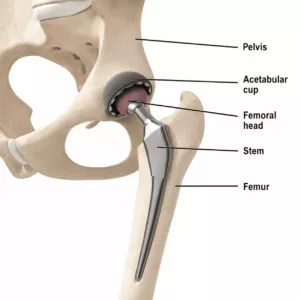
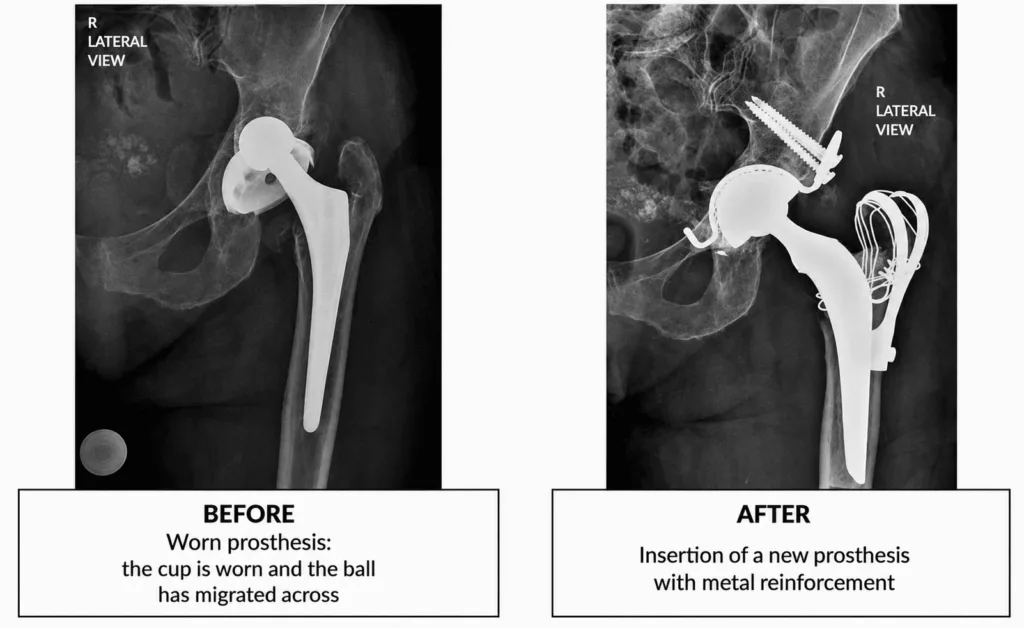
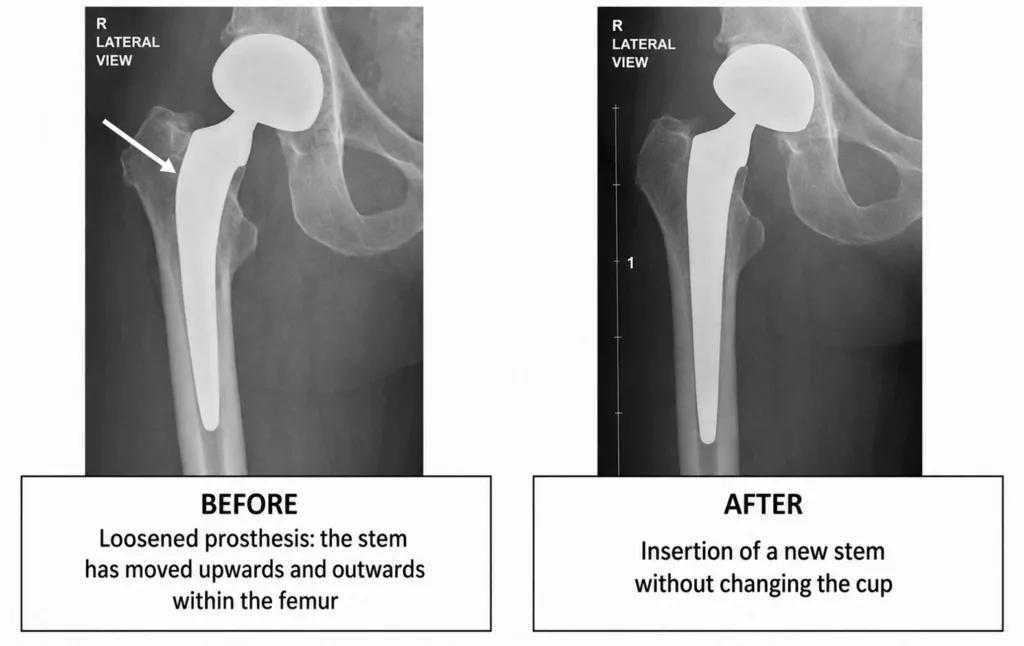
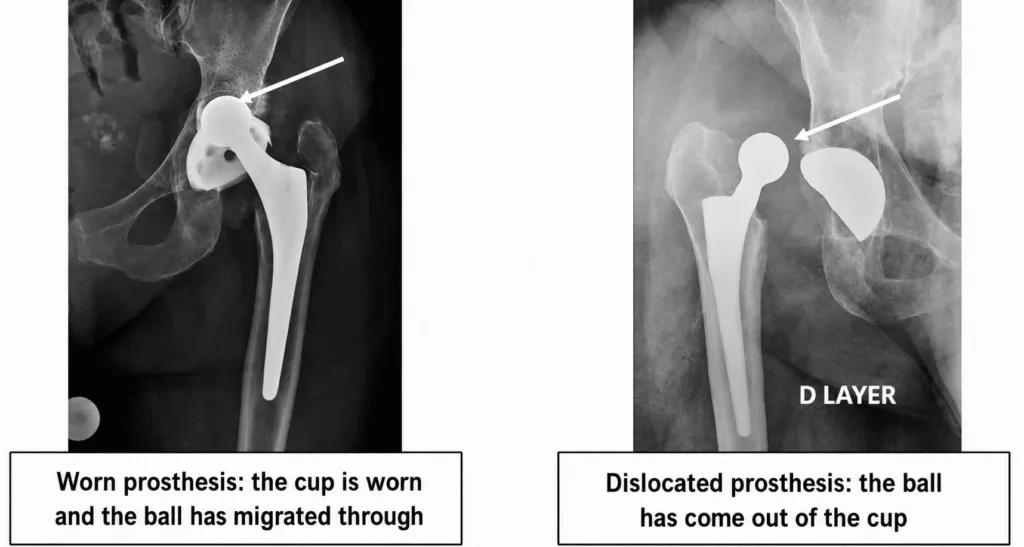
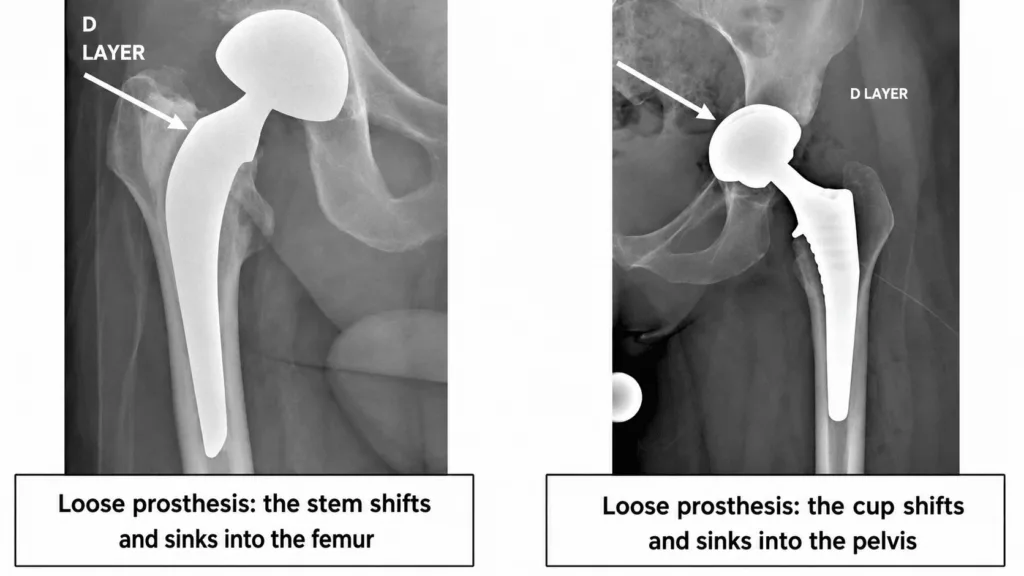
Over time, and with normal use, these prosthetic components may gradually wear or lose their fixation within the bone, a process known as implant loosening. Modern hip replacements generally have an expected lifespan of around 20 years, although older implants may wear more rapidly. Wear or loosening may affect the acetabular cup, the femoral stem, or both components. This can lead to hip pain, limping and, in some cases, episodes of instability or prosthetic dislocation, where the femoral head comes out of the socket.
Problems may also arise if the prosthetic components are not ideally positioned. This can result in leg length discrepancy, recurrent dislocation or pain caused by friction between the implant and the surrounding muscles or tendons. In these situations, revision surgery may become necessary.
Symptoms of Hip Replacement Wear or Implant Loosening
Hip Surgery Specialist in Hauts-de-Seine (92)
The gradual onset of pain around the hip or thigh in a patient with a hip replacement should raise suspicion of implant loosening. As the condition progresses, the function of the artificial joint may deteriorate, often resulting in an increasingly noticeable limp.
The appearance of episodes of instability or dislocation in a hip replacement that had previously been stable may suggest progressive wear of the prosthesis.
Malposition of the prosthetic components may also cause leg length discrepancy, recurrent dislocation or pain resulting from contact between the implant and the muscles or tendons surrounding the hip.
Hip Replacement Wear and Implant Loosening in Rueil-Malmaison
Hip Surgery in Hauts-de-Seine
Diagnosis of Hip Replacement Wear or Implant Loosening
A precise diagnosis is essential to determine whether the entire hip replacement requires revision or whether only one prosthetic component needs to be replaced.
Clinical examination enables the surgeon to assess the location of the pain, identify the surgical approach used during the original procedure, evaluate the appearance of the surgical scar and compare lower limb length.
X-rays of the pelvis and both hips are routinely performed and often provide reliable evidence of implant wear, loosening or malposition. A CT scan is also frequently requested to obtain a more detailed assessment of the bone surrounding the prosthesis, the degree of implant wear and the position of the prosthetic components.
Hip aspiration is commonly performed to collect synovial fluid for bacteriological analysis in order to exclude prosthetic joint infection.
Treatment of Hip Replacement Wear or Implant Loosening
When implant loosening, prosthetic wear or recurrent dislocation occurs, surgical replacement of the affected prosthetic components becomes necessary. This procedure is known as revision total hip replacement (revision total hip arthroplasty).