Ankle Fractures in Hauts-de-Seine

Ankle Surgery

What Is an Ankle Fracture?

Dr Simon Tournemine in Hauts-de-Seine (92)

Like any fracture, an ankle fracture is a break in the continuity of a bone. The medial malleolus, which forms part of the tibia, and the lateral malleolus, which forms the distal end of the fibula, are located at the junction between the leg and the foot. This vulnerable region is one of the most common sites of fractures.

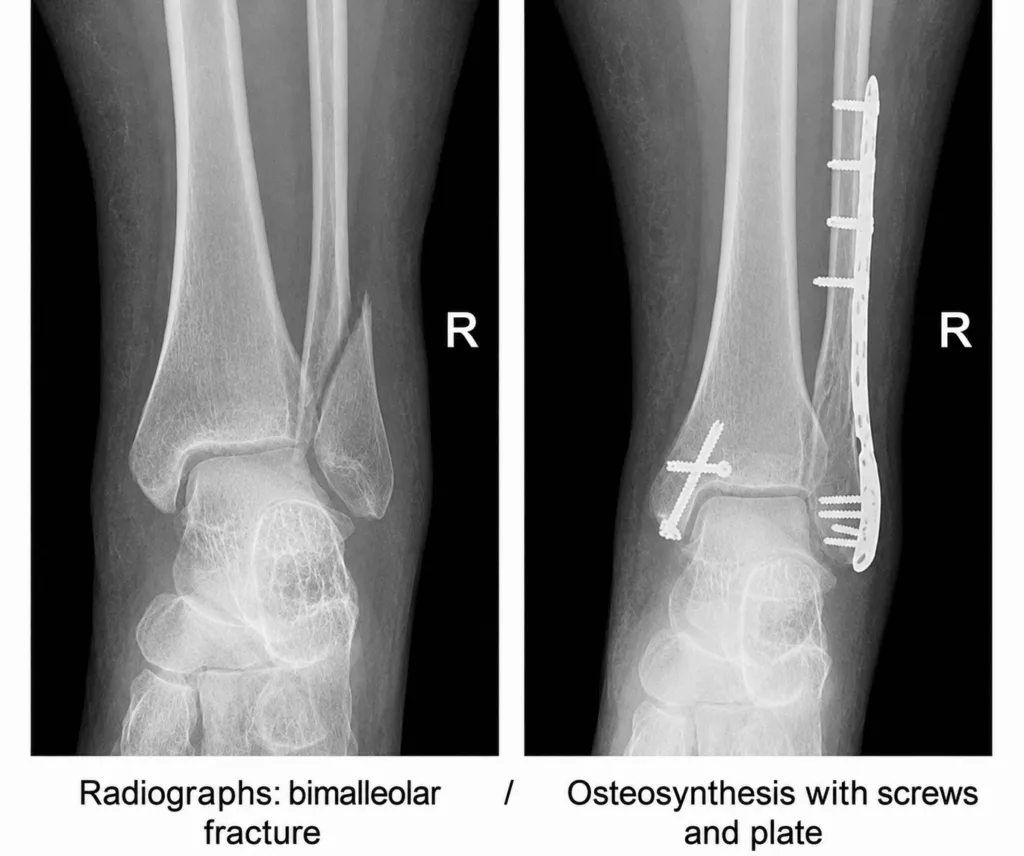
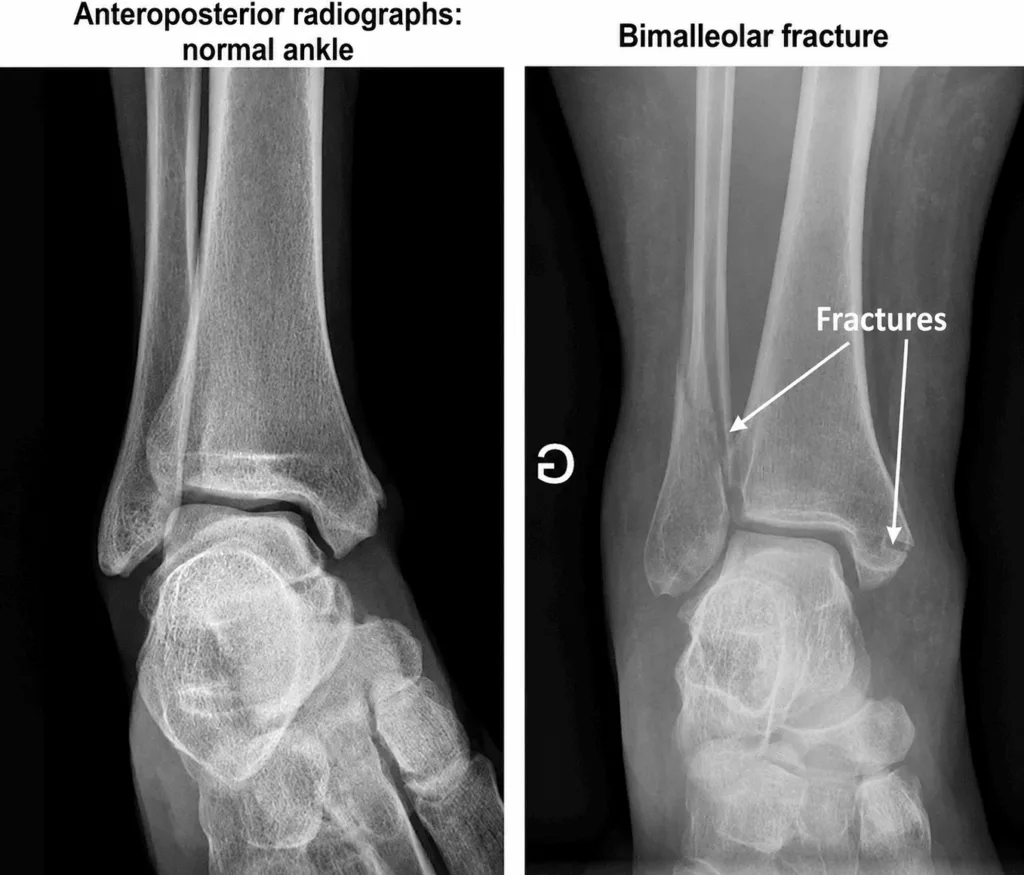
When only the fibula is fractured, the injury is referred to as an isolated lateral malleolar fracture. When both the tibia and fibula are involved, it is known as a bimalleolar fracture.

These injuries are typically associated with severe pain and are frequently displaced, resulting in deformity and instability of the ankle that make walking impossible.

Causes and Risk Factors for Ankle Fractures

Ankle Surgery Specialist in Hauts-de-Seine (92)

Ankle fractures are common injuries that affect patients of all ages.

Women are at greater risk than men, particularly after menopause, when osteoporosis may weaken the bones and increase fracture susceptibility.

In younger patients, ankle fractures most commonly result from high-energy trauma sustained during sporting activities or road traffic accidents.

In older adults, however, a simple fall may be sufficient to cause an ankle fracture.

Ankle Fractures in Rueil-Malmaison

Ankle Surgery in Hauts-de-Seine

Pain is immediate and severe, making it impossible to stand or move the ankle.

A visible deformity may be present, with the foot appearing abnormally positioned. Significant swelling and bruising usually develop rapidly.

In a small number of cases, when the fracture is stable and undisplaced, obvious deformity may be absent and the patient may still be able to walk despite experiencing pain.

Although not all ankle fractures can be prevented, several measures help reduce the risk:

  • screening for and treating osteoporosis;
  • achieving and maintaining a healthy body weight;
  • following a balanced and nutritious diet;
  • engaging in regular physical activity to preserve bone strength;
  • identifying and treating risk factors for falls, including visual, hearing or balance disorders.

The consultation begins by determining the circumstances surrounding the injury.

Clinical examination typically reveals severe ankle pain with marked limitation of movement. Deformity of the ankle may be visible, and bruising is commonly present.

A neurological and vascular examination is systematically performed to exclude associated nerve or blood vessel injuries. The surgeon also assesses for any additional fractures.

Standard ankle radiographs confirm the diagnosis by demonstrating disruption of the continuity of one or both malleoli, often associated with displacement of the fracture fragments.

In most cases, no further imaging investigations are required.

Without appropriate treatment, the natural course of most displaced ankle fractures is unfavourable. The ankle remains painful, unstable and deformed, with significant loss of mobility that compromises normal walking.

Because these fractures are frequently displaced and unstable, the bone fragments must be restored to their normal anatomical position and stabilised using metal implants to allow proper healing.

This procedure is known as osteosynthesis (internal fixation).