
Subtalar Osteoarthritis in Hauts-de-Seine
Foot Surgery
What is subtalar osteoarthritis?
Dr Simon Tournemine in Hauts-de-Seine (92)
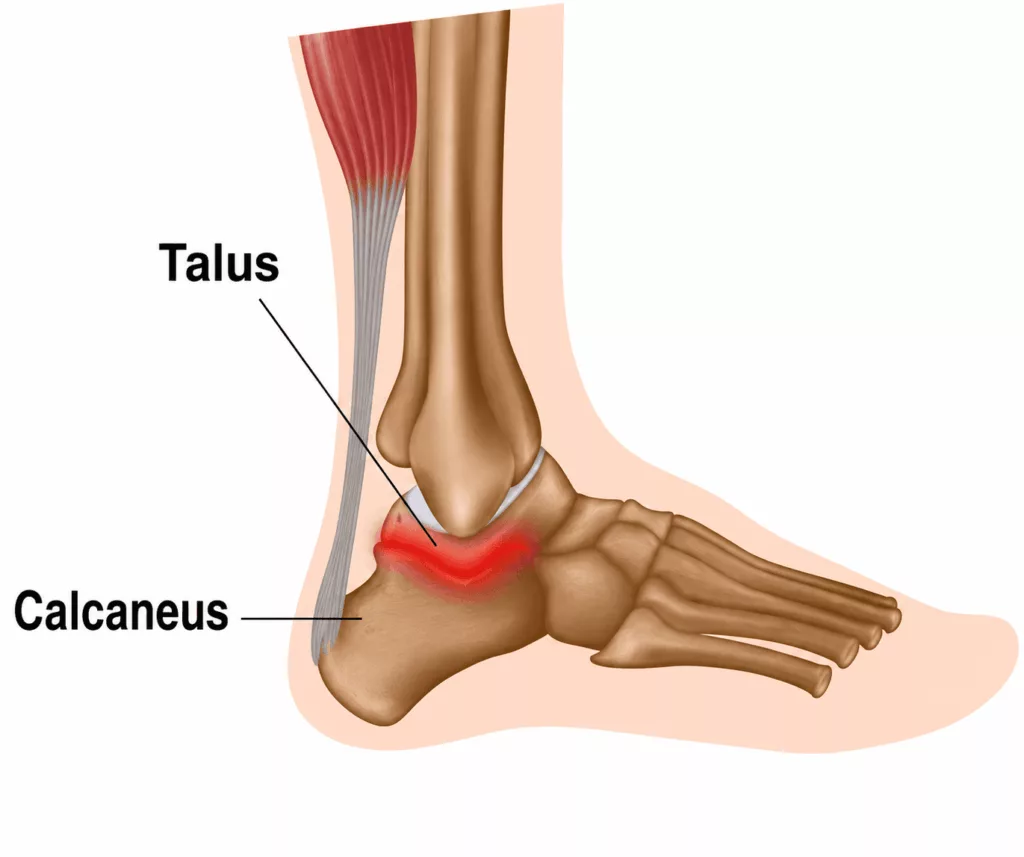
Subtalar osteoarthritis is a degenerative condition affecting the joint between the talus (ankle bone) and the calcaneus (heel bone). It begins with the gradual wear of the articular cartilage before progressively involving all the structures of the joint, including the underlying bone and the synovial membrane.
The condition typically progresses in cycles, with:
- chronic phases, during which pain remains relatively stable and moderate;
- acute flare-ups lasting several weeks, characterised by marked inflammation of the joint and more severe pain.
Subtalar osteoarthritis usually develops slowly over several years, leading to progressively increasing pain and difficulty when walking.
Degenerative joint disease is common, with approximately 80% of people over the age of 80 affected by osteoarthritis.
Causes and risk factors for subtalar osteoarthritis
Specialist in Foot Surgery in Hauts-de-Seine (92)
Subtalar osteoarthritis may be primary (without an identifiable anatomical or traumatic cause) or secondary, resulting from an underlying deformity or disease.
Primary subtalar osteoarthritis is associated with several recognised risk factors:
- increasing age, with osteoarthritis becoming more common after the age of 60;
- excess body weight;
- female sex, particularly after the menopause.
Secondary subtalar osteoarthritis may develop as a consequence of:
- congenital or acquired foot deformities;
- recurrent ankle sprains;
- fractures of the talus or calcaneus;
- inflammatory rheumatic diseases.
Subtalar Osteoarthritis in Rueil-Malmaison
Foot Surgery in Hauts-de-Seine
Symptoms of subtalar osteoarthritis
Pain is usually the earliest symptom of subtalar osteoarthritis.
It may be located around the ankle or heel and can radiate into the leg or foot. Symptoms typically worsen with walking or weight-bearing activities and improve with rest.
Patients may also experience joint stiffness, particularly in the morning, requiring a short period of movement before normal mobility returns.
When pain becomes severe or persistent, a limp may develop and, in some cases, the use of a walking stick becomes necessary.
The condition generally progresses slowly, with alternating painful flare-ups and periods of relative symptom relief.
Preventing subtalar osteoarthritis
Although osteoarthritis cannot always be prevented, several measures may help slow its progression and reduce symptoms.
Maintaining a healthy body weight through a balanced diet and regular physical activity helps reduce stress on the joints and may limit both pain and disease progression.
In everyday life, it is important to protect the painful joint while remaining physically active. Low-impact activities such as walking, cycling and swimming are particularly recommended.
Diagnosis of subtalar osteoarthritis
Your consultation begins with a detailed medical history to identify possible causes and risk factors for subtalar osteoarthritis. The impact of symptoms on daily activities, including pain and difficulties wearing shoes, is also carefully assessed.
Clinical examination identifies the painful areas of the foot and evaluates the mobility of the subtalar joint.
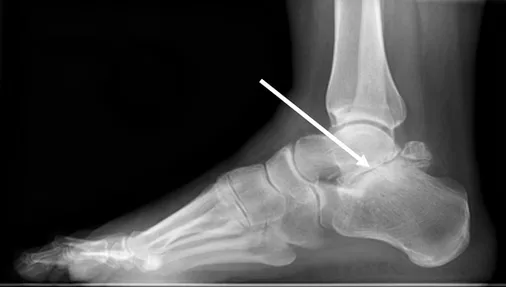
Weight-bearing anteroposterior and lateral radiographs confirm the diagnosis by demonstrating characteristic features of osteoarthritis, including:
- narrowing of the joint space caused by cartilage loss;
- sclerosis of the underlying bone;
- abnormal bony outgrowths around the joint known as osteophytes.
A computed tomography (CT) scan may also be required to assess the joint more accurately and determine the extent of degenerative changes.
Treatment of subtalar osteoarthritis
No treatment can reverse subtalar osteoarthritis, and its natural course is one of gradual progression. However, several treatment options can effectively relieve pain and improve function.
Initial management consists of conservative treatment, including:
- weight reduction where appropriate;
- maintaining regular physical activity;
- pain-relieving medication such as paracetamol and non-steroidal anti-inflammatory drugs (NSAIDs).
Corticosteroid injections into the subtalar joint may also provide temporary pain relief, although they do not treat the underlying osteoarthritis.
When conservative treatment no longer provides adequate symptom control and daily activities remain significantly limited, surgical treatment may be recommended.
The surgical procedure consists of subtalar arthrodesis, in which the subtalar joint is fused to eliminate pain arising from the arthritic joint.