Hallux Valgus Correction in Hauts-de-Seine
Foot Surgery
What is hallux valgus correction?
Dr Simon Tournemine in Hauts-de-Seine (92)
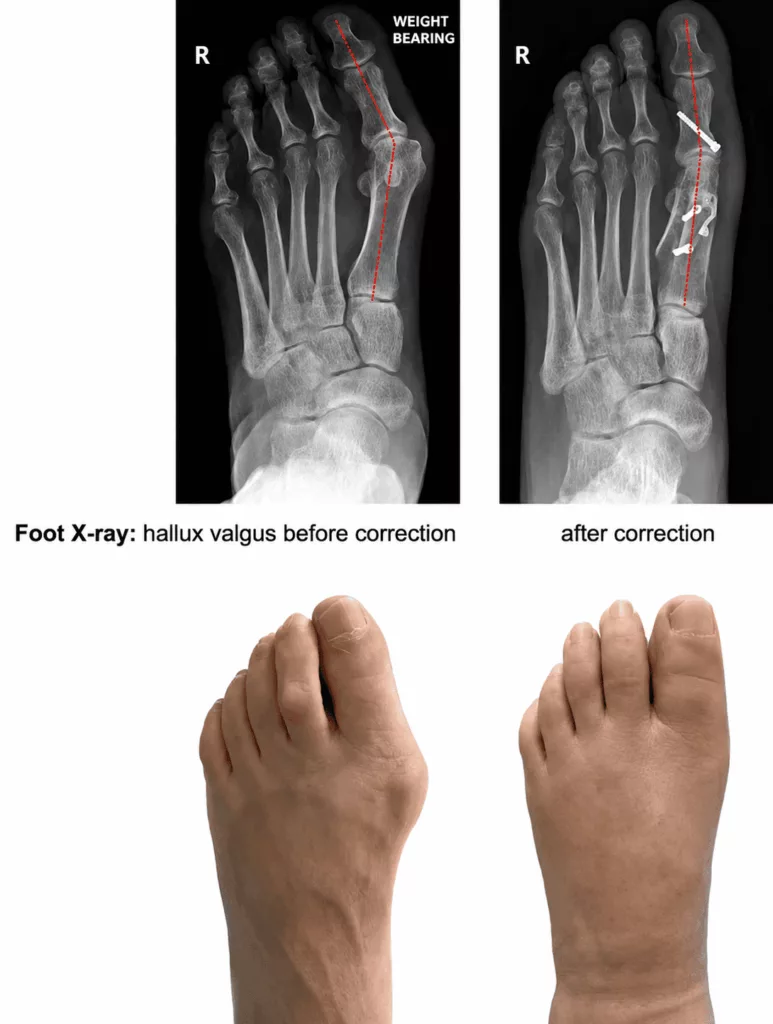
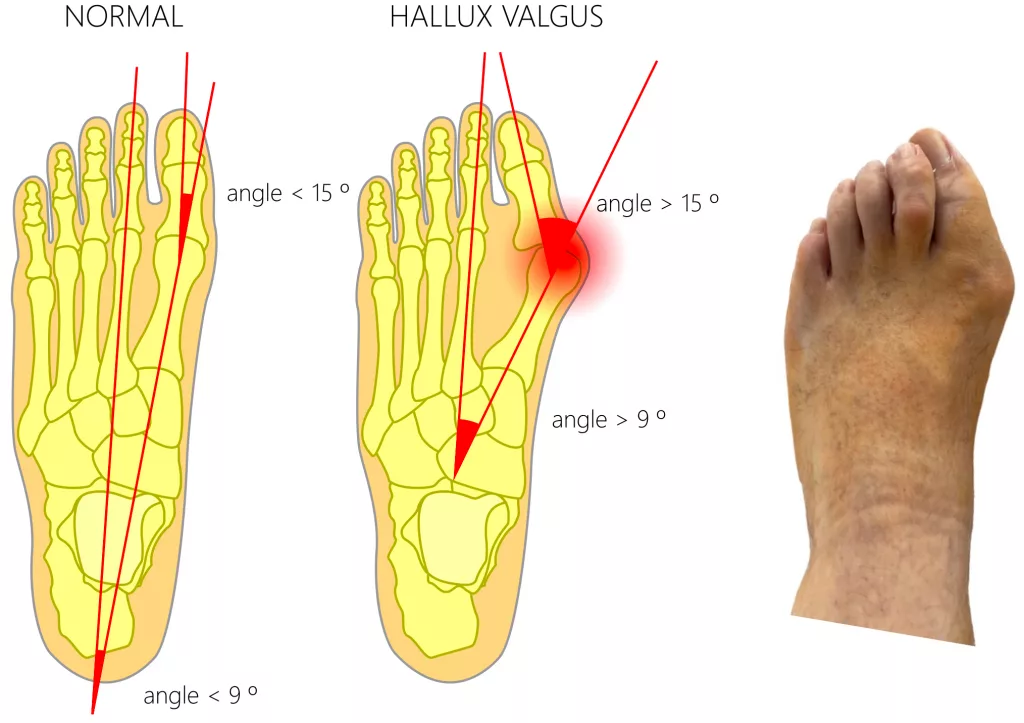
Hallux valgus, commonly known as a bunion, is a deformity of the great toe. The first metatarsal shifts towards the inside of the foot while the great toe deviates outwards. The joint between these two bones, known as the first metatarsophalangeal (MTP) joint, becomes prominent, creating the characteristic bony bump.
This progressive deviation of the great toe leads to forefoot deformity, pain and increasing difficulty wearing shoes comfortably.
Hallux valgus correction surgery
Specialist in Foot Surgery in Hauts-de-Seine (92)
Surgery aims to correct the deformity in order to restore an even distribution of weight across the foot during walking. The great toe is realigned and the prominent bunion at the first metatarsophalangeal joint is removed.
Several surgical techniques are available.
Hallux Valgus Correction in Rueil-Malmaison
Foot Surgery in Hauts-de-Seine
Surgical techniques for hallux valgus correction
Minimally invasive Chevron osteotomy
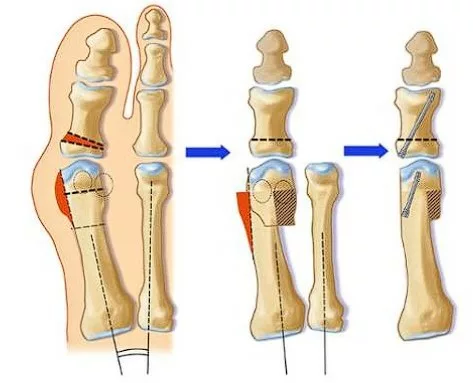
An incision of approximately 4 cm is made along the inner side of the foot. The first metatarsal is then divided (osteotomy) and repositioned into its correct anatomical alignment. Tightened soft tissues are released at the same time, including contracted tendons and ligaments.
The realigned bone fragments are stabilised using a screw, which is normally left in place permanently. However, should it become symptomatic, the screw can be removed during a subsequent procedure.
Percutaneous osteotomy
An alternative technique involves making several small skin incisions using a percutaneous approach performed under fluoroscopic guidance. The bony correction is then maintained using a carefully moulded corrective dressing rather than internal fixation.
The choice between these two techniques is discussed with your surgeon and depends on the type and severity of the deformity.
The procedure takes approximately 10 to 15 minutes and is performed under either general anaesthesia or regional anaesthesia (with only the foot being anaesthetised). The most appropriate anaesthetic technique will be decided during your consultation with the anaesthetist.
The operation is performed as day-case (outpatient) surgery, allowing you to return home on the same day.
Except in exceptional circumstances, operating on both feet simultaneously is not recommended. An interval of approximately two weeks between the two procedures is generally advised.
When should hallux valgus correction be performed?
Initial management consists of conservative treatment, including appropriate footwear, toe orthoses and regular podiatric care.
If symptoms persist despite these measures, surgical correction may be considered.
Surgery is never recommended for purely cosmetic or preventive reasons.
Postoperative care and rehabilitation following hallux valgus correction
The procedure is performed as day-case surgery, allowing you to return home on the day of the operation.
A sterile dressing is applied in the operating theatre and must remain in place for two weeks without being removed.
A comprehensive pain management programme is implemented and closely monitored to maximise comfort and facilitate early rehabilitation.
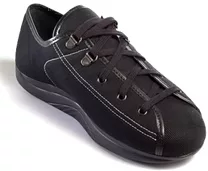
Walking is permitted immediately while wearing a PODONOV forefoot offloading shoe, which should be worn for six weeks.
Following surgery, swelling (oedema) of the foot and toes is entirely normal. To help reduce swelling more rapidly, it is important to rest and keep the foot elevated whenever possible.
Physiotherapy begins immediately to preserve toe mobility and prevent postoperative stiffness.
Time away from work is generally around three weeks, although this depends on the nature of your occupation. Patients with office-based work may often return sooner.
Sporting activities can usually be resumed after approximately three months.
These recovery times represent average estimates and may vary from one patient to another.
Long-term clinical and radiographic follow-up is essential to monitor healing and identify any potential complications.
Risks and complications of hallux valgus correction
Every precaution is taken to ensure the best possible outcome. Nevertheless, as with any surgical procedure, rare complications may occur, including:
- deep vein thrombosis (DVT) and pulmonary embolism, minimised by prescribing anticoagulant treatment for two weeks after surgery;
- worsening of pre-existing medical conditions such as heart failure or diabetes, with careful postoperative monitoring provided by the anaesthetic team;
- infection (risk below 1%). Should this occur, further surgery may be required to wash out the surgical site, followed by antibiotic treatment;
- postoperative stiffness and reduced mobility of the toes if rehabilitation is not carried out appropriately;
- haematoma, which may occasionally require drainage or, in exceptional cases, blood transfusion;
- injury to small sensory nerve branches supplying the foot, potentially resulting in an area of reduced sensation affecting part of the toes;
- recurrence of the deformity, due to secondary displacement of the corrected bone fragments, which may occasionally require revision surgery.
Complex Regional Pain Syndrome (CRPS) is a painful inflammatory condition that remains poorly understood. It is treated medically and may persist for several months, or in some cases several years, requiring specialised pain management, additional investigations and tailored rehabilitation. Both its onset and long-term outcome remain unpredictable.
These represent the principal potential complications, although this list is not exhaustive. Rare and exceptional complications may also occur. It is not possible to describe every potential risk in advance. Your surgeon will be pleased to discuss your individual situation and answer any questions you may have.
Results of hallux valgus correction
Without treatment, hallux valgus generally progresses, with worsening pain and increasing deformity. Over time, the deformity may extend to the lesser toes, eventually affecting the mechanics and function of the entire foot.
The objectives of surgery are twofold:
- to relieve pain and restore comfortable walking and footwear;
- to preserve the overall structure of the foot, limiting progressive deformity and reducing the long-term risk of osteoarthritis.
Approximately 90% of patients experience significant improvement in both pain and deformity following surgery.
Walking ability and participation in sporting activities are generally not restricted after full recovery.