
Ingrown Toenail in Hauts-de-Seine
Foot Surgery
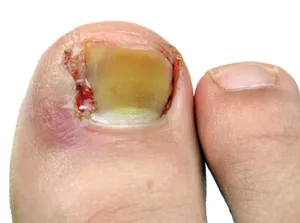
What is an ingrown toenail?
Dr Simon Tournemine in Hauts-de-Seine (92)
An ingrown toenail occurs when the edge of the nail grows into the surrounding skin, creating conflict between the nail plate and the soft tissues alongside the nail.
As the nail penetrates the skin, it triggers an inflammatory reaction that may subsequently become infected. This results in a painful, red swelling around the edge of the nail, making walking and wearing shoes increasingly uncomfortable.
The condition most commonly affects the big toe.
Causes and risk factors for an ingrown toenail
Specialist in Foot Surgery in Hauts-de-Seine (92)
Incorrect nail trimming is the most important factor contributing to the development of an ingrown toenail. Nails cut too short, or leaving a small fragment of nail within the periungual nail groove, can cause the nail edge to penetrate the surrounding skin as it grows.
Tight-fitting footwear that places excessive pressure on the toes also increases the risk of developing an ingrown toenail.
Certain foot deformities, including hallux valgus and claw toes, as well as diabetes, are additional recognised risk factors.
Ingrown Toenail in Rueil-Malmaison
Foot Surgery in Hauts-de-Seine
Preventing an ingrown toenail
Good foot hygiene, combined with regular podiatry care and appropriately fitting footwear, helps prevent the vast majority of ingrown toenails.
Symptoms of an ingrown toenail
The main symptoms include:
- pain around the edge of the nail, particularly when pressure is applied;
- redness and swelling;
- the gradual development of an inflamed fleshy swelling around the nail edge;
- purulent discharge if the inflamed tissue becomes infected.
Without appropriate treatment, an ingrown toenail generally progresses and may lead to increasing infection and pain.
Diagnosis of an ingrown toenail
Your consultation begins with a detailed medical history to identify the factors that may have contributed to the development of the ingrown toenail.
Clinical examination typically reveals a painful, red swelling around the affected nail.
Additional investigations are generally not required.
Treatment of an ingrown toenail
Treatment depends on the stage and severity of the condition.
In the early stages, management consists of podiatric care, regular antiseptic foot baths, and wearing wide, well-ventilated footwear that avoids pressure on the affected toe.
In the majority of patients, these simple conservative measures are sufficient to resolve the problem.
However, if pain persists or infection develops despite appropriate treatment, surgical management becomes necessary.