
Ingrown Toenail Surgery in Hauts-de-Seine
Foot Surgery
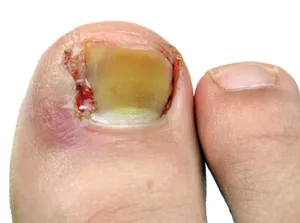
What is ingrown toenail surgery?
Dr Simon Tournemine in Hauts-de-Seine (92)
An ingrown toenail develops when the edge of the nail grows into the surrounding skin rather than over it. This creates a conflict between the nail plate and the adjacent soft tissues, leading first to inflammation and, if left untreated, to infection.
The condition typically causes a red, swollen and painful nail fold, making walking and wearing shoes increasingly uncomfortable. The great toe is by far the most commonly affected.
The principal cause of an ingrown toenail is incorrect nail trimming. Cutting the nail too short or leaving a small nail spicule hidden within the lateral nail groove allows the nail edge to penetrate the surrounding skin as it grows.
Additional contributing factors include tight-fitting footwear, which compresses the toes and increases pressure on the nail margins.
Ingrown toenail surgery
Specialist in Foot Surgery in Hauts-de-Seine (92)
The surgical procedure consists of removing:
- the portion of the nail embedded within the surrounding soft tissues;
- the inflamed nail fold;
- any infected tissue.
To minimise the risk of recurrence, the lateral portion of the nail matrix responsible for producing the affected section of nail is also removed.
The procedure is performed under local anaesthesia.
Surgery is carried out as day-case (outpatient) treatment, allowing you to return home on the same day.
Ingrown Toenail Surgery in Rueil-Malmaison
Foot Surgery in Hauts-de-Seine
When should ingrown toenail surgery be performed?
Early-stage ingrown toenails are usually managed conservatively.
Treatment includes podiatric care, antiseptic foot baths, and wearing wide, well-ventilated footwear that avoids pressure on the toes. These measures are sufficient in the majority of patients.
If symptoms persist or infection develops despite conservative treatment, surgical management becomes necessary.
Postoperative care and recovery following ingrown toenail surgery
The dressing should be changed daily for approximately three weeks, until complete wound healing has been achieved.
Pain management is carefully monitored to ensure maximum comfort during recovery.
When infection is present, a seven-day course of antibiotics is also prescribed.
During the first postoperative week, patients are advised to limit walking and keep the foot elevated whenever possible in order to reduce pain and promote healing.
Full weight-bearing is permitted immediately after surgery, provided that wide, comfortable footwear is worn.
Sick leave is generally not required, and driving may usually be resumed immediately.
Sporting activities can generally be restarted after approximately four weeks.
These recovery times are average estimates and may vary according to individual healing.
Regular postoperative clinical follow-up is recommended to monitor healing and identify any potential complications.
Risks and complications of ingrown toenail surgery
Every precaution is taken to optimise healing and minimise complications. Nevertheless, as with any surgical procedure, certain risks remain, although they are uncommon:
- infection (risk below 1%). Should infection occur, additional surgery to clean the operative site together with antibiotic treatment may be required;
- haematoma, caused by postoperative bleeding around the surgical site;
- recurrence of the ingrown toenail, an uncommon complication that may require further surgical treatment.
These represent the principal potential complications, although this list is not exhaustive. Rare and exceptional complications may also occur. Not every possible complication can be anticipated in advance. Your surgeon will discuss your individual case and answer any questions during your consultation.
Results of ingrown toenail surgery
The objectives of surgery are twofold:
- to eliminate pain and restore comfortable walking and footwear;
- to prevent progression of the condition and reduce the risk of recurrent infection affecting the toe.
Complete wound healing and return to sporting activities are generally achieved after approximately four weeks.