
Tarsal Tunnel Syndrome in Hauts-de-Seine
Foot Surgery
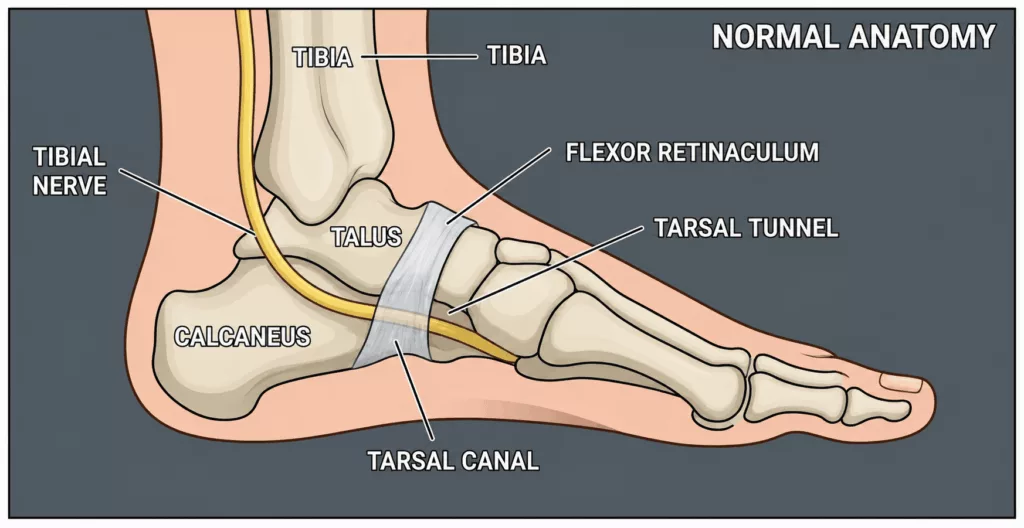
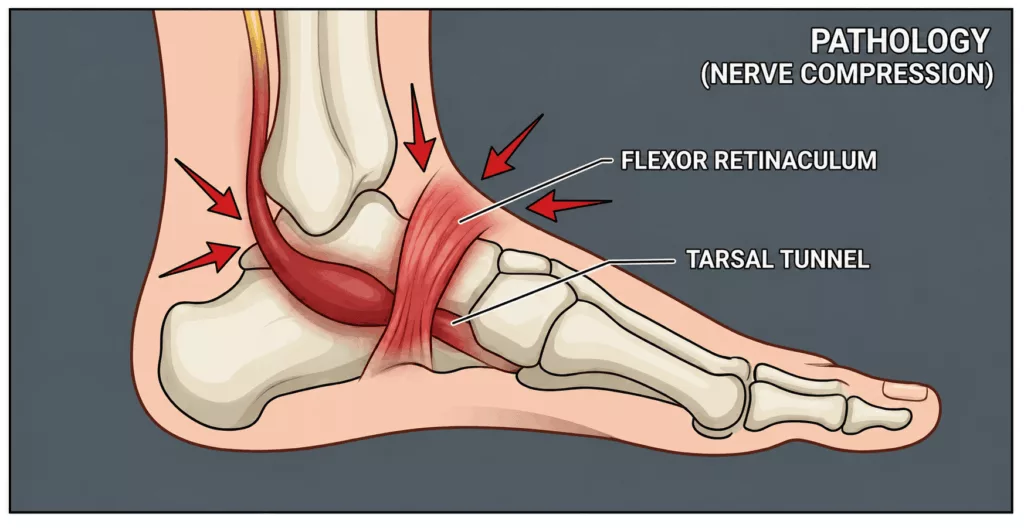
What is tarsal tunnel syndrome?
Dr Simon Tournemine in Hauts-de-Seine (92)
Tarsal tunnel syndrome is a neurological condition of the foot caused by compression or irritation of the posterior tibial nerve, or one of its branches, as it passes through a narrow osteofibrous tunnel. This anatomical passage, known as the tarsal tunnel, is located on the inner side of the ankle, just behind and below the medial malleolus.
Comparable to the well-known carpal tunnel syndrome affecting the wrist, compression of the nerve at the ankle leads to sensory disturbances and disabling pain affecting the sole of the foot.
Causes and symptoms of tarsal tunnel syndrome
Specialist in Foot Disorders in Hauts-de-Seine (92)
The tarsal tunnel is a confined, non-expandable space. Any change in its volume or in the structures passing through it may compress the posterior tibial nerve.
The main causes include:
- Foot alignment disorders: A flat valgus foot (pes planovalgus) or collapse of the medial arch increases tension on the flexor retinaculum (the ligament forming the roof of the tunnel), reducing the space available for the nerve.
- Traumatic causes: Previous ankle sprains, fractures of the calcaneus or medial malleolus may leave residual bony deformities or chronic swelling that narrows the tunnel.
- Local space-occupying lesions: A ganglion cyst, dilated veins (varicosities) or inflamed tendon sheaths (flexor tenosynovitis) may directly compress the nerve.
- Systemic diseases: Conditions such as diabetes mellitus, hypothyroidism and rheumatoid arthritis increase the susceptibility of peripheral nerves to compression.
Characteristic symptoms
Patients typically describe neuropathic pain affecting the sole of the foot, the heel and, in some cases, radiating towards the toes.
Common symptoms include:
- burning sensations;
- tingling, pins and needles or numbness;
- intermittent electric shock-like sensations;
- worsening pain at the end of the day, after prolonged standing or during walking;
- frequent night-time pain severe enough to wake the patient, often relieved by massaging the foot or allowing it to hang over the edge of the bed.
Tarsal Tunnel Syndrome in Hauts-de-Seine
Foot Surgery Consultation in Hauts-de-Seine (92)
Diagnosis of tarsal tunnel syndrome
Diagnosis begins with a thorough clinical examination performed by a foot and ankle specialist.
Key clinical findings include:
- Tinel’s sign: Gentle tapping behind the medial malleolus reproduces paraesthesia (tingling sensations) along the distribution of the plantar branches of the tibial nerve.
- Palpation: Examination aims to identify a precise area of tenderness or detect the presence of a palpable ganglion cyst.
Additional investigations are routinely requested to confirm the diagnosis and identify the underlying cause.
Electromyography (EMG): Performed by a neurologist, this test evaluates electrical conduction through the posterior tibial nerve. It confirms nerve compression and assesses its severity.
MRI or ultrasound of the ankle: These imaging studies are essential for visualising the contents of the tarsal tunnel and identifying any compressive lesion, such as a ganglion cyst, varicose vein or inflamed tendon sheath.
Weight-bearing radiographs: Standing X-rays assess the overall alignment of the foot and identify structural abnormalities such as pes planovalgus.
Progression and treatment of tarsal tunnel syndrome
Natural progression without treatment
Persistent, untreated nerve compression may eventually lead to irreversible nerve damage.
Over time, pain may become constant and be accompanied by complete loss of sensation (hypoaesthesia) affecting the sole of the foot, significantly impairing walking. In advanced cases, wasting of the intrinsic muscles of the foot (muscle atrophy) may also occur.
Conservative treatment (first-line management)
Before considering surgery, a comprehensive non-operative treatment programme is routinely implemented.
This may include:
- Custom-made foot orthoses (insoles): Designed to correct underlying biomechanical abnormalities, particularly flat valgus foot, helping to realign the heel and reduce tension within the tarsal tunnel.
- Medication: Anti-inflammatory drugs together with analgesics specifically indicated for neuropathic pain.
- Corticosteroid injections: Frequently performed under ultrasound guidance directly into the tarsal tunnel to reduce local inflammation.
- Physiotherapy: Stretching exercises, soft tissue mobilisation, drainage techniques and therapeutic massage to improve tissue mobility.
Surgical treatment: Tarsal tunnel neurolysis
If well-conducted conservative treatment fails after several months, or if electromyography demonstrates objective evidence of significant nerve compression, surgical treatment is recommended.
The procedure, known as tarsal tunnel neurolysis, involves surgically releasing the flexor retinaculum, which forms the roof of the tarsal tunnel, thereby decompressing the posterior tibial nerve and eliminating the source of compression. If a ganglion cyst or varicose vein is identified within the tunnel, it is removed during the same procedure.
The operation is performed as day-case (outpatient) surgery under regional anaesthesia, allowing patients to return home on the day of surgery.