
Synovial Cyst Excision in Hauts-de-Seine
Foot Surgery
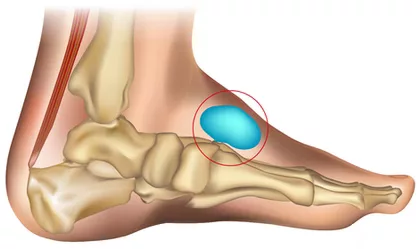
What is a synovial cyst excision?
Dr Simon Tournemine in Hauts-de-Seine (92)
A synovial cyst of the foot is a benign fluid-filled swelling that develops beneath the skin. It contains a thick, gelatinous synovial fluid and most commonly appears on the dorsum of the foot or around the toes.
Although entirely non-cancerous, the natural course of a synovial cyst is unpredictable. Some cysts resolve spontaneously within a few months, whereas others progressively enlarge and become symptomatic.
As the cyst increases in size, it may cause both cosmetic concerns and functional impairment by compressing neighbouring anatomical structures such as tendons, nerves or blood vessels. This may result in pain, restricted movement and discomfort when wearing footwear.
Synovial Cyst Excision
Specialist in Foot Surgery in Hauts-de-Seine (92)
A small skin incision is made directly over the cyst.
The cyst is completely excised, and the opening in the joint capsule or tendon sheath from which it originates is carefully repaired to reduce the risk of recurrence.
The procedure takes approximately 20 minutes.
It is performed under either general anaesthesia or regional anaesthesia (where only the foot is anaesthetised). The most appropriate anaesthetic technique will be discussed during your consultation with the anaesthetist.
This is a day-case (outpatient) procedure, allowing you to return home on the day of surgery.
Synovial Cyst Excision in Rueil-Malmaison
Foot Surgery in Hauts-de-Seine
When should a synovial cyst be removed?
Treatment is not always necessary.
If the cyst is painless and causes no functional limitation, it may simply be observed, particularly as some synovial cysts disappear spontaneously over time.
Surgical treatment is considered when the cyst causes pain, cosmetic concerns or functional impairment.
Why undergo synovial cyst excision and what are the benefits?
Two treatment options may be considered for symptomatic synovial cysts:
- Aspiration (needle drainage) with corticosteroid injection
- Surgical excision
Aspiration consists of draining the cyst using a needle, followed by a corticosteroid injection intended to reduce the likelihood of recurrence.
However, recurrence rates following aspiration remain high.
Surgical excision removes the cyst completely together with the underlying tissue responsible for its formation, thereby significantly reducing, although not completely eliminating, the risk of recurrence.
Postoperative care and rehabilitation following synovial cyst excision
The dressing should be changed every two days for approximately two weeks while the wound heals.
Pain management is carefully supervised to maximise comfort and promote an uncomplicated recovery.
Walking is permitted immediately after surgery with comfortable, supportive footwear such as trainers.
Physiotherapy is not routinely required, as normal daily activities generally provide sufficient rehabilitation.
Driving is usually possible after approximately three weeks, while sporting activities can generally be resumed after six weeks.
Patients return home on the day of surgery.
These recovery times represent average estimates and may vary depending on individual healing.
Regular clinical and, where appropriate, radiographic follow-up is recommended to monitor recovery and detect any complications.
Risks and complications of synovial cyst excision
Every effort is made to ensure optimal healing. Nevertheless, as with any surgical procedure, certain complications may occur, although they remain uncommon:
- deep vein thrombosis (DVT) and pulmonary embolism;
- worsening of pre-existing medical conditions such as heart disease or diabetes, with appropriate postoperative monitoring provided by the anaesthetic team;
- infection (risk below 1%). Should infection occur, further surgery to clean the operative site together with antibiotic treatment may be required;
- haematoma, which may occasionally require drainage;
- injury to small sensory nerve branches supplying the foot, potentially resulting in areas of reduced sensation;
- recurrence, which remains the most frequent complication, occurring in approximately 5-10% of patients, and occasionally requiring further surgery.
Complex Regional Pain Syndrome (CRPS) may rarely develop following surgery. This painful inflammatory condition can cause swelling, stiffness and persistent pain in the foot. It is treated medically and may require specialised rehabilitation, further investigations and dedicated pain management. Its occurrence, duration and long-term outcome remain unpredictable.
These represent the principal potential complications, although the list is not exhaustive. Rare or exceptional complications may also occur. Your surgeon will discuss your individual situation in detail during your consultation.
Results of synovial cyst excision
Surgery removes the symptomatic cyst and relieves the associated discomfort.
Complete wound healing is generally achieved within three weeks, allowing return to sporting activities thereafter.
Although the likelihood of recurrence is low, it cannot be completely eliminated.