Haglund's Deformity Resection in Hauts-de-Seine

Foot Surgery

What is Haglund's deformity resection?

Dr Simon Tournemine in Hauts-de-Seine (92)

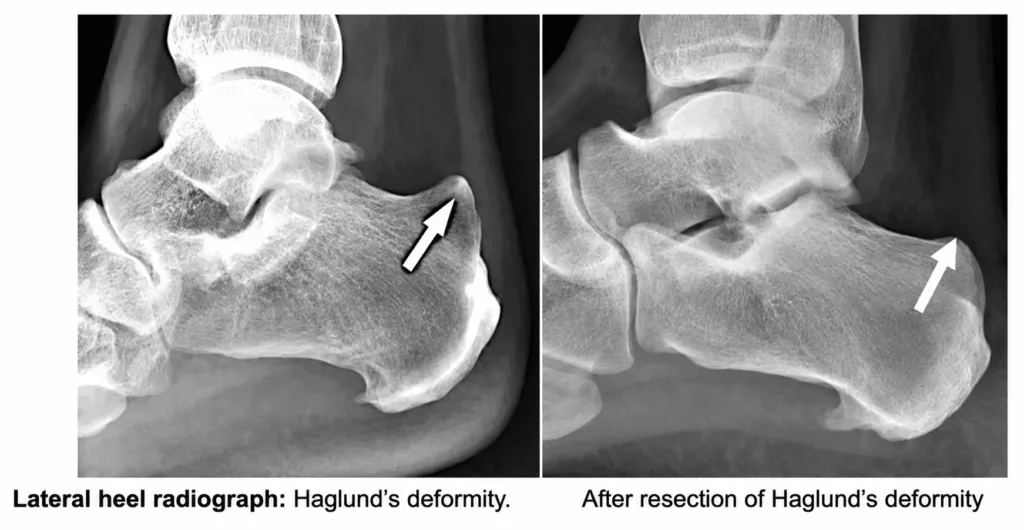
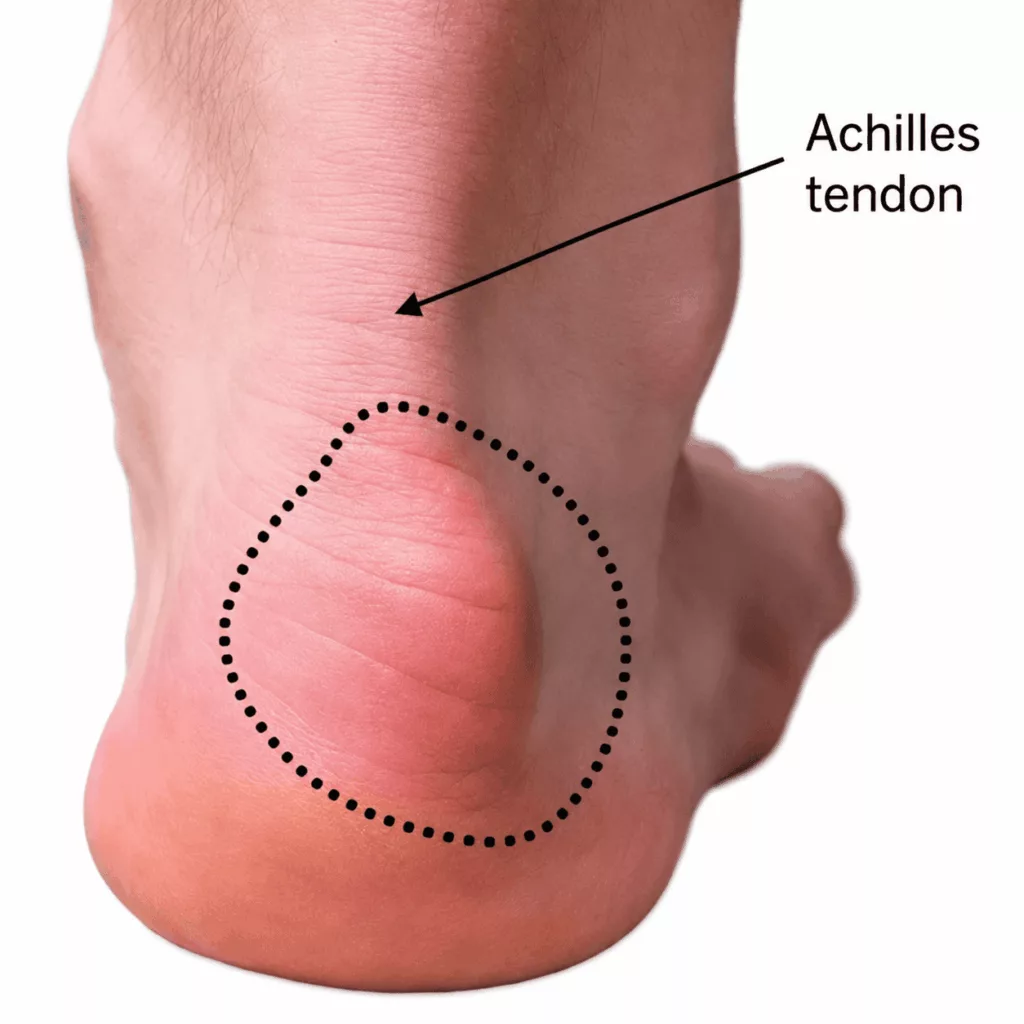
Haglund’s deformity is an insertional disorder of the Achilles tendon, affecting the point where the tendon attaches to the heel bone (calcaneus). It is characterised by a painful bony prominence at the back of the heel.

The condition is frequently bilateral, most commonly affects adults between 20 and 30 years of age, and is associated with rigid-backed footwear and high-arched (cavus) feet.

Haglund's deformity resection

Specialist in Foot Surgery in Hauts-de-Seine (92)

The aim of surgery is to remove the excess bone responsible for the prominence and the mechanical conflict with the Achilles tendon. Inflamed soft tissues surrounding the tendon are also excised.

A skin incision of approximately 1 cm is made directly over the bony prominence. The excess bone is then carefully reshaped using a high-speed surgical burr.

The procedure is relatively short, taking approximately 20 minutes.

It is performed under either general anaesthesia or regional anaesthesia (where only the leg is anaesthetised). The most appropriate anaesthetic technique will be determined during your preoperative consultation with the anaesthetist.

The operation is performed as day-case (outpatient) surgery, allowing you to return home on the same day.

Haglund's Deformity Resection in Rueil-Malmaison

Foot Surgery in Hauts-de-Seine

In the majority of patients, conservative treatment is successful.

Initial management includes:

  • oral or topical anti-inflammatory medication;
  • regular ice application during painful inflammatory episodes;
  • physiotherapy, including Achilles tendon stretching and soft tissue mobilisation;
  • custom orthotic insoles incorporating a heel lift to reduce tension on the Achilles tendon and minimise friction within footwear;
  • wearing soft-backed shoes;
  • corticosteroid injections are not recommended, as they may weaken the Achilles tendon and increase the risk of tendon rupture.

When symptoms persist despite appropriate conservative treatment, surgical management may be recommended.

Dressings should be changed every two days for approximately two weeks, until wound healing is complete.

Pain management is carefully monitored to maximise comfort and facilitate early rehabilitation.

Anticoagulant treatment is prescribed for two weeks to reduce the risk of deep vein thrombosis.

Patients begin full weight-bearing on the day of surgery, wearing a removable walking boot fitted with a heel lift for approximately three weeks. This protects the Achilles tendon while healing takes place.

Physiotherapy should begin immediately to maintain muscle strength and preserve ankle mobility.

Driving is generally possible after approximately three weeks, while sporting activities can usually be resumed after eight weeks.

These recovery times are average estimates and may vary according to individual healing.

Long-term clinical and radiographic follow-up is recommended to monitor recovery and identify any potential complications.

Every precaution is taken to optimise healing and minimise complications. Nevertheless, as with any surgical procedure, certain risks remain, although they are uncommon:

  • deep vein thrombosis (DVT) and pulmonary embolism, with the risk reduced through anticoagulant treatment for two weeks following surgery;
  • infection (risk below 1%). Should infection occur, additional surgery to clean the operative site together with antibiotic treatment may be required;
  • postoperative stiffness and reduced ankle mobility if rehabilitation is not adequately performed;
  • haematoma, caused by postoperative bleeding, which may occasionally require surgical evacuation or, rarely, blood transfusion;
  • injury to small sensory nerve branches supplying the ankle and foot, potentially resulting in areas of reduced sensation.

Complex Regional Pain Syndrome (CRPS) is a painful inflammatory condition that remains poorly understood. It is treated medically and may persist for several months, or occasionally several years, requiring specialised rehabilitation, additional investigations and, in some cases, dedicated pain management. Both its occurrence and long-term evolution remain unpredictable.

These represent the principal potential complications, although this list is not exhaustive. Rare and exceptional complications may also occur. Not every possible complication can be anticipated in advance. Your surgeon will discuss your individual case and answer any questions during your consultation.

The objectives of surgery are twofold:

  • to relieve pain and restore comfortable walking and footwear;
  • to prevent complications such as Achilles tendon damage and skin lesions including calluses, blisters, wounds and infection.

Complete healing and return to sporting activities are generally achieved approximately eight weeks after surgery.