
Knee Sprain in Hauts-de-Seine
Knee Surgery
What Is a Knee Sprain?
Dr Simon Tournemine in Hauts-de-Seine (92)
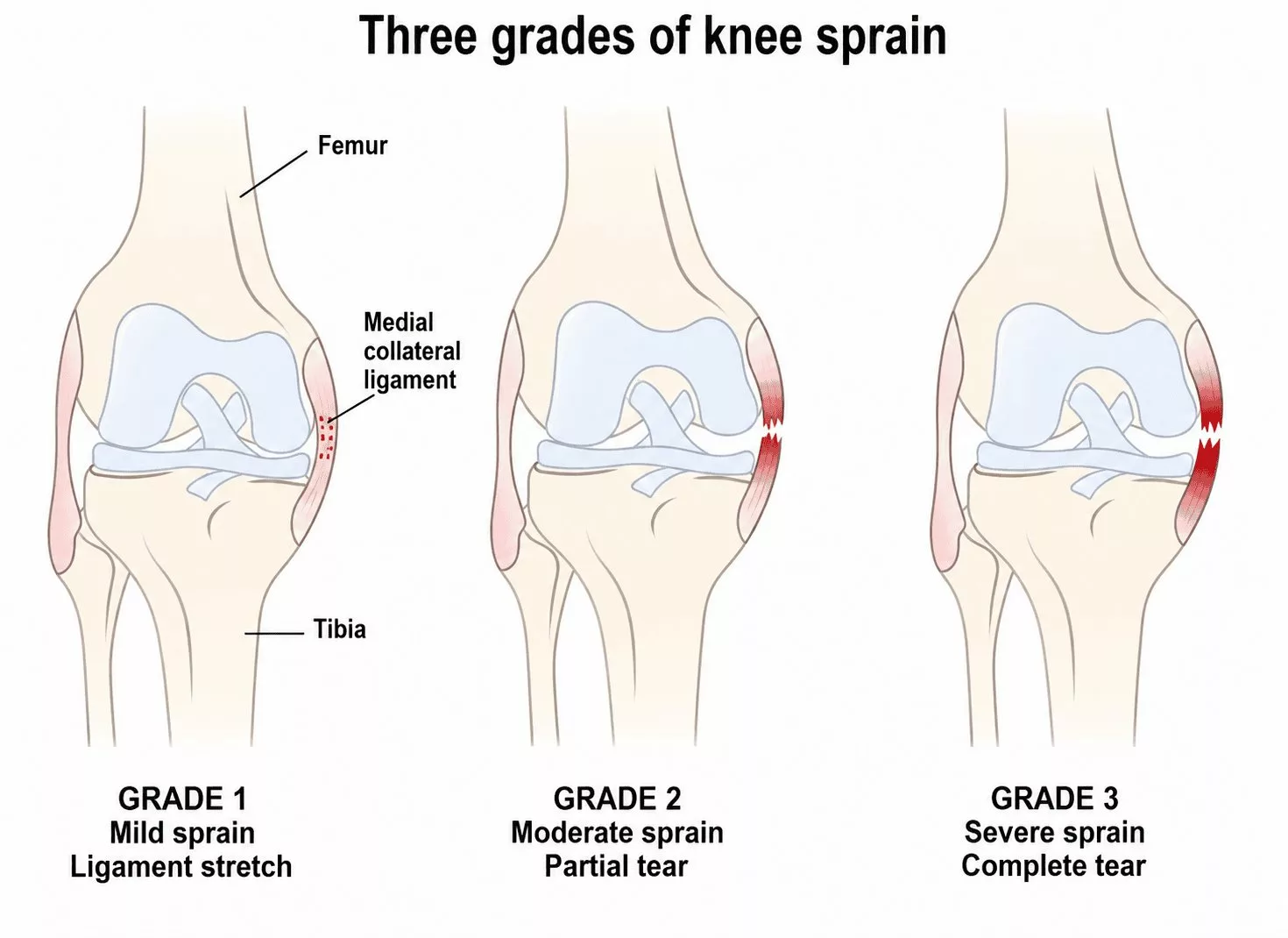
A knee sprain is a partial or complete tear of one or more of the ligaments that stabilise the knee joint following a traumatic injury.
The knee is stabilised by four principal ligaments:
- the medial collateral ligament (MCL) and the lateral collateral ligament (LCL), located on either side of the knee;
- the anterior cruciate ligament (ACL) and the posterior cruciate ligament (PCL), situated at the centre of the joint.
The severity of a knee sprain depends on the extent of ligament damage:
- Mild sprain: the ligament is stretched without significant tearing.
- Moderate sprain: the ligament is partially torn.
- Severe sprain: the ligament is completely ruptured.
Causes and Risk Factors for a Knee Sprain
Knee Surgery Specialist in Hauts-de-Seine (92)
A knee sprain most commonly occurs following a traumatic movement such as:
- Hyperextension of the knee, for example when kicking and missing the ball during a football match.
- Twisting injuries, where the foot remains firmly planted on the ground while the knee rotates above it. These injuries occur particularly during so-called pivot-contact sports, including football, skiing, rugby and combat sports.
Knee Sprain in Rueil-Malmaison
Knee Surgery in Hauts-de-Seine
Symptoms of a Knee Sprain
Many patients report hearing or feeling a distinct “pop” inside the knee at the time of injury, followed by immediate pain. Some also experience a sensation that the knee has briefly “given way” or moved out of place before returning to its normal position. Sporting activity usually has to be stopped immediately, and the knee rapidly becomes swollen because bleeding occurs within the joint following ligament injury (haemarthrosis).
Although this acute and painful phase generally resolves over the following weeks, with swelling progressively subsiding and daily activities gradually becoming easier, symptoms may persist depending on the severity of the sprain and the ligaments involved. Ongoing pain or instability may affect everyday activities, while pivoting movements and a return to sport may remain difficult.
Preventing a Knee Sprain
Maintaining good knee flexibility together with adequate muscle strength helps reduce the risk of ligament injuries. A thorough warm-up before sporting activity, combined with regular muscle-strengthening and stretching exercises, plays an important role in preventing knee sprains.
Diagnosis of a Knee Sprain
The consultation begins with a detailed medical history to establish the mechanism of injury and assess the patient’s symptoms, including pain, popping sensations, locking episodes and instability. The type of sport practised and the patient’s level of physical activity are also taken into consideration.
Clinical examination focuses on assessing knee stability. The anterior and posterior cruciate ligaments, together with the medial and lateral collateral ligaments, are carefully evaluated. Associated injuries, particularly meniscal tears, are also investigated, as they frequently occur alongside ligament sprains.
Standard knee X-rays are performed to identify associated injuries or indirect bony signs of ligament damage. Magnetic resonance imaging (MRI) is the reference investigation, allowing precise assessment of the injured ligaments and the severity of the injury. MRI also evaluates the menisci, which are commonly affected in association with ligament injuries.
Treatment of a Knee Sprain
Treatment varies considerably depending on the severity of the sprain and the ligaments involved. A specialist assessment is essential to establish an accurate diagnosis and determine the most appropriate management.
In the majority of mild and moderate knee sprains, surgery is not required because the injured ligaments are capable of healing. Treatment consists of early mobilisation with weight-bearing as tolerated, combined with pain relief, anti-inflammatory medication, regular icing and a structured physiotherapy programme. Wearing a hinged knee brace can help reduce pain while allowing a safe and earlier return to everyday activities.
In cases of severe ligament injury, temporary immobilisation may be necessary and surgical treatment may be considered to restore knee stability. This usually involves ligament reconstruction (ligamentoplasty), a procedure commonly performed for anterior cruciate ligament (ACL) ruptures. The decision to proceed with surgery depends on several factors, including the severity of the ligament injury, the patient’s age, occupation and level of sporting activity. A specialist orthopaedic opinion is therefore essential.