Anterior Cruciate Ligament (ACL) Reconstruction in Hauts-de-Seine
Knee Surgery
What Is Anterior Cruciate Ligament (ACL) Reconstruction?
Dr Simon Tournemine in Hauts-de-Seine (92)
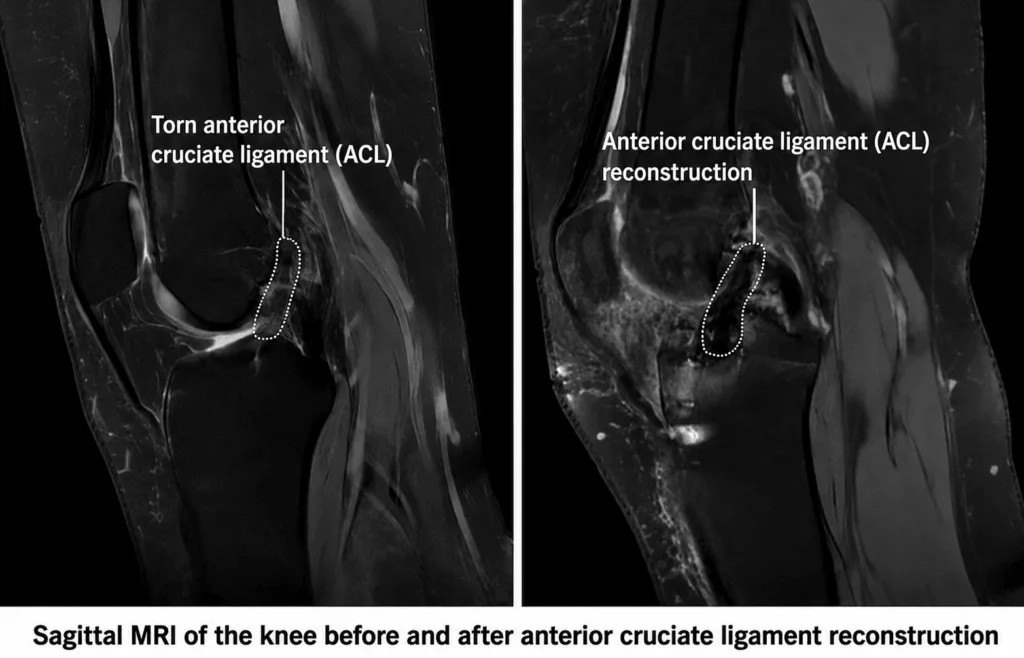
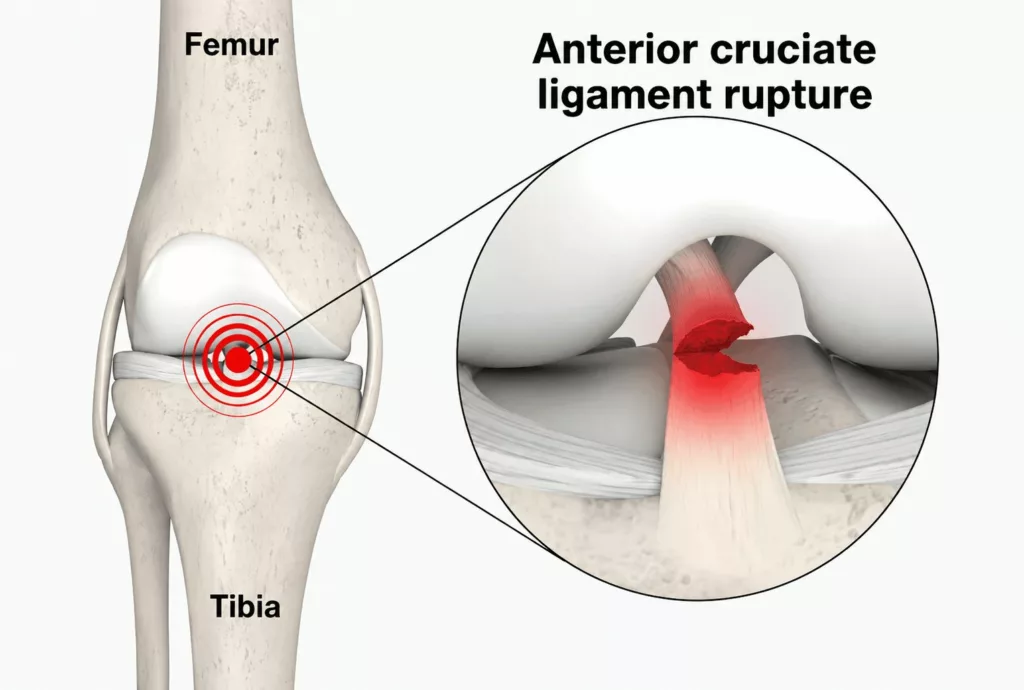
The anterior cruciate ligament (ACL) is located at the centre of the knee joint, within the intercondylar notch, where it connects the femur to the tibia. It plays a fundamental role in knee stability by preventing excessive forward movement of the tibia relative to the femur while also controlling rotational movements of the knee. ACL rupture is one of the most common sports-related injuries, affecting approximately 1 in 3,000 people, and most frequently occurs following a twisting injury during sporting activity.
At the time of injury, patients often experience a distinct “pop” within the knee, followed by immediate pain. Continuing sporting activity is usually impossible, and the knee rapidly becomes swollen due to bleeding into the joint (haemarthrosis) caused by the torn ligament.
During the initial acute phase, treatment consists of immobilising the knee with a brace, combined with pain relief, anti-inflammatory medication, rest and regular icing. Symptoms generally improve over the following weeks as the swelling subsides and daily activities gradually become easier.
However, the natural progression of a complete ACL rupture is unfavourable because the ligament cannot heal spontaneously. Persistent knee instability develops over time, making everyday movements, pivoting manoeuvres and sporting activities increasingly difficult. In these circumstances, ACL reconstruction surgery may be recommended to restore knee stability.
ACL Reconstruction Procedure
Knee Surgery Specialist in Hauts-de-Seine (92)
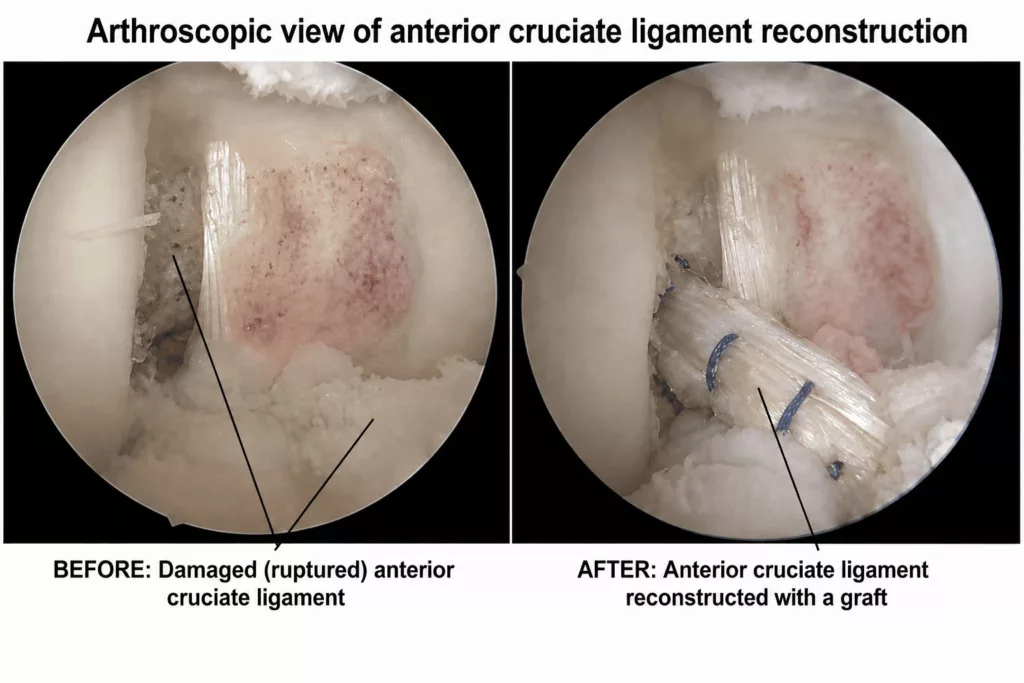
ACL reconstruction, also known as ligamentoplasty, is one of the most frequently performed orthopaedic procedures, with approximately 60,000 operations carried out each year in France. The procedure consists of replacing the torn ligament with a tendon graft that serves as a new anterior cruciate ligament.
The graft is usually harvested from either the hamstring tendons (DT4, DIDT or DT3+DI2 techniques) or from part of the patellar tendon using the Kenneth-Jones technique. Once prepared, the graft is positioned within the knee to reproduce the native ACL and secured inside the bone using either cortical suspensory fixation devices (Endobuttons) or interference screws, depending on the reconstruction technique.
ACL Reconstruction in Rueil-Malmaison
Knee Surgery in Hauts-de-Seine
ACL Reconstruction Surgery
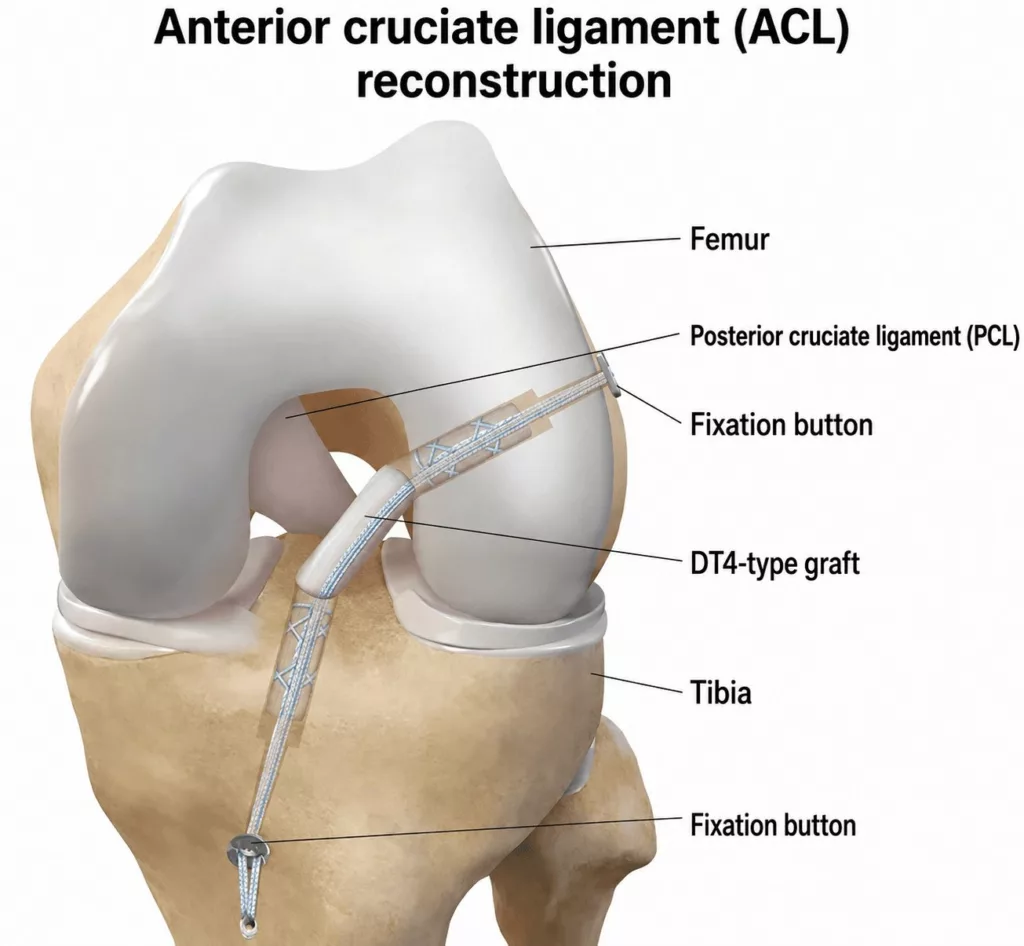
Harvesting either the hamstring tendons or part of the patellar tendon has minimal long-term functional consequences, as the donor tissue heals progressively over the following weeks.
The operation is performed arthroscopically, using a minimally invasive, video-assisted technique that avoids opening the knee joint. Two small incisions of approximately 5 mm are made at the front of the knee to introduce a miniature camera and specialised instruments used to prepare the bone tunnels and position the new ligament. Compared with conventional open surgery, arthroscopy offers several advantages, including reduced bleeding, less postoperative pain, smaller scars and a faster recovery.
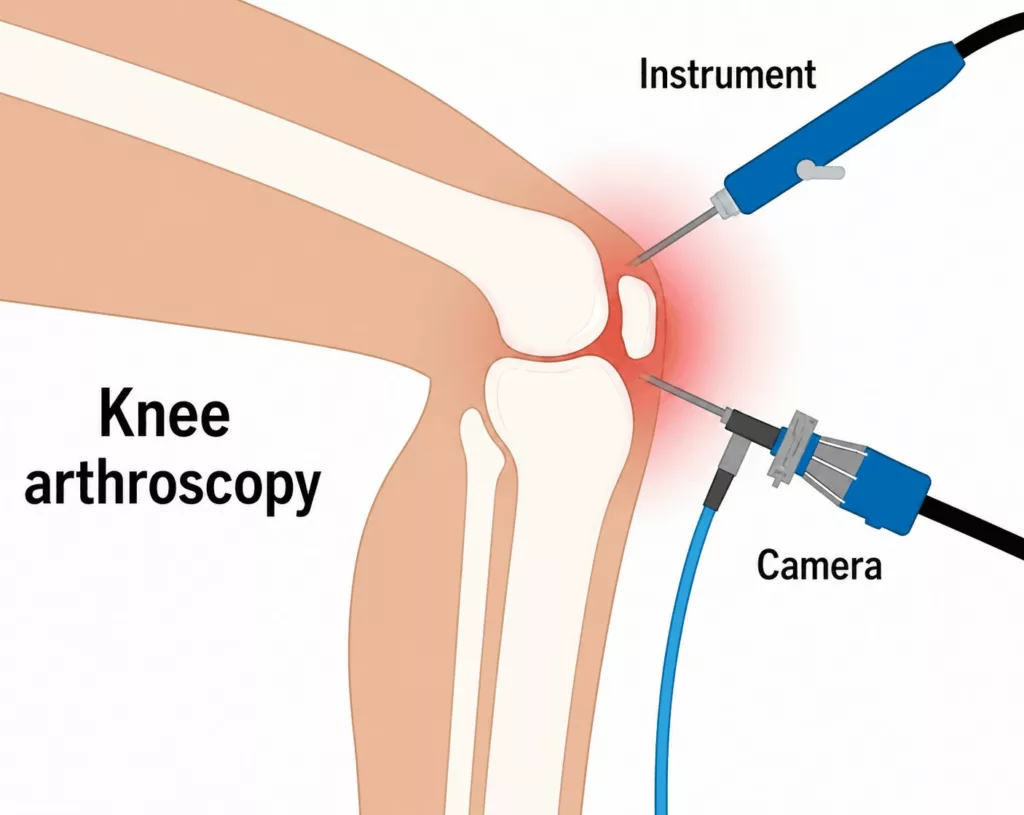
Meniscal injuries are frequently associated with ACL ruptures. Whenever necessary, meniscal repair or meniscal surgery is performed during the same procedure.
The operation generally lasts approximately 60 minutes.
It is performed under either general anaesthesia or spinal anaesthesia, in which only the lower limbs are anaesthetised. The choice of anaesthetic is made jointly with the anaesthetist during your preoperative consultation.
This is usually performed as day-case surgery, allowing patients to return home on the same day.
When Should Anterolateral Ligament (ALL) Reconstruction Be Combined with ACL Reconstruction?
When performing ACL reconstruction, it is often beneficial to combine the procedure with reconstruction of the anterolateral ligament (ALL), also referred to as anterolateral augmentation.
Scientific studies have shown that adding an anterolateral reinforcement to ACL reconstruction offers two important advantages:
- Improved functional outcomes through better control of rotational knee stability.
- A lower risk of ACL graft failure or re-rupture.
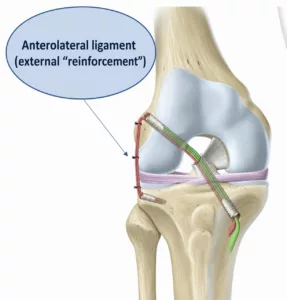
The anterolateral ligament therefore acts as an additional stabiliser and may be reconstructed in selected patients, including those presenting with:
- Significant rotational instability of the knee.
- Participation in pivoting or contact sports.
- Competitive athletes.
- Patients younger than 20 years of age.
- Revision ACL reconstruction following graft failure.
- Chronic ACL injuries.
In these situations, a modified hamstring technique known as DT3+DI2 is used, allowing simultaneous reconstruction of both the ACL and the anterolateral ligament using hamstring tendon grafts.
Postoperative recovery follows the same principles as isolated ACL reconstruction.
Postoperative Care and Rehabilitation Following ACL Reconstruction
Immediately after surgery, full weight-bearing is permitted without the need for a knee brace. The dressing is usually changed every two days for approximately two weeks. Pain management is carefully monitored to maximise comfort and facilitate early rehabilitation. Anticoagulant medication is prescribed for two weeks to reduce the risk of deep vein thrombosis (DVT). This treatment is administered as tablets and does not require routine blood monitoring.
Rehabilitation forms an essential part of successful treatment. Physiotherapy begins the day after surgery, either with your own physiotherapist or within a rehabilitation centre, and continues for several months. The initial goals are to reduce pain, restore knee mobility and gradually discontinue the use of crutches.
Most patients are able to walk without crutches after approximately one month.
Progressive strengthening of both the quadriceps and hamstring muscles then becomes a key component of rehabilitation. At the six-week review, full knee flexion and extension should have been restored and swelling should have resolved.
Return to straight-line sports, such as swimming, cycling and jogging, is generally possible after three months. Return to pivoting and contact sports is usually recommended after six months.
Return to work generally occurs between one and three months, depending on the patient’s occupation. Office-based work can often be resumed earlier. These recovery times are averages and remain indicative, as every patient’s recovery is individual.
Long-term clinical and radiographic follow-up remains essential to monitor the reconstructed knee and identify any potential complications.
Why Undergo ACL Reconstruction? What Are the Benefits?
The natural progression of a complete ACL rupture is unfavourable because the torn ligament cannot heal on its own. Persistent instability gradually develops, leading to recurrent episodes of giving way and progressive damage to the entire knee joint.
ACL reconstruction has two principal objectives:
- To restore knee stability, eliminate pain and instability, and allow a safe return to sporting activities.
- To protect the knee over the long term by reducing progressive joint degeneration. An unstable knee without a functioning ACL is more likely to develop meniscal injuries, cartilage damage and premature osteoarthritis.
Risks and Complications of ACL Reconstruction
Every precaution is taken to maximise the chances of a successful outcome. Nevertheless, as with any surgical procedure, complications, although uncommon, may occur.
The principal risks include:
- Deep vein thrombosis (DVT) and pulmonary embolism: uncommon complications, with the risk reduced by anticoagulant treatment prescribed for two weeks after surgery.
- Worsening of pre-existing medical conditions: such as heart disease or diabetes. Close postoperative monitoring by the anaesthetic team helps minimise this risk.
- Infection (risk below 1%): this may require further surgery to wash out the knee joint, followed by antibiotic treatment.
- Loss of knee motion and postoperative stiffness: these complications may occur if rehabilitation is inadequate.
- Haematoma: postoperative bleeding may occasionally require drainage or blood transfusion.
- Sensory nerve injury: small cutaneous nerve branches around the knee may rarely be affected, leading to a localised area of reduced skin sensation.
- Complex Regional Pain Syndrome (CRPS): a rare inflammatory and painful condition that may persist for several months, or occasionally longer, requiring specialised rehabilitation and pain management.
- Injury to the tibial or common peroneal nerve: an exceptionally rare complication that may result from a haematoma, surgical trauma or regional anaesthesia. Partial or complete recovery may occur over several months.
- Vascular injury: an extremely uncommon complication that may require urgent additional surgery to restore blood flow to the leg.
- Compartment syndrome: a rare emergency caused by increased pressure within the leg, usually secondary to bleeding, requiring urgent surgical decompression.
- ACL graft failure or re-rupture: although uncommon, the reconstructed ligament may rupture following a new injury or gradually stretch over time. In addition, fixation devices may occasionally become symptomatic and require removal. Strict adherence to the rehabilitation programme and recommended timelines for returning to sport is essential to minimise these risks.
These represent the principal risks associated with ACL reconstruction but do not constitute an exhaustive list. Exceptional complications may occur, and every patient’s situation is unique. Your orthopaedic surgeon will discuss your individual case in detail and answer any questions you may have before surgery.
Results of ACL Reconstruction
Recovery of knee strength and mobility generally occurs between three and six months after surgery. Pain, instability and episodes of locking usually resolve progressively during rehabilitation.
Clinical outcomes demonstrate significant improvement in knee function in more than 90% of patients. Nevertheless, recovery may occasionally take longer than expected, and some patients may continue to experience intermittent swelling or mild discomfort during strenuous activity.
By restoring knee stability, ACL reconstruction also helps reduce progressive joint degeneration and lowers the long-term risk of meniscal injury, cartilage damage and osteoarthritis. However, the reconstructed ligament is not stronger than the original ACL, and a further rupture remains possible following a new injury. Continued attention to injury prevention and appropriate sporting practice therefore remains essential.