Unicompartmental Knee Replacement in Hauts-de-Seine

Knee Surgery

What Is a Unicompartmental Knee Replacement?

Dr Simon Tournemine in Hauts-de-Seine (92)

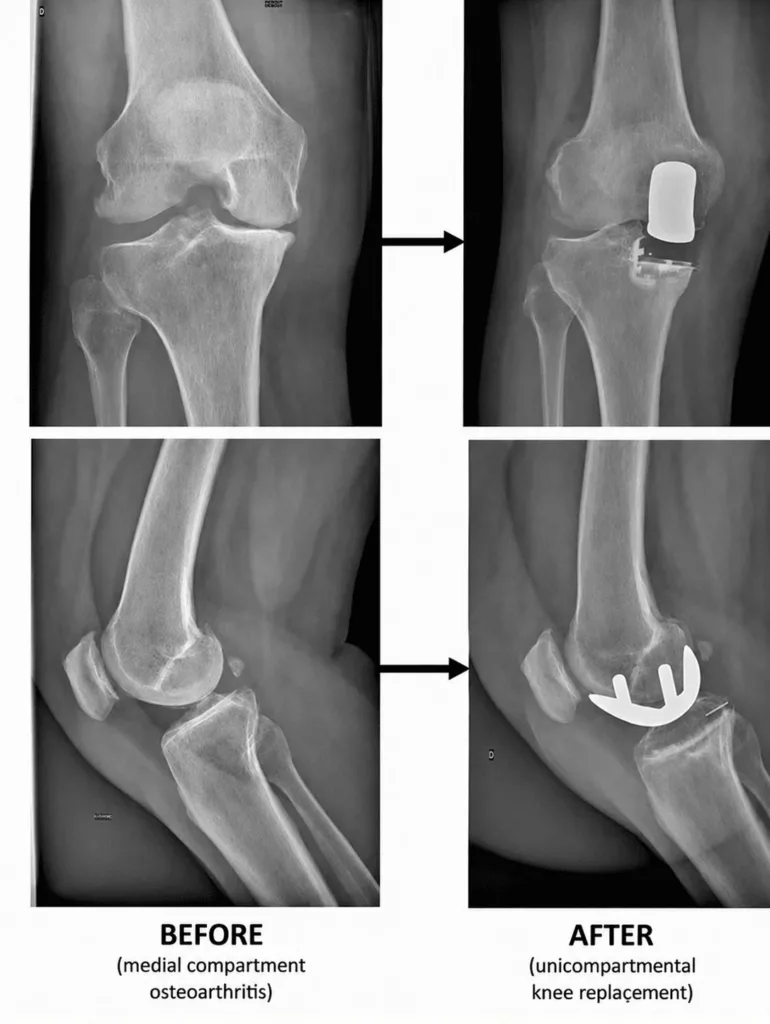
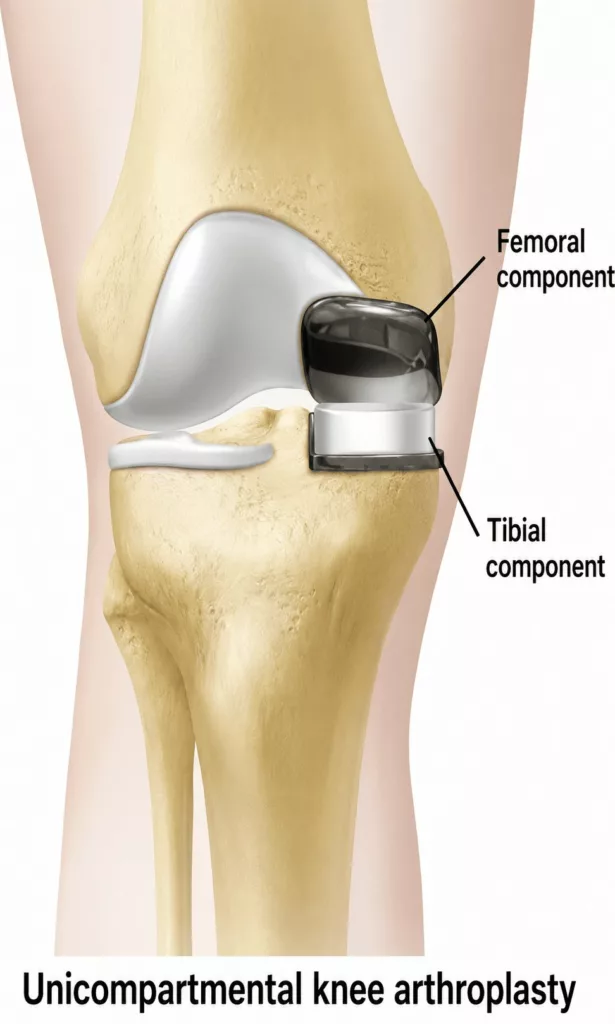
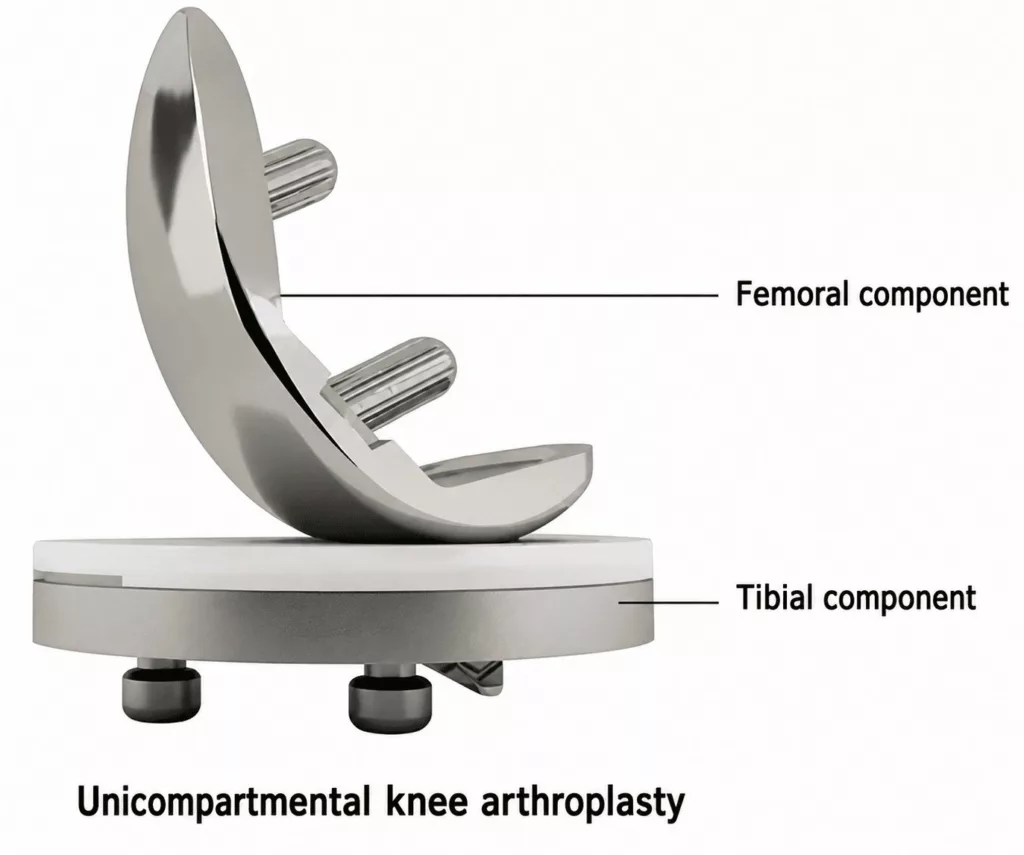
A unicompartmental knee replacement, also known as a partial knee replacement, is a surgical procedure that replaces only the worn compartment of the knee joint with an artificial joint surface. This prosthesis consists of two components designed to reproduce the shape and function of a healthy knee compartment: a femoral component fixed to the femur and a tibial component fixed to the tibia.

There are three main types of knee replacement:

  • Total knee replacement, used when osteoarthritis affects the entire knee joint;
  • Unicompartmental knee replacement, used when only one compartment of the knee is affected;
  • Patellofemoral knee replacement, used in cases of isolated patellofemoral osteoarthritis.

When and Why Is Unicompartmental Knee Replacement Recommended?

Knee Surgery Specialist in Hauts-de-Seine (92)

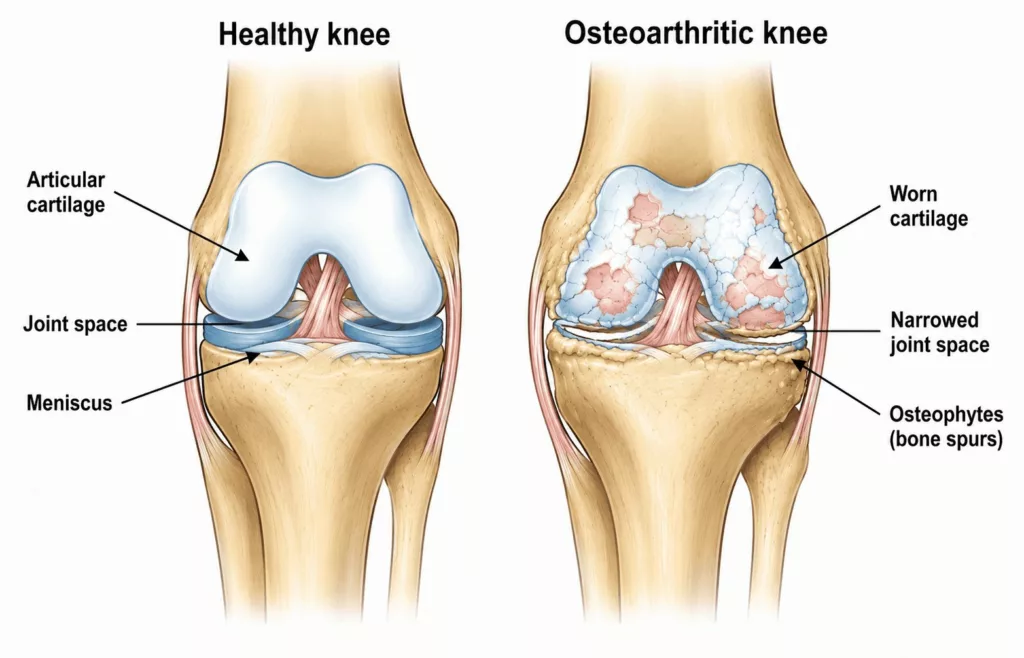
Knee osteoarthritis, also known as gonarthrosis, is a progressive degenerative condition characterised by wear of the joint. No treatment can reverse this degeneration, and the condition tends to worsen over time.

Several conservative treatments may initially be prescribed to relieve pain, including lifestyle and dietary measures, pain-relieving medication, anti-inflammatory treatment and physiotherapy. However, when joint wear becomes too advanced and these treatments no longer provide sufficient relief, knee replacement surgery may be considered.

When osteoarthritis affects only one compartment of the knee, a unicompartmental knee replacement may be appropriate. When wear involves the entire knee joint, a total knee replacement is generally considered instead.

The aims of surgery are to provide lasting pain relief, restore knee flexibility and allow patients to return to normal walking, everyday activities and sporting pursuits.

Unicompartmental Knee Replacement in Rueil-Malmaison

Knee Surgery in Hauts-de-Seine

The procedure is performed through a minimally invasive subvastus approach. An incision measuring approximately 20 cm is made at the front of the knee. This minimally invasive anterior approach preserves the natural anatomy of the knee without cutting through the muscles, thereby supporting a faster postoperative recovery.

Implant positioning is individually planned, and the prosthesis is adapted to the patient’s anatomy. A CT scan is performed before surgery to create a three-dimensional reconstruction of the knee. This allows personalised surgical planning and helps reproduce the anatomy of the affected compartment as accurately as possible.

The worn areas of cartilage are removed from the femur and tibia, and the underlying bone is prepared to receive the prosthesis. The two prosthetic components are then implanted. These artificial components reproduce the shape and function of the affected compartment of the natural knee joint.

The procedure generally lasts approximately 45 minutes.

It is performed under either general anaesthesia or spinal anaesthesia, in which only the lower limbs are anaesthetised. The choice of anaesthetic is made jointly with the anaesthetist during the preoperative consultation.
Following surgery, the dressing is generally changed every two days for approximately two weeks. Pain management is carefully monitored to maximise comfort and facilitate early rehabilitation.

Anticoagulant treatment is prescribed for four weeks to reduce the risk of deep vein thrombosis. This medication is taken in tablet form and does not require specific monitoring.

The prosthesis is functional immediately after surgery, allowing patients to begin walking on the day of the operation. Enhanced Recovery After Surgery (ERAS) protocols are used, and a physiotherapist assists patients with walking and beginning rehabilitation on the day of surgery.

Early mobilisation combined with physiotherapy is a key factor in achieving a favourable recovery, as it helps preserve and improve muscle function and joint mobility. No specific movements are routinely prohibited. Walking sticks or crutches may be useful during the first few weeks but are generally discontinued rapidly.

Patients usually return home one to two days after surgery. In some cases, a short stay in a rehabilitation centre may be necessary to regain sufficient independence before returning home.

Physiotherapy should continue either at home or in a rehabilitation centre for approximately two to three months.

Driving is generally possible around six weeks after surgery. Sick leave usually lasts approximately two months, although this depends on the patient’s occupation, and office-based work may often be resumed earlier.

Sporting activities may be reintroduced progressively from the third postoperative month.

These timeframes are averages and are provided for guidance only, as recovery varies from one patient to another.

Long-term clinical and radiographic follow-up remains essential to monitor the prosthesis and identify any potential abnormalities.

Every precaution is taken to promote a favourable recovery. Nevertheless, as with any surgical procedure, complications, although uncommon, may occur.

The principal risks include:

  • Deep vein thrombosis and pulmonary embolism: uncommon complications, with the risk reduced by anticoagulant treatment prescribed for one month after surgery;
  • Worsening of a pre-existing medical condition: such as heart failure or diabetes. Postoperative monitoring by the anaesthetic team is provided to reduce this risk;
  • Prosthetic joint infection, with a risk below 1%: this may require further surgery to wash out or replace the prosthesis, followed by prolonged antibiotic treatment;
  • Reduced knee mobility and postoperative stiffness: these may develop if rehabilitation is not carried out appropriately. Manipulation of the knee under anaesthesia may be proposed to release adhesions;
  • Haematoma: postoperative bleeding may lead to the formation of a haematoma. Depending on its severity, drainage or blood transfusion may be required;
  • Sensory nerve injury: small sensory nerve branches around the knee may rarely be injured, resulting in reduced sensation over certain areas of the knee;
  • Complex Regional Pain Syndrome (CRPS): a painful and inflammatory condition that remains poorly understood. It is treated medically and may persist for several months or, in some cases, several years. It may require adapted rehabilitation, additional investigations and specific pain management. Its onset, progression and possible long-term effects, including stiffness, pain or a constricting sensation, are unpredictable;
  • Injury to the tibial or common peroneal nerve: this is a very rare complication that may occur following a haematoma, surgical trauma or a reaction to regional anaesthesia. Recovery may occur over several months in some cases;
  • Injury to the blood vessels of the leg: this is extremely rare but may require an additional procedure or urgent further surgery to restore blood flow to the limb.

These are the principal risks associated with unicompartmental knee replacement, but the list is not exhaustive. Other exceptional complications may occur. Not every possible complication can be specified. Your surgeon remains available to discuss the particular risks associated with your individual situation.

Modern prosthetic implants, personalised 3D planning and minimally invasive surgery provide excellent results in the majority of cases.

Full weight-bearing and walking can generally be resumed immediately after surgery. Pain progressively subsides, stiffness improves and knee mobility is restored over the following weeks.

Unicompartmental knee replacement usually allows patients to resume their personal, professional and sporting activities progressively within one to two months.

The best results are generally observed after at least six months, although improvement may continue for up to two years after surgery.

The final range of motion varies from one patient to another and depends on several factors, including preoperative stiffness, the cause of joint wear, the condition of the muscles and tendons, the type of prosthesis, the surgical procedure and, above all, the quality of postoperative rehabilitation.

Activities such as cycling, swimming, golf and hiking are possible and may be encouraged. Other sports, including skiing, tennis and recreational running, may also be possible at a moderate intensity in order to maximise the lifespan of the prosthesis.

The expected lifespan of a unicompartmental knee replacement is approximately 20 years. However, several factors influence its longevity, including the patient’s age, body weight and level of physical activity.